
-
An ancient forest on Takapuna beach
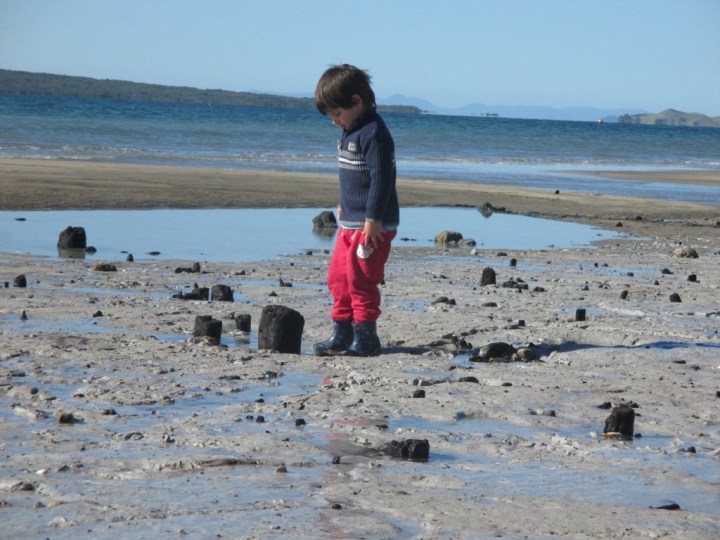
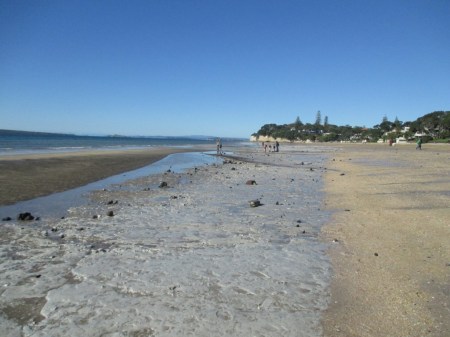
An ancient forest has recently been exposed on Auckland’s Takapuna beach, it’s really exciting, making news. There is the well known fossil forest at the north end of the beach, which you can read about in this paper, Fossil forests preserved in volcanic ash and lava at Ihumato and Takapuna, Auckland….
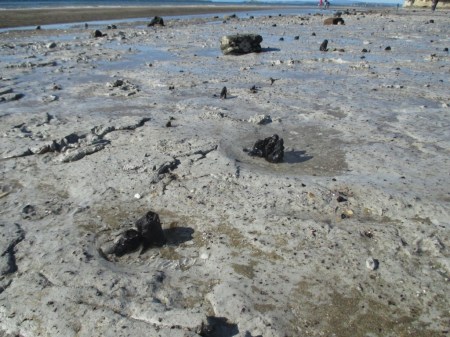
But this is something different, a bizarre landscape from another world.
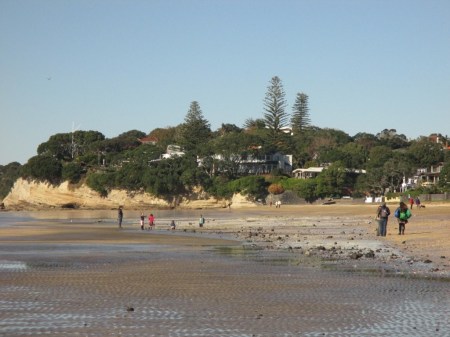
We had to investigate, we had a lovely day at the beach and took loads of photos…
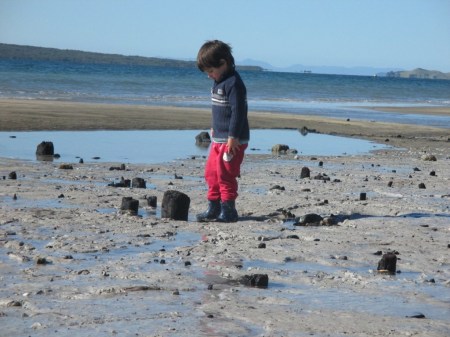
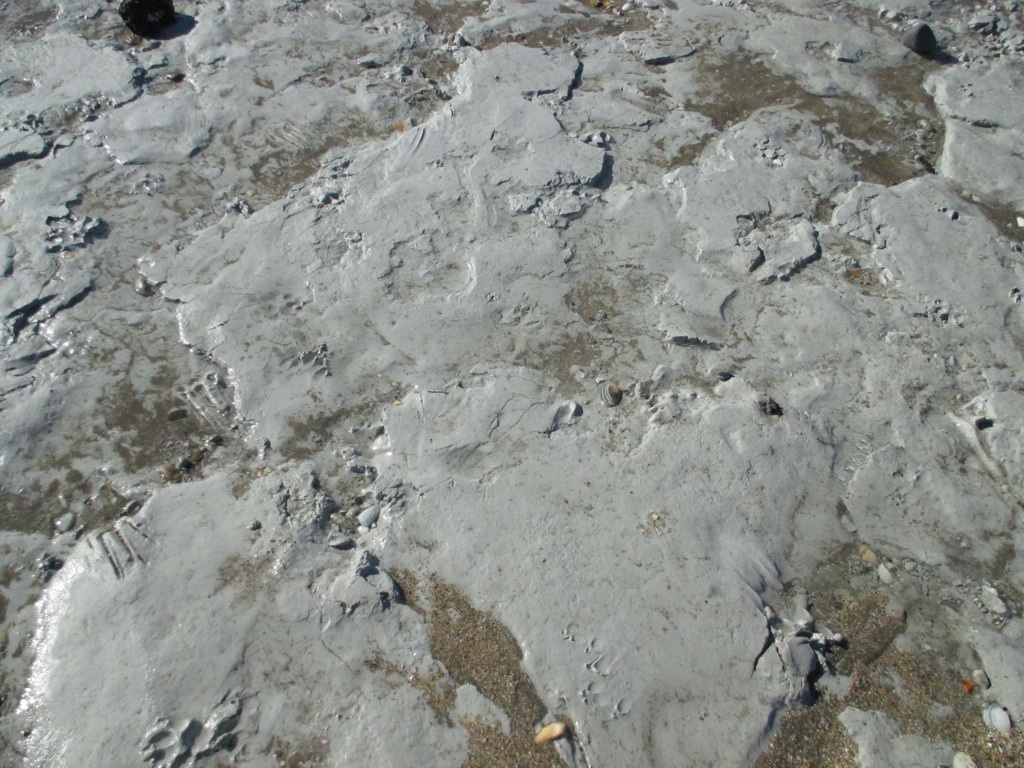
The ash mud was very slippery and I loved the texture, as you can see below, this forest has had many visitors!
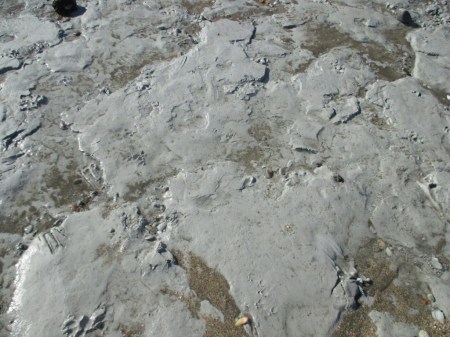
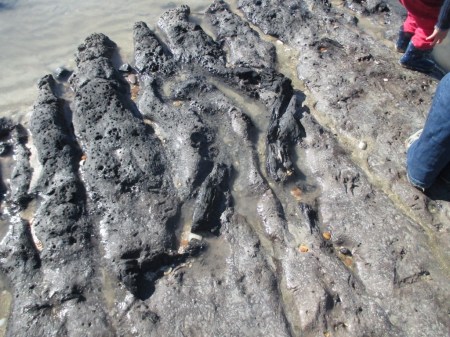
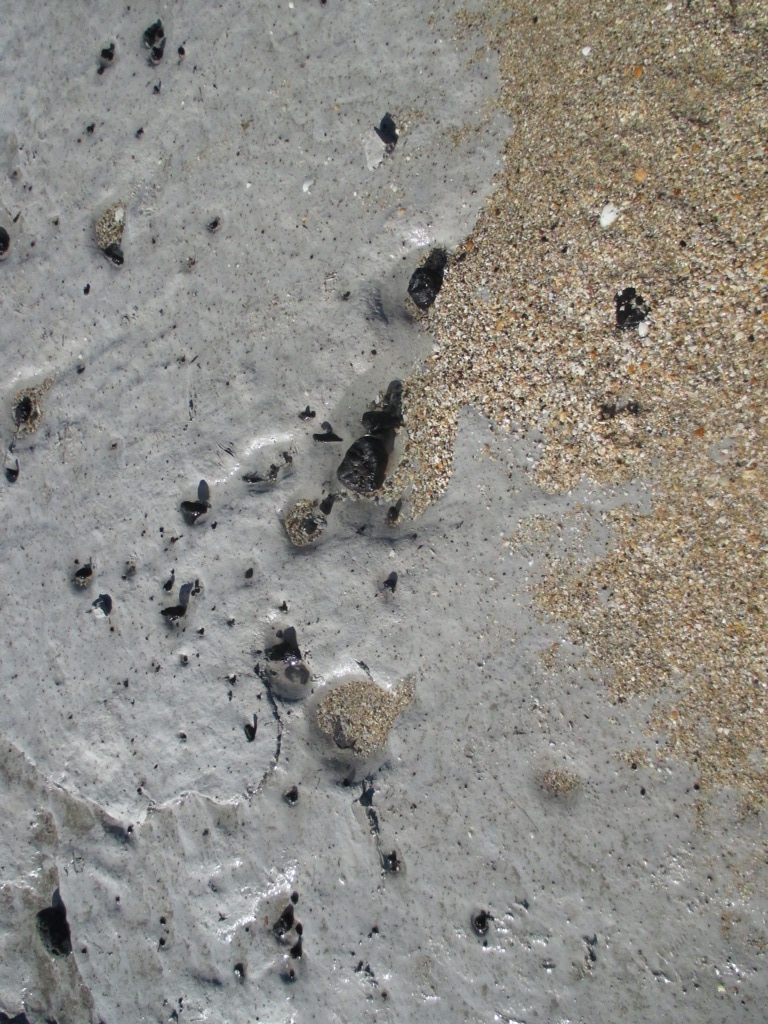
When I heard about it, I imagined that the remains of the trees would be like rock, that they had been fossilised, but they felt just like wet, rotting wood. We discovered many small tree stumps emerging from grey mud, from volcanic ash, it was like the trees were marching off into the sea.
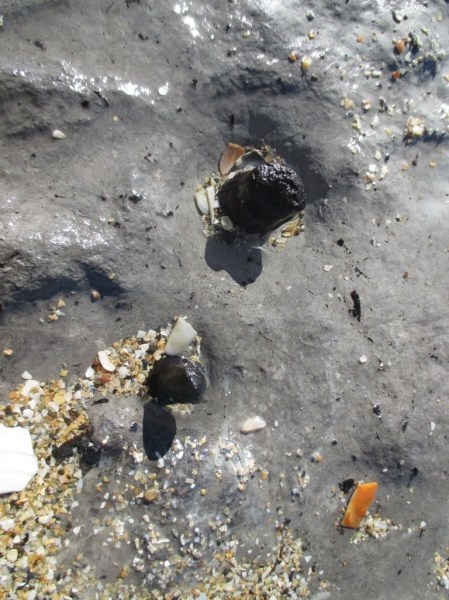
Fascinating. These, below looked like roots, and appeared larger than the other tree remains we saw.
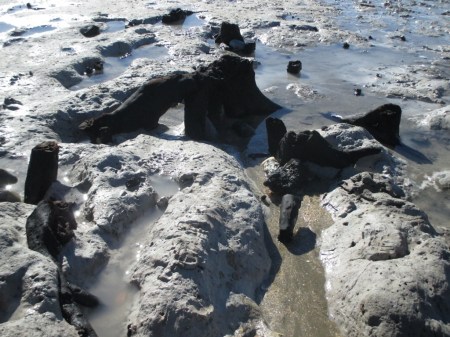
The meeting place, we could see where the sand had washed away and stumps were exposed in the sand as well as nearby mud.
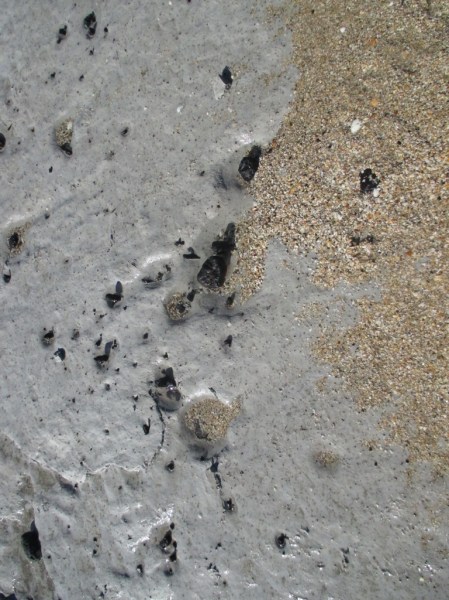
This is more like what I expected to find, tree remains in rock.
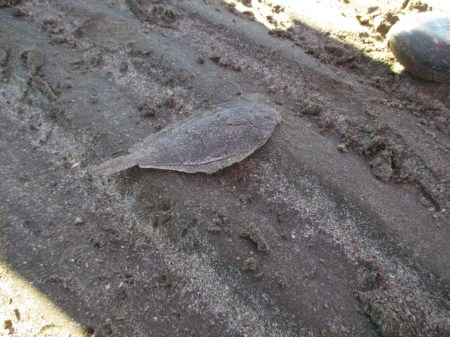
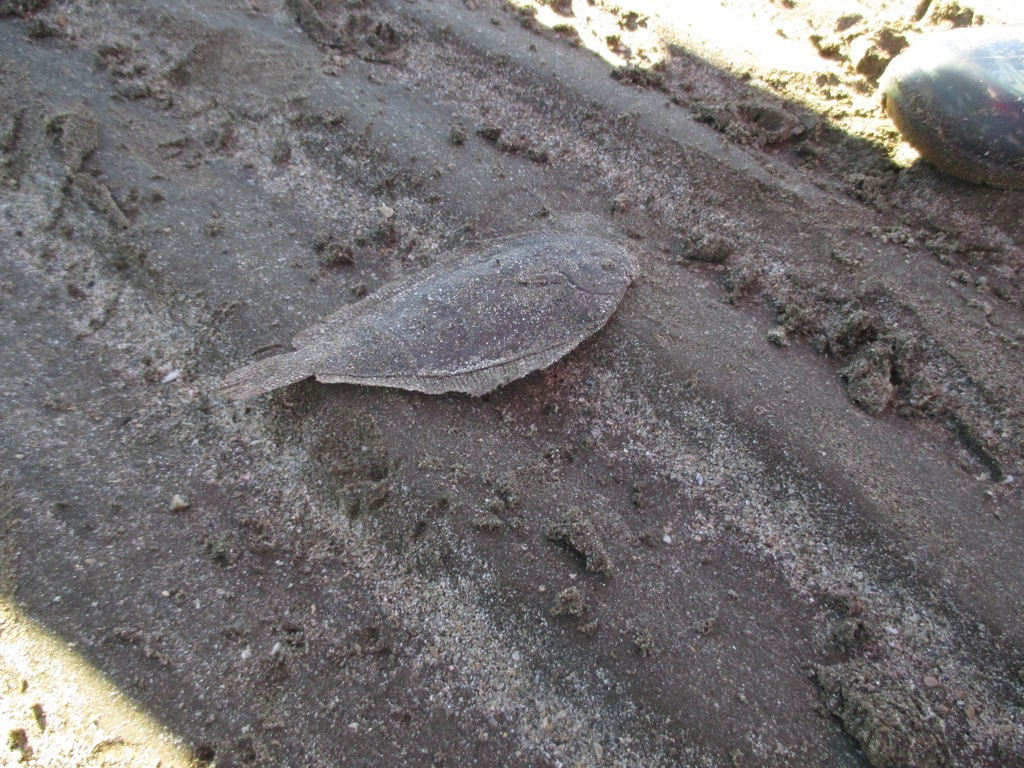
Other finds at the beach, a dead flounder.
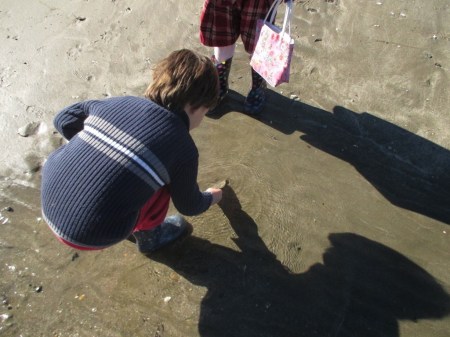
Blake wanted to put it in water, just in case.
Local geologist Bruce Hayward shared this information about the ancient forest on Facebook:
ANCIENT FOREST EMERGES FROM BENEATH TAKAPUNA BEACH
In recent days the sand near low water in the middle of Takapuna Beach. Auckland, has shifted and exposed the long buried remains of an ancient forest. Many long-time locals say they have never seen it before, although some of the soft sticky mud that it is buried in has been uncovered in other parts of the beach on odd occasions in the past.
Auckland geologist Bruce Hayward visited the newly exposed fossil forest this week. “This is an exciting new discovery and is quite different and much older than Takapuna Reef’s famous fossil forest preserved in the lava flows from Pupuke Volcano”, he says.
“This new fossil forest consists of many small tree stumps in growth position in an ancient soil. It is clear that the trees became established on the surface of a thick white rhyolitic ash deposit, and in turn they have been buried and preserved by another thick creamy-white volcanic ash bed”. Similar thick rhyolitic ash and ignimbrite deposits occur in a number of low-lying parts of Auckland. Elsewhere they have been dated at close to 1 million years old and were erupted by gigantic explosive blasts from a volcano in the vicinity of Whakamaru, near Taupo.
A similar sequence of white volcanic ash and peat occurs in Shoal Bay and was exposed a few years ago by earthworks when the Esmonde Rd interchange for the northern motorway was being enlarged. Similar aged fossil forests are permanently visible in eastern and southern Auckland in low sea cliffs at Pakuranga, Takanini and Waiuku.
“The fossil tree stumps and fallen branches and twigs are black, but they have not been burnt” says Dr Hayward, “instead they have been carbonised during their preservation and fossilisation. A specialist could study their cell structure and identify the kinds of trees present. Most of the trees are small and less than 15 cm diameter, but larger trees were in the neighbourhood as I found a large lump of kauri gum with the ancient soil.”
In places the volcanic ash has weathered to clays and is soft and sticky but in some places it has been hardened by remineralisation and some of these rocks stick up 30 cm above the present beach level.
History tells us that it will not be too long before the sands shift back and once again bury Takapuna Beach’s hidden secret – the oldest fossil forest on the North Shore.
-
a jar of white butterflies
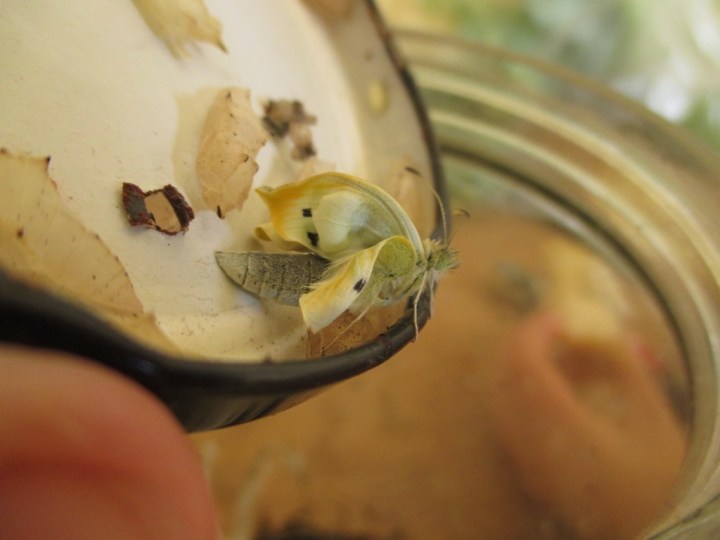
A couple of weeks ago the kids and I harvested leaves and their accompanying caterpillars from our kale plants, putting them all into one of our largest habitat jars. The caterpillars were huge, and it was interesting to observe them strip the leaves by the end of the day. We put the jar outside on the back step and promptly forgot all about it, we had intended to refill and watch them more…but life got a bit busy.
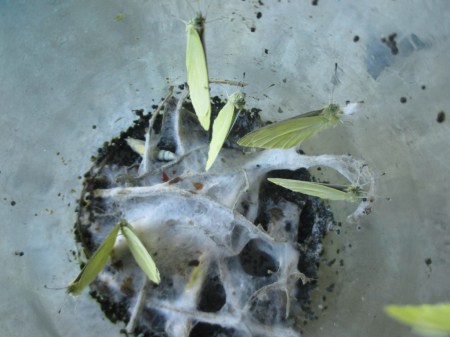
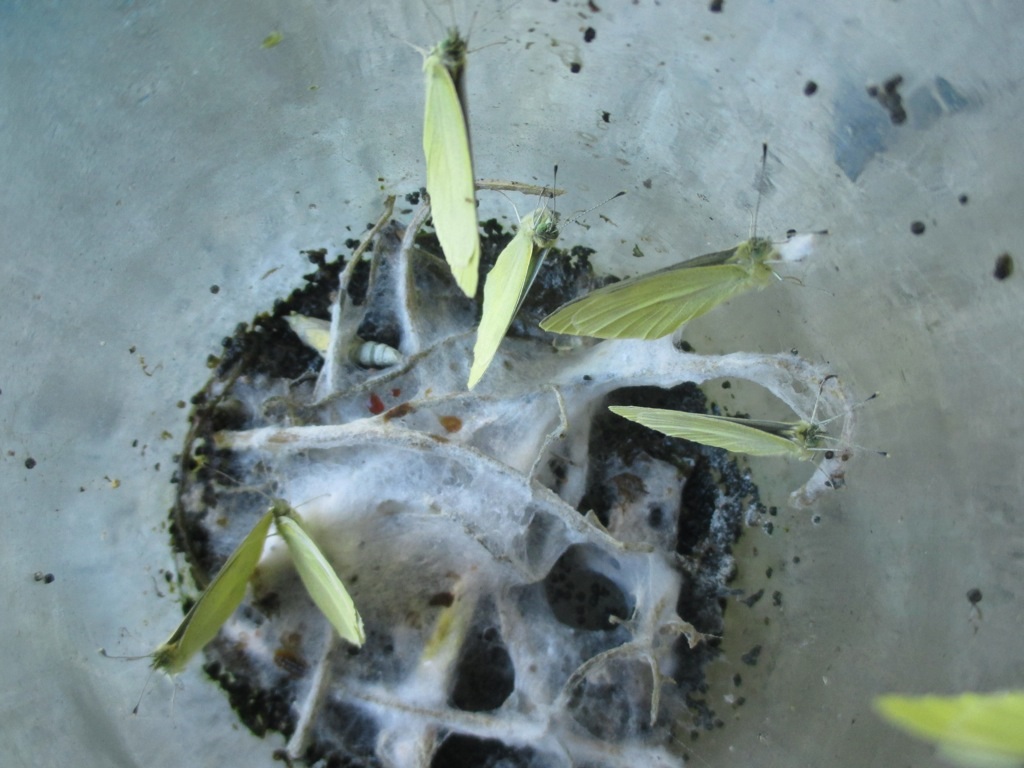
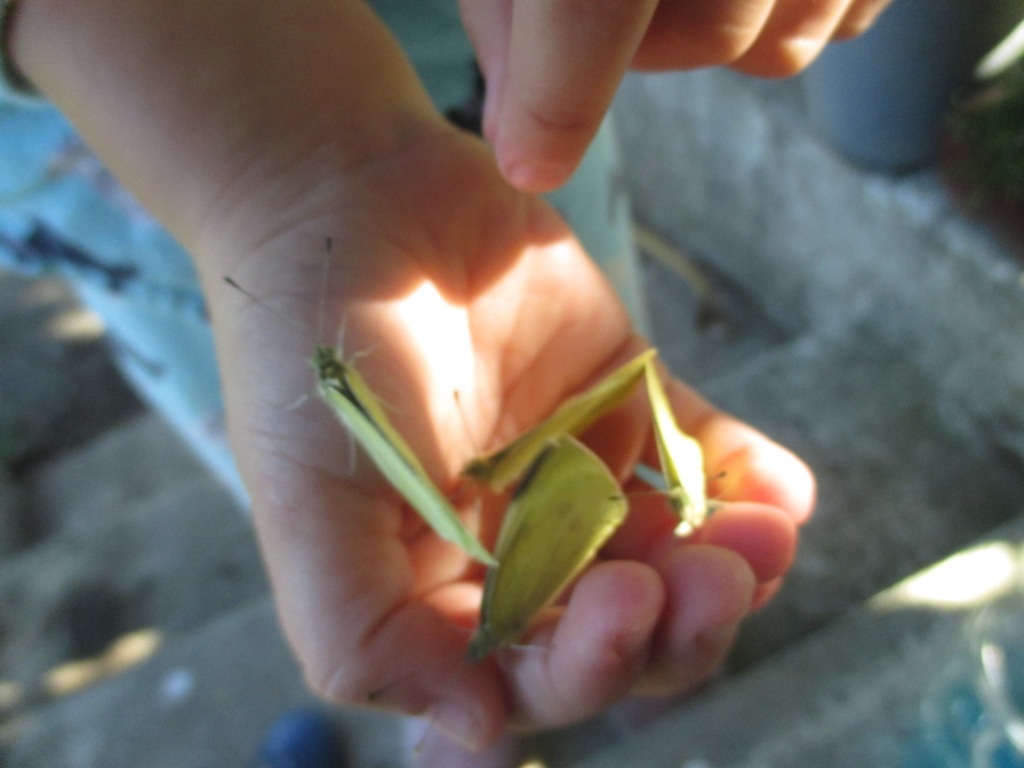
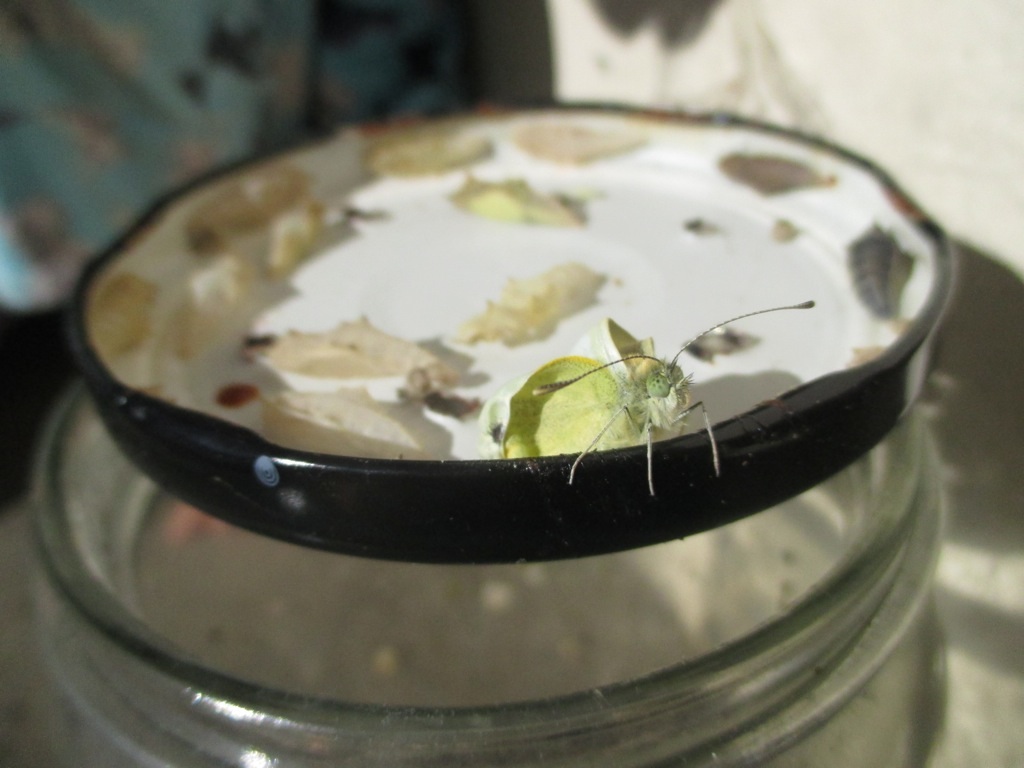
It was something of a surprise when we noticed the jar recently, it no longer contained caterpillars and leaves, and was home to white butterflies!
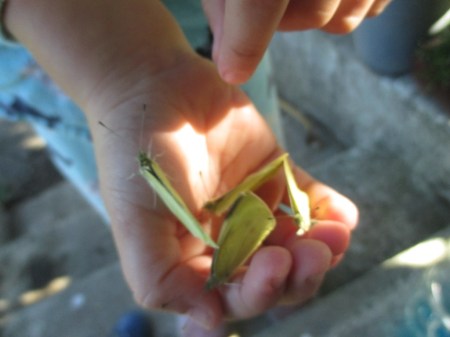
Luna was delighted!
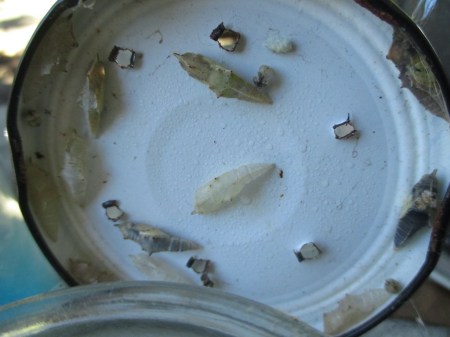
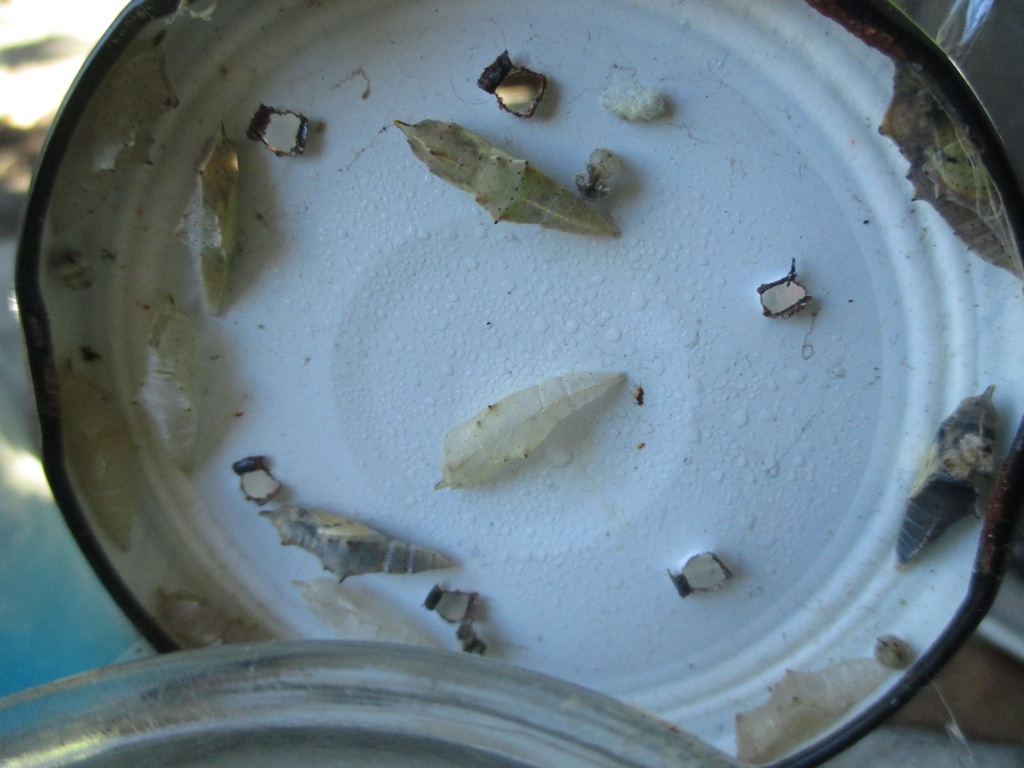
Upon further inspection, we discovered the chrysalises that the butterflies had emerged from, which I had never seen in the garden before, despite being all too familiar with the caterpillars.
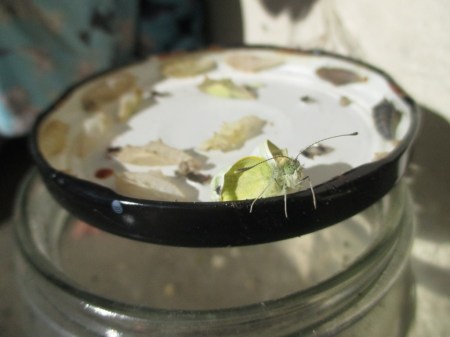
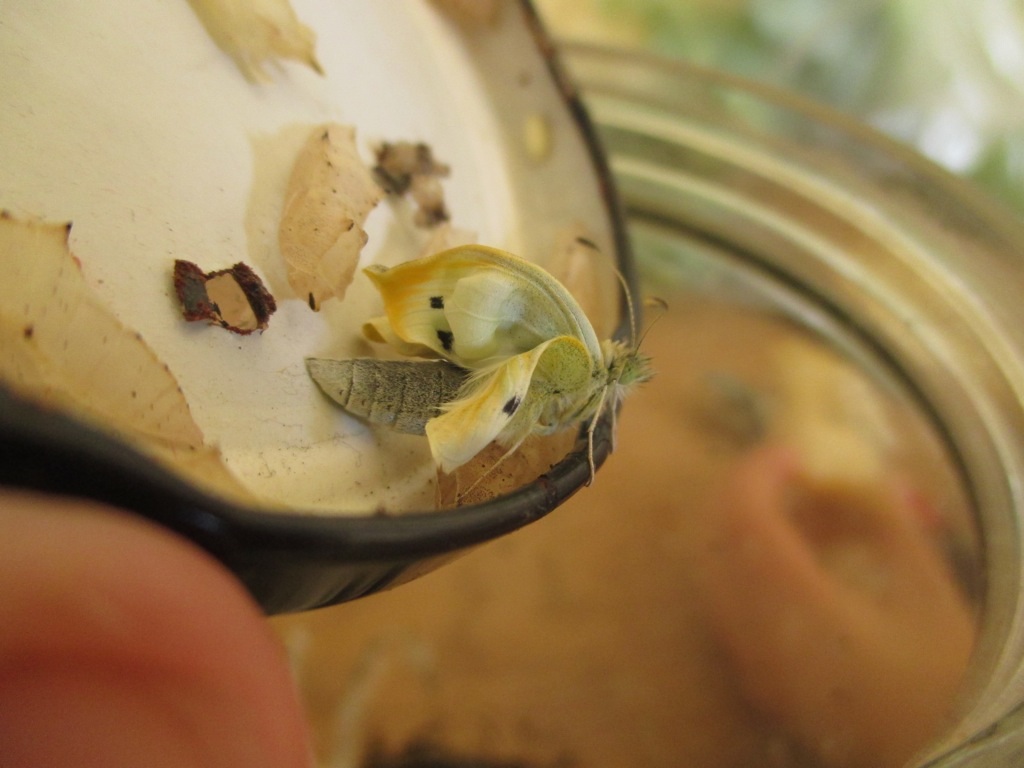
Another very exciting moment was when we noticed that there were a few fresh butterflies yet to hatch, we watched them wriggling before they broke through and Luna was very taken with seeing their wings unfurl and dry out, ready for flight.
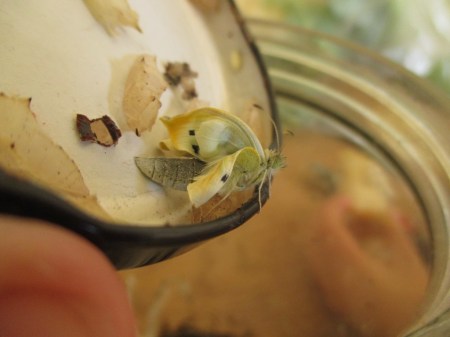
Such a special experience, I also discovered Luna had made a home in one of our bedside cupboards…. good fun. They are ‘re-homed’ now and probably looking for more of our kale to lay eggs on!
-
Vintage sewing with Elise from Punga Road Studio
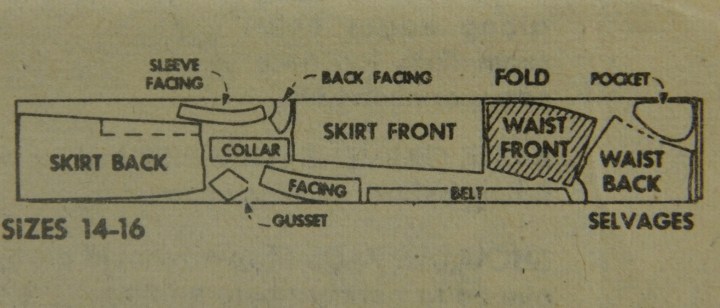
If you have been following along with my Vintage Dressmaking Collaboration announced a couple of weeks ago, you might be excited to learn that this is The Big Weekend. I’m meeting with Elise at Punga Road Studio on Sunday afternoon, to move onto the next step, working with a toile, checking fit and moving on to the final garment.
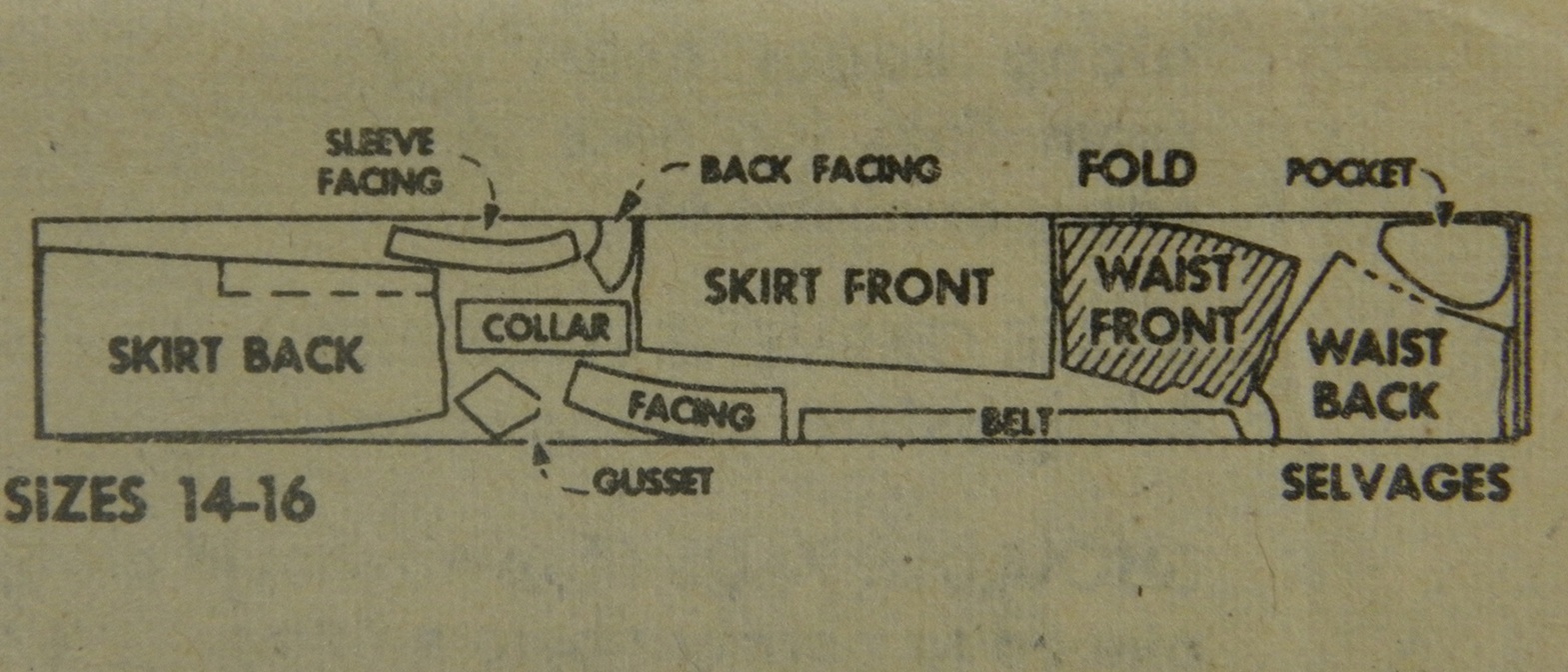
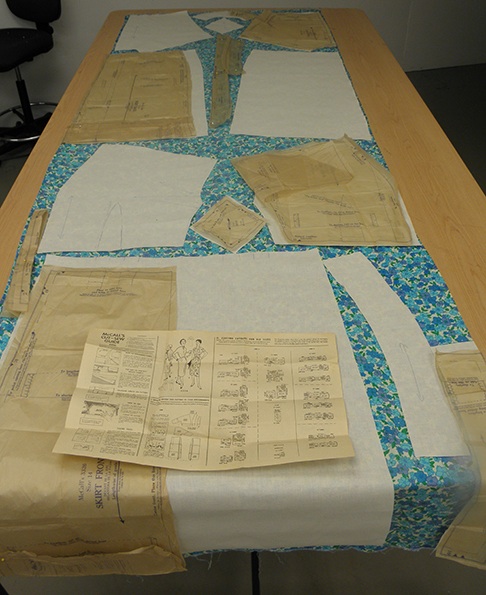
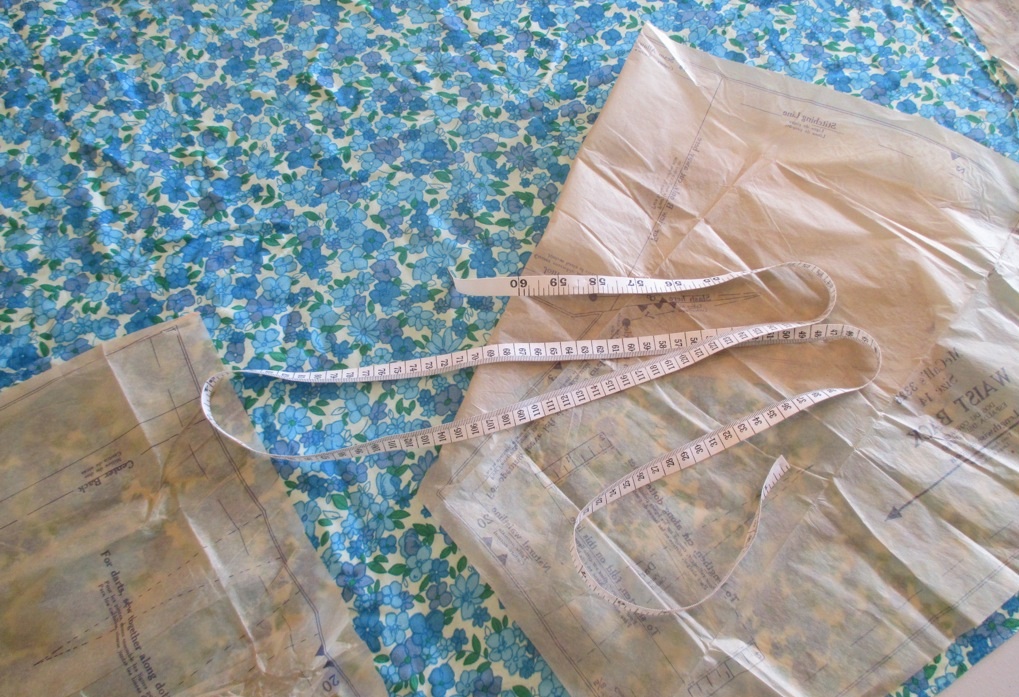
For those who like to see the details, the pattern instructions for the lay indicate all is cut on the fold with no amounts to cut indicated (cut two, cut one etc.) this method reflects home dressmaking culture of fold to fit a kitchen table. This is probably how my nanas cut and sewed their clothes.
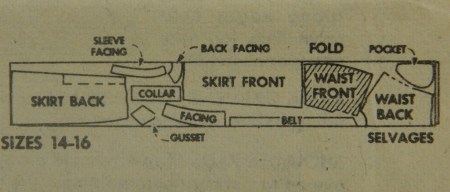
We will not be using this layout as the fabric is far smaller that that required, but we will be working from the toile pieces, and using them with single thickness. This is one of those economical home sewing techniques I will use again.
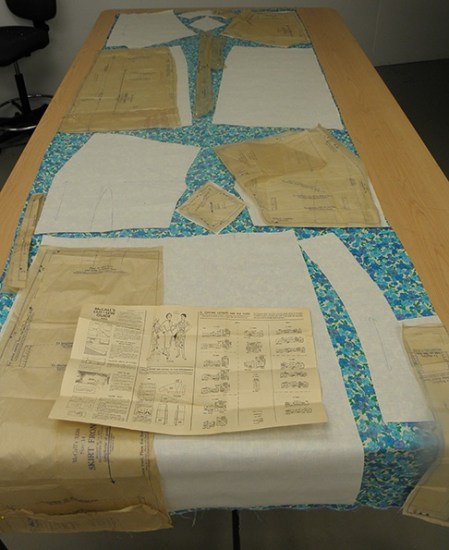
So very exciting!
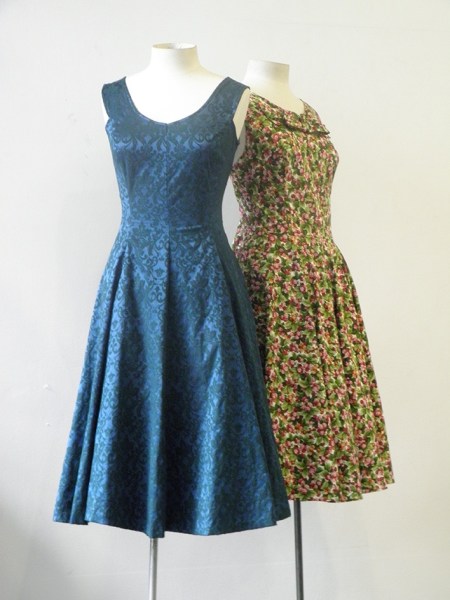
I asked Elise about other vintage and vintage style dresses she has made, here is a photo of two lovely frocks she has created, here is what Elise says about them:
“The Blue is made in a polyester/cotton damask weave, with hidden pockets in the front seams. The Berries with bows front and back, is in polished cotton so makes a lovely swishing sound when moving.”
-
The vintage playsuit sew along 2014!
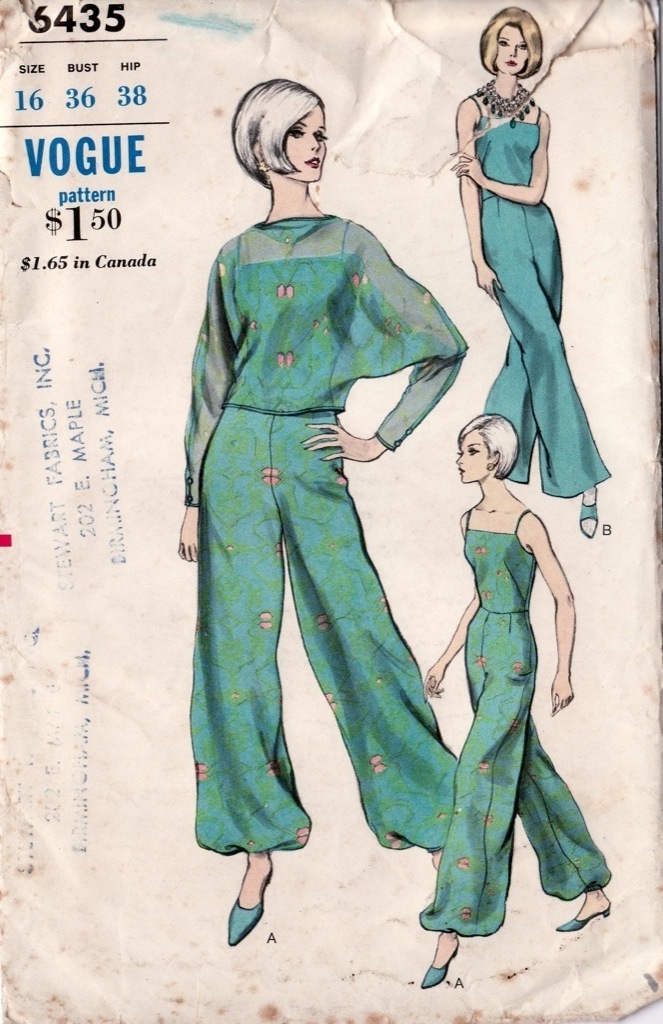

I have just signed up for The Vintage Playsuit Sew Along, over at The Girl with the Star-Spangled Heart. Yay!!
I know I’m going into winter…I’m thinking I’ll be way ahead for spring and summer or, I could whip up a wintery play suit combo..hm. Maybe it’s time to try this stylish pattern:

It kind of – almost – fits the description, of being co-ordinationing separates brought together to make a sporty, holiday look.
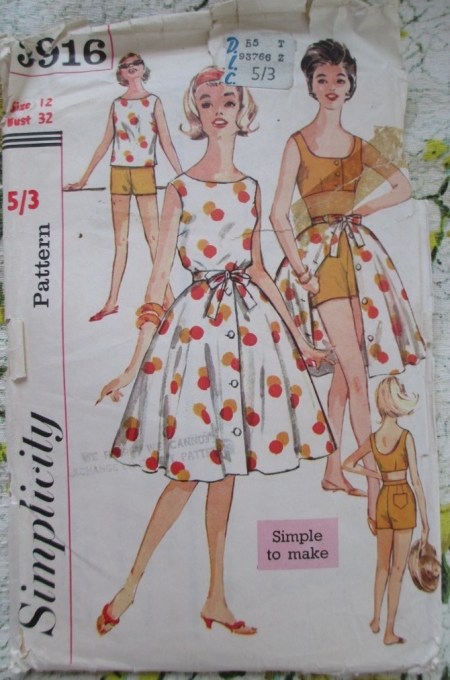
Some more traditional play suit ideas from my pattern stash:
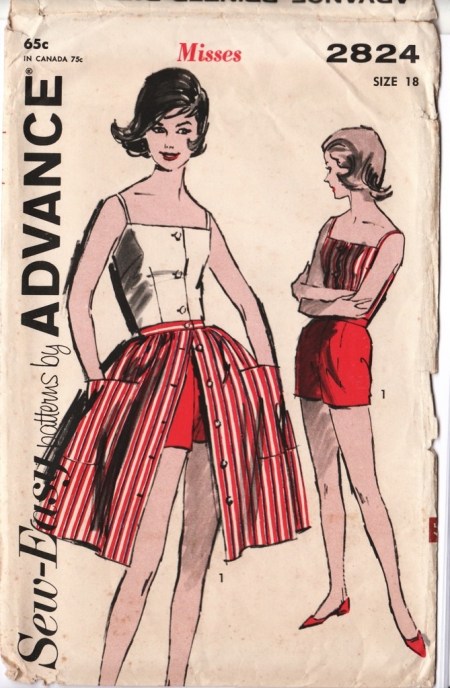
And this…
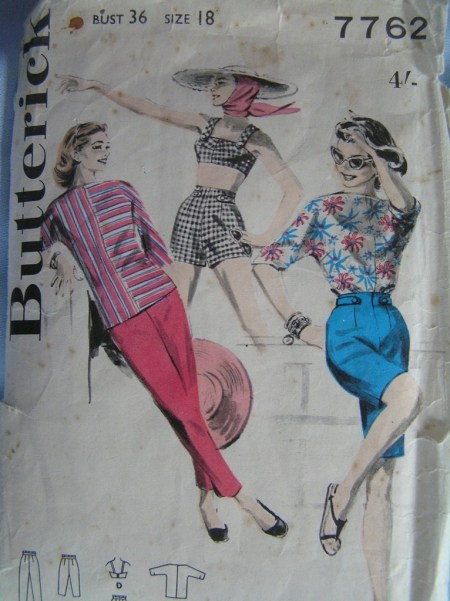
I have made a few pairs of pants from this pattern, Butterick 7762, but the instructions are missing, so had not attempted the bra top, it might be time to tackle this project, pants top and all.
And now for fabrics…. that will be another post! Who else is in? What do you think about a winter playsuit?
-
Sometimes a Great Notion
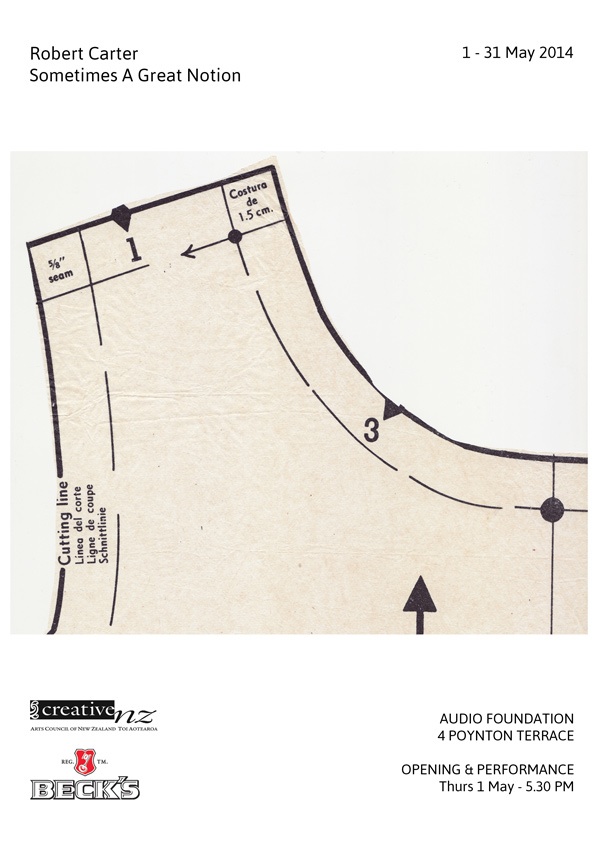
I am quite excited on account of Rob’s performance this evening, he’s been working on it for weeks now, we’ve had sewing machines in the lounge, the car, we’ve spent time with them at art school…all loads of fun!
Sometimes a Great Notion is happening this evening at Audio Foundation as part of First Thursdays
 .
.
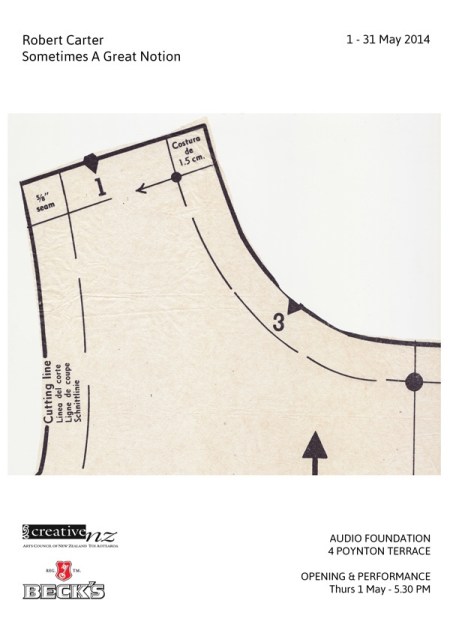
When Elsie MacPherson purchased Simplicity pattern 2523 at the Avondale hospice shop in November 1982, she did so with the intention of producing a practical and attractive garment for her six year old granddaughter, Elisa.It is unlikely she would have foreseen that, 30 years later, the instructions for making this child’s one-piece playsuit would form the structure of an orchestrated improvisation of sewing machines.
Opening event and performance:
5:30pm Thursday May 1.Audio Foundation, 4 Poynton Tce.The show runs until May 31.
-
fungi hunt
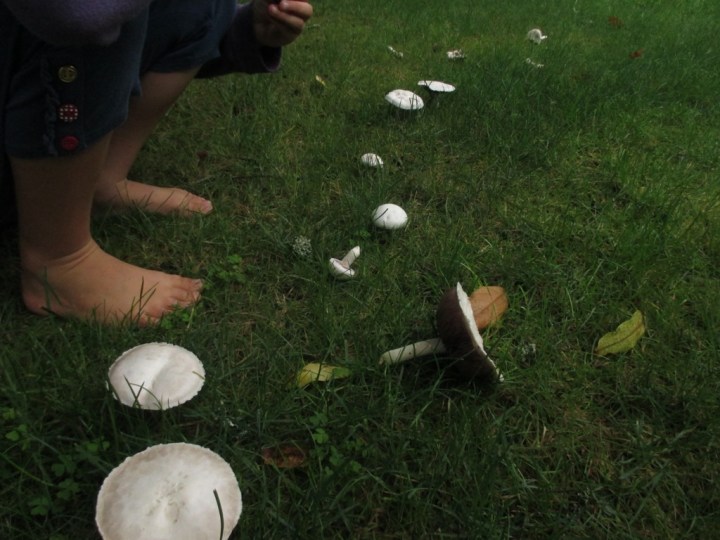
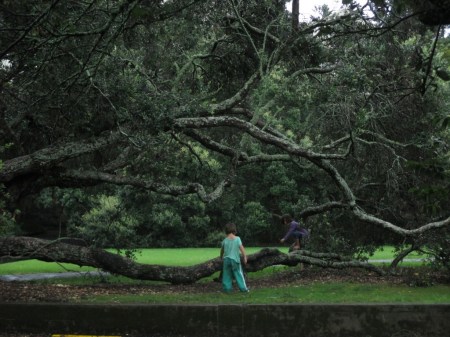
Fallen trees, bark mulch, damp ground….the perfect habitat for fungi. At first it just looks like leaf litter and bark, but look a little closer and you’ll see ‘scrums’ of fungi, as Luna calls them.
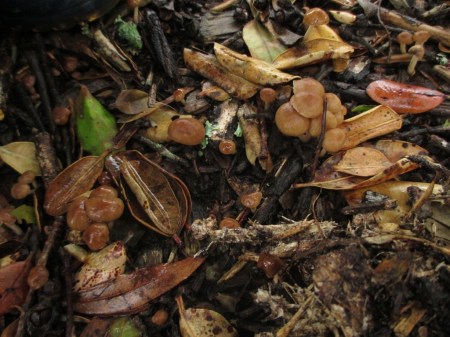
Fungi are everywhere.
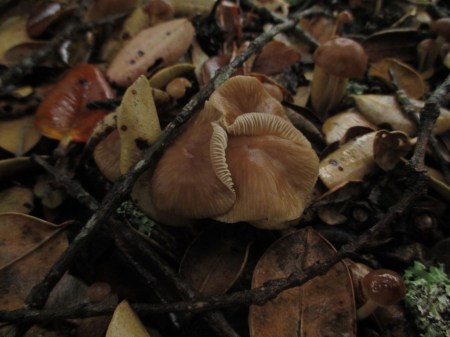
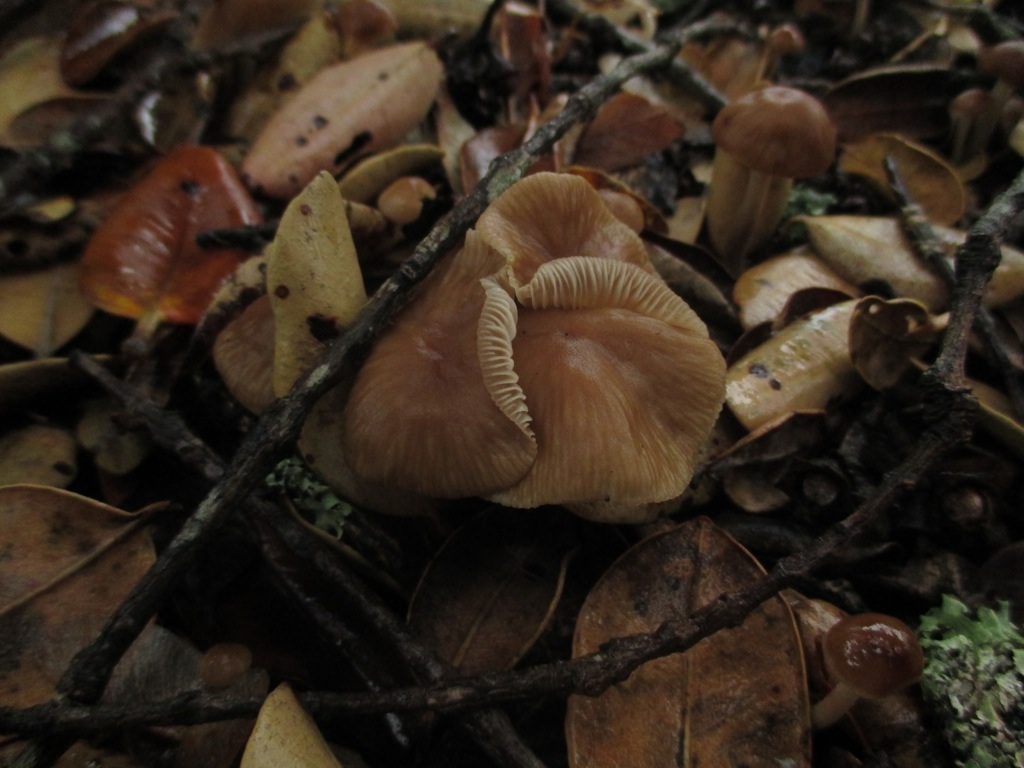
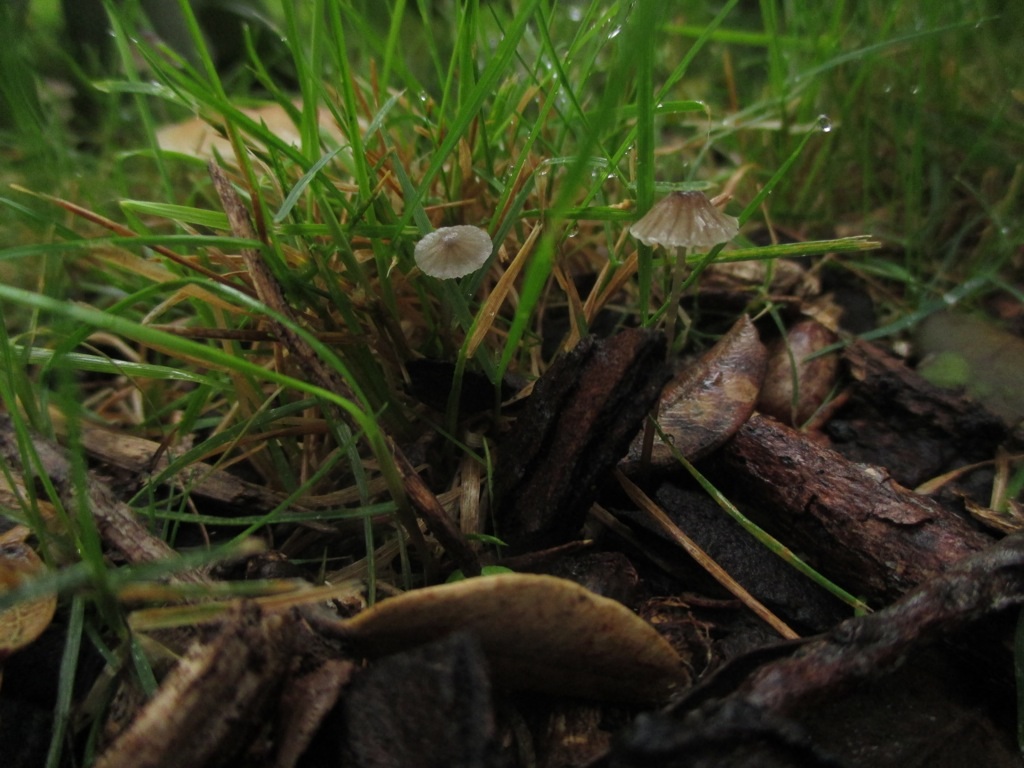
There were delicate toadstools inhabiting the edge between the grass and the wood chip, very fragile little things.
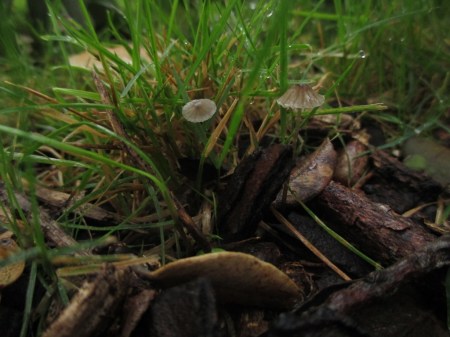
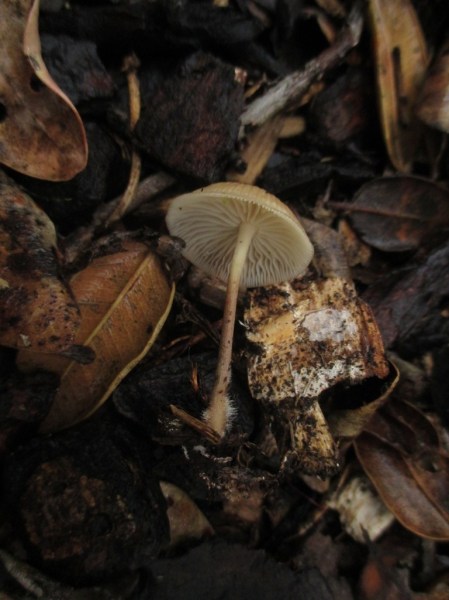
This was another species, small but a bit more robust than that above.
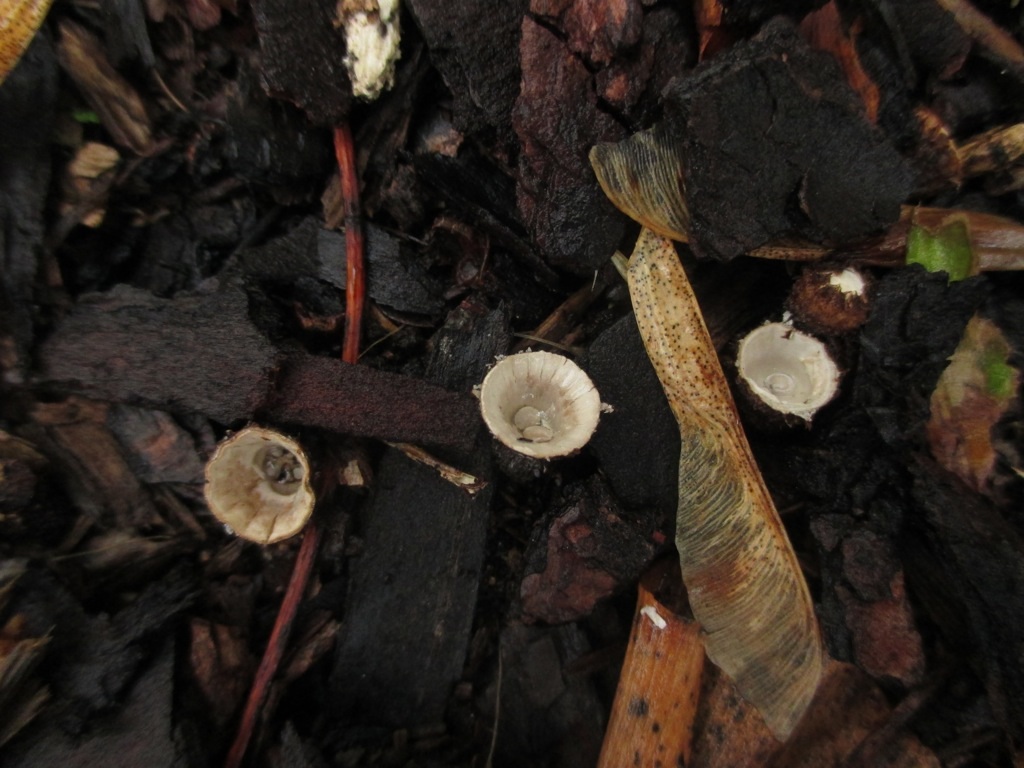
Some we know well, having discovered them another autumn, like the birds nest fungi.
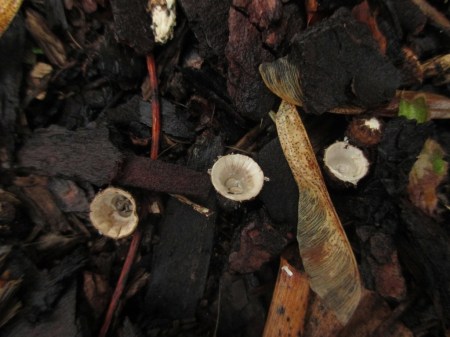
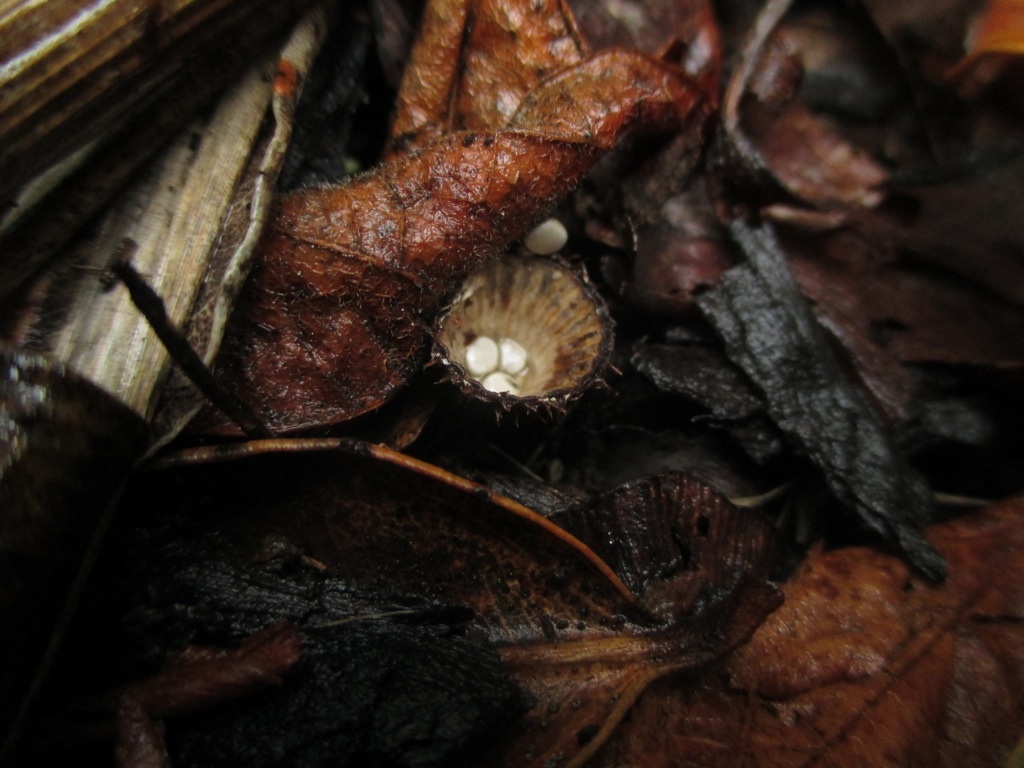
Birds nest fungi is certainly my favourite! As you can see with this one, they do look like they have tiny eggs in them (they are the spores).
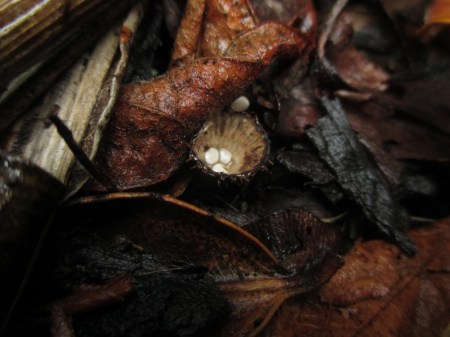
So unusual, the raised cup shape, and just so small, under 10mm across.
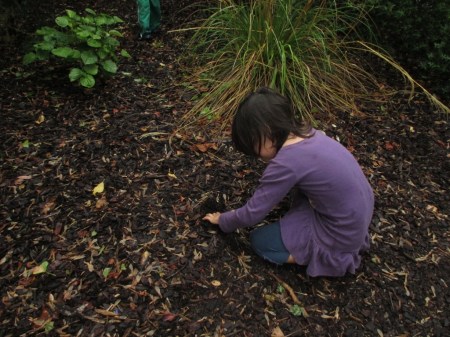
Luna removed some to bring home to study.
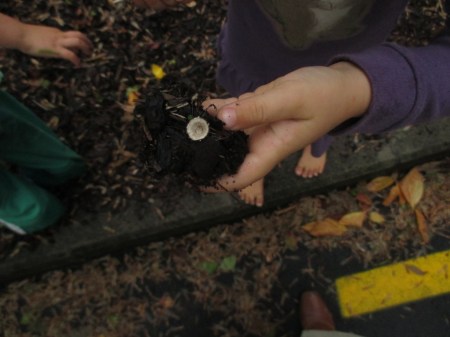
We’ve learnt quite a lot about the relationship fungi has with the organic matter it lives off, and Luna is taking more care to excavate a decent amount of substrate when choosing specimens. I hope these ones last a while at home!
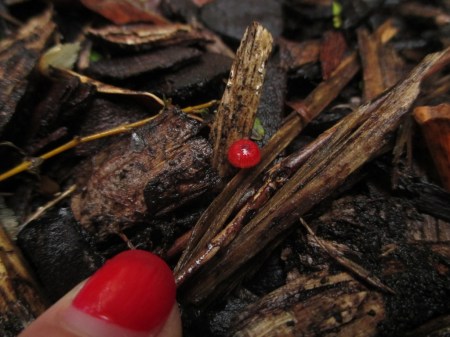
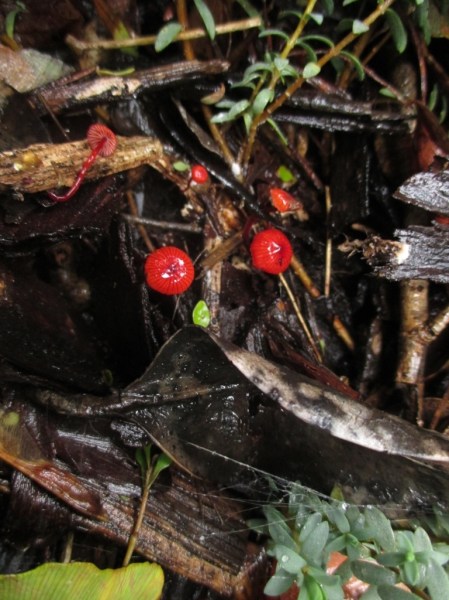
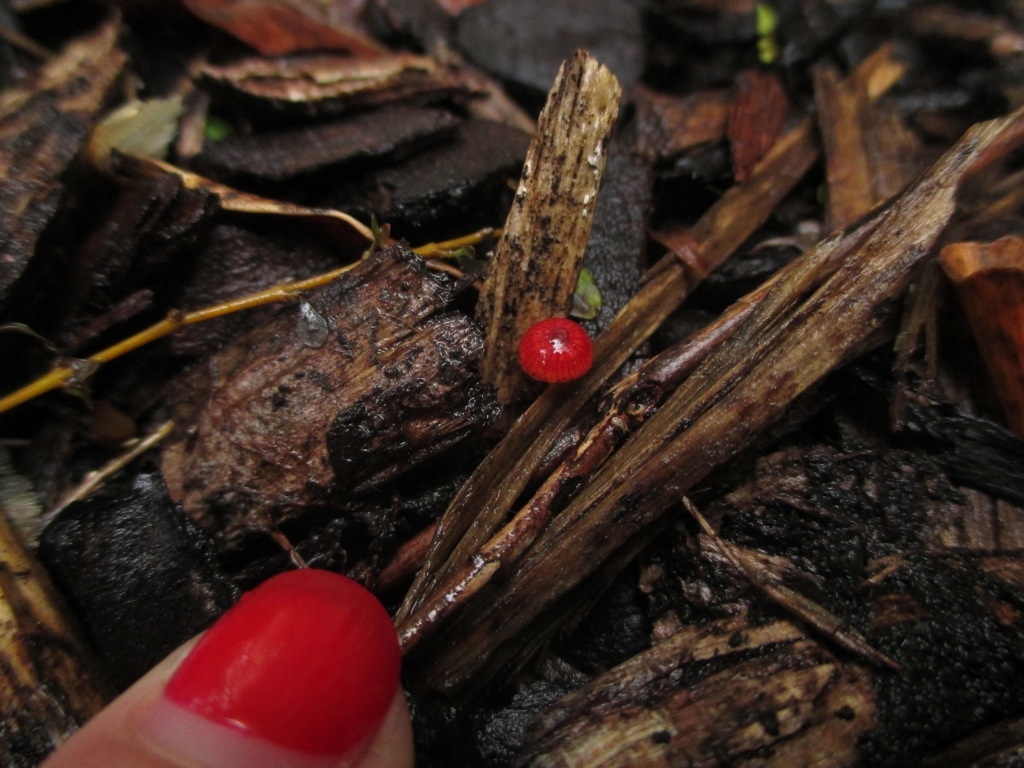
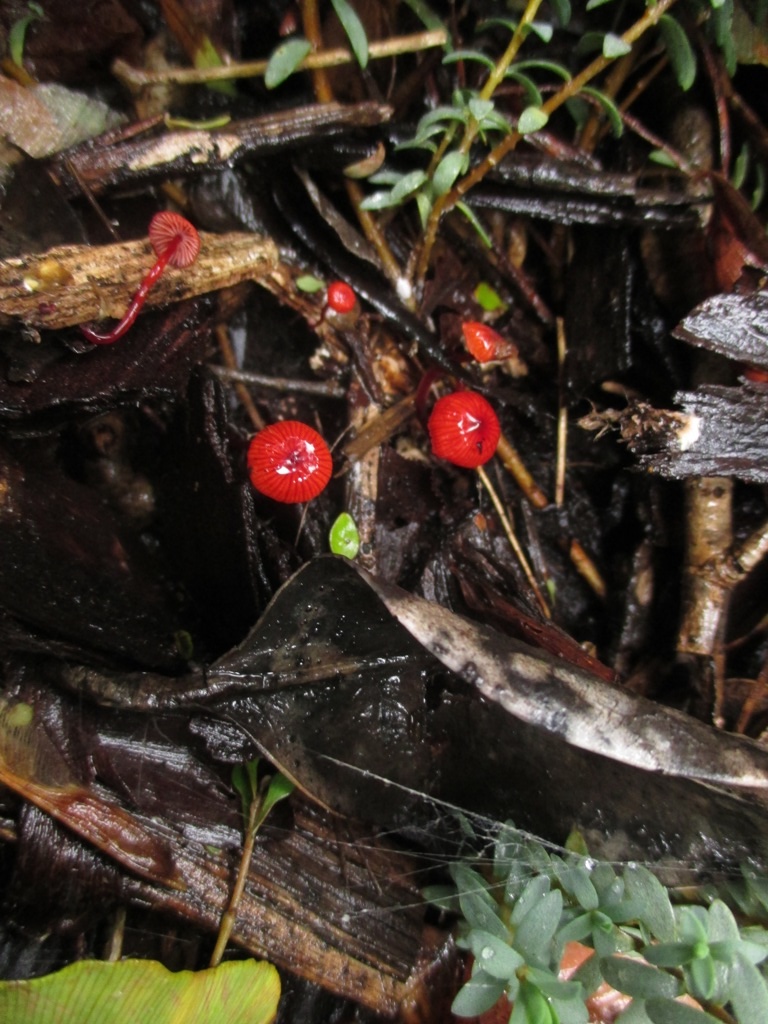
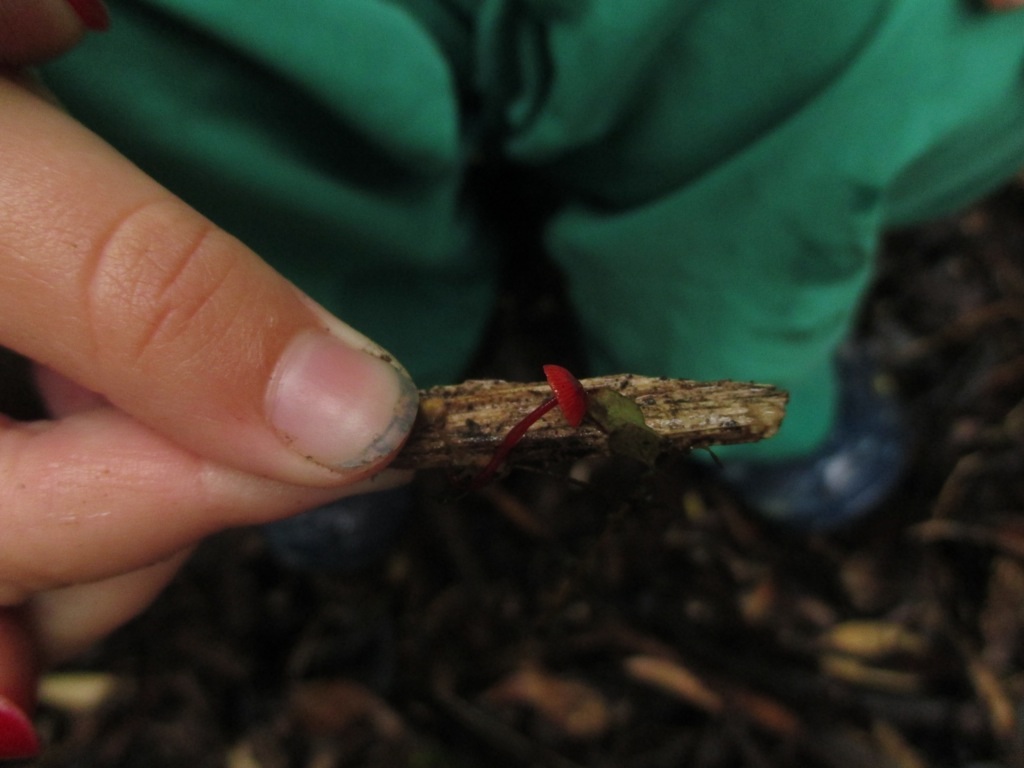
These striking red toadstools were an exciting discovery in the rotting wood under bushes, and *ahem* it’s always nice when ones nail varnish matches the colour of an exquisite little toadstool.
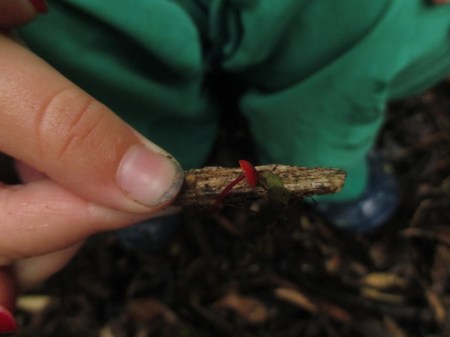
Did I say how tiny these babies were? That’s Blake’s three year old thumb there, he really wanted to record this find.
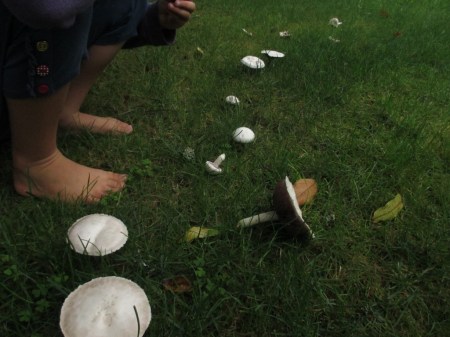
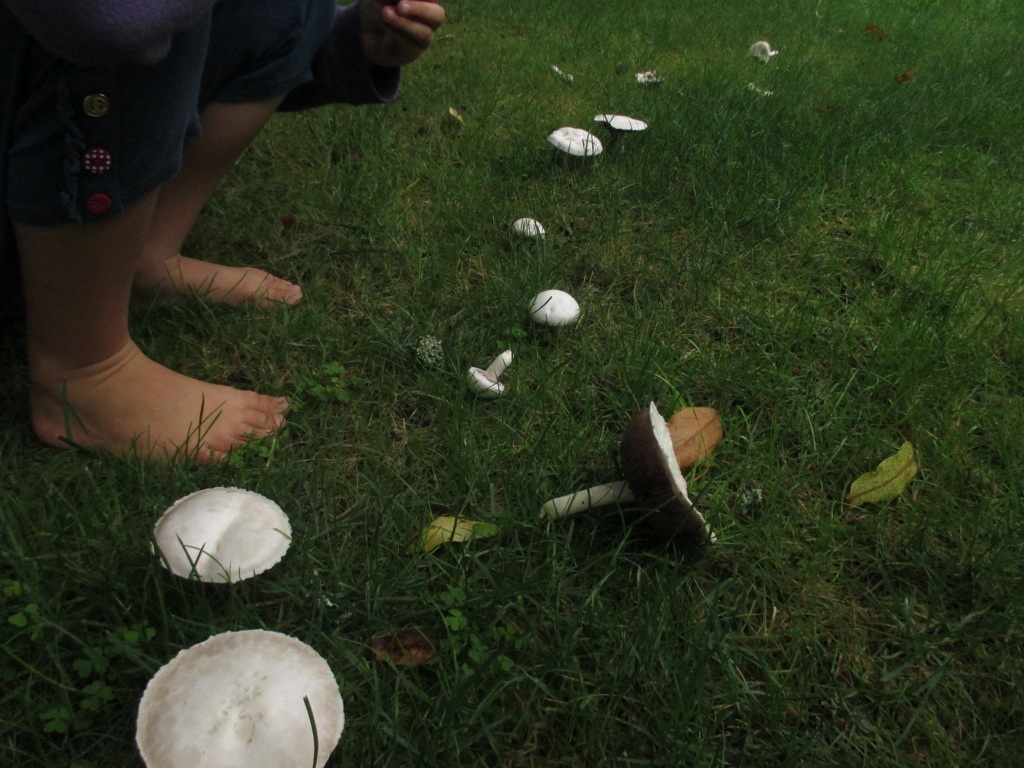
There were a few edible (looking) mushrooms on the lawn too, we just looked at them, I’m not quite game enough to cook up some foraged fungi yet. From what I’ve read, there is a poisonous variety that closely resembles an edible field mushroom, so will have to do some more research on that!
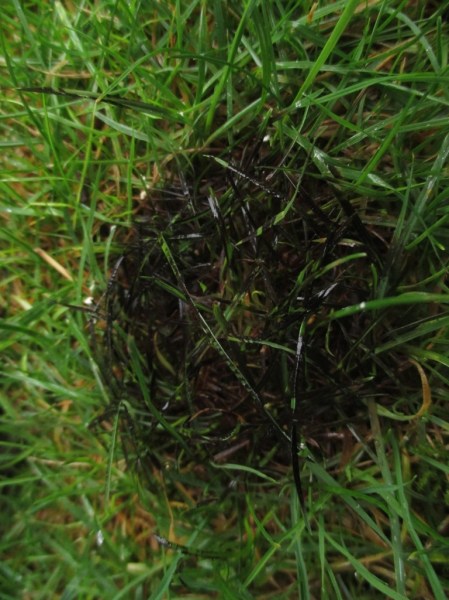
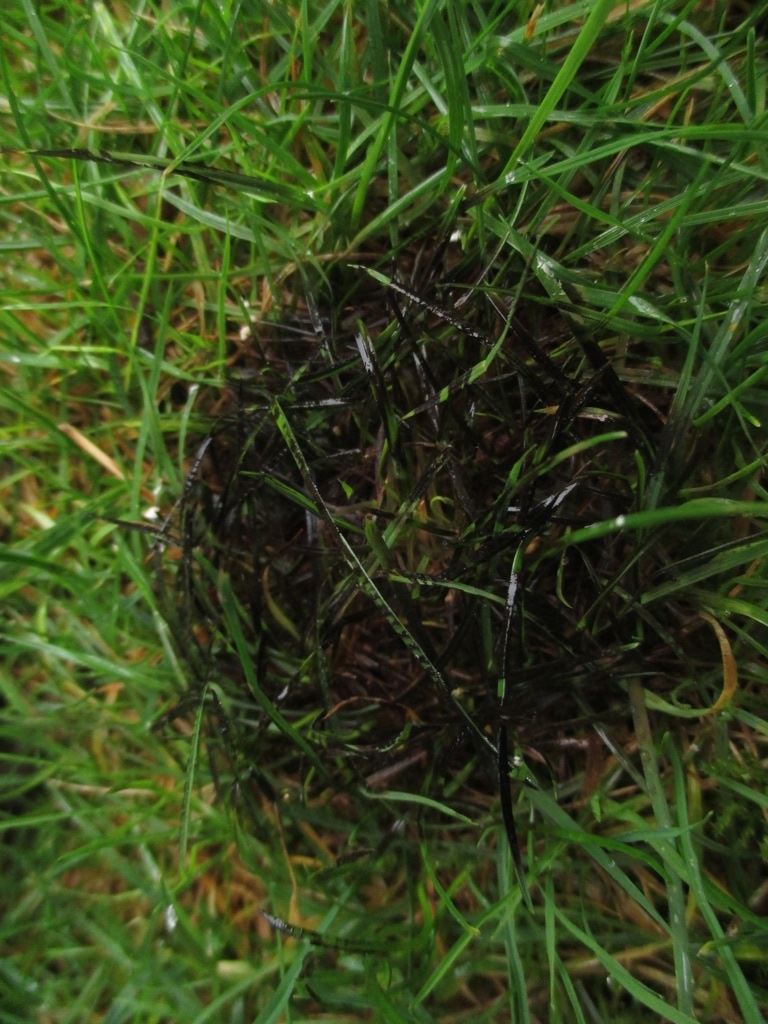
There are a few distinguishing features, including the colour of the spore print, and interestingly there was a cap that had left a print on the grass, making a black spore print. How about that?
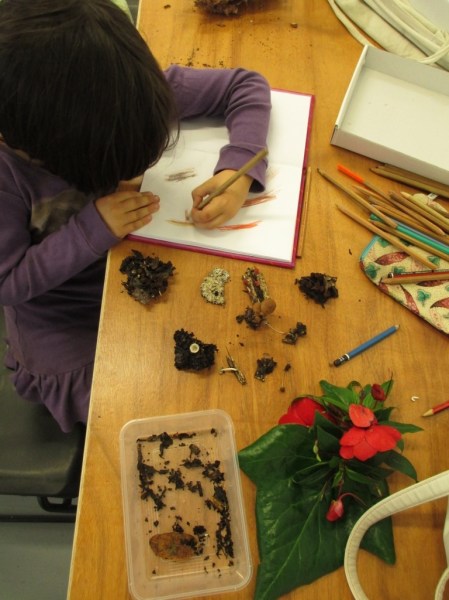
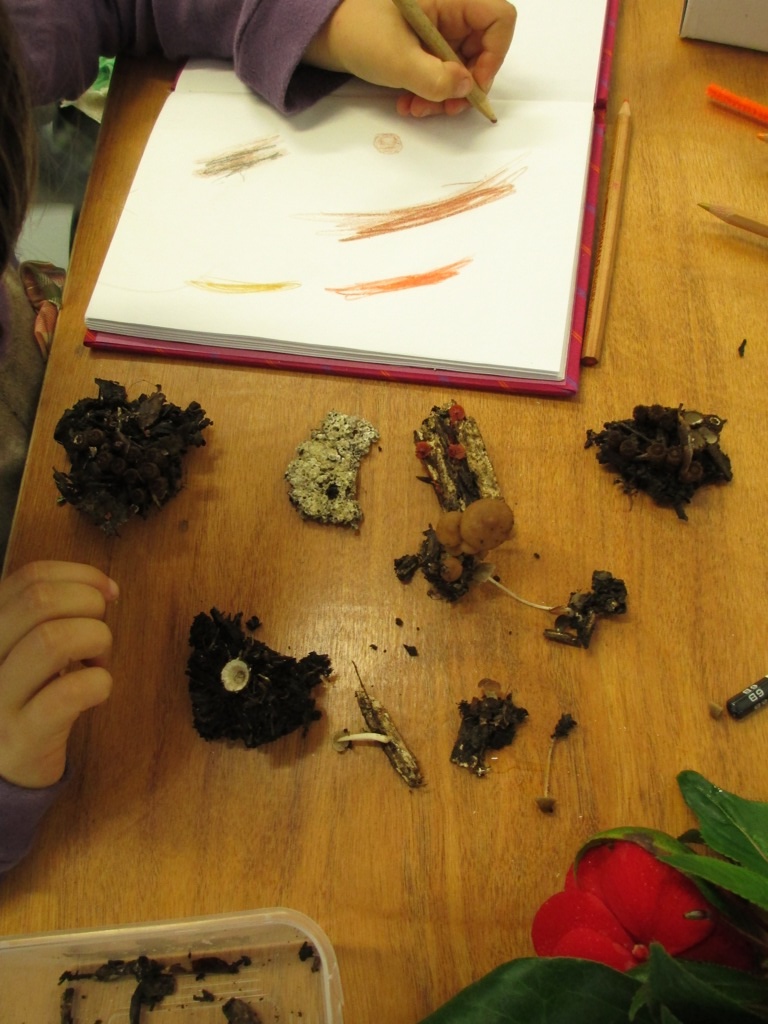
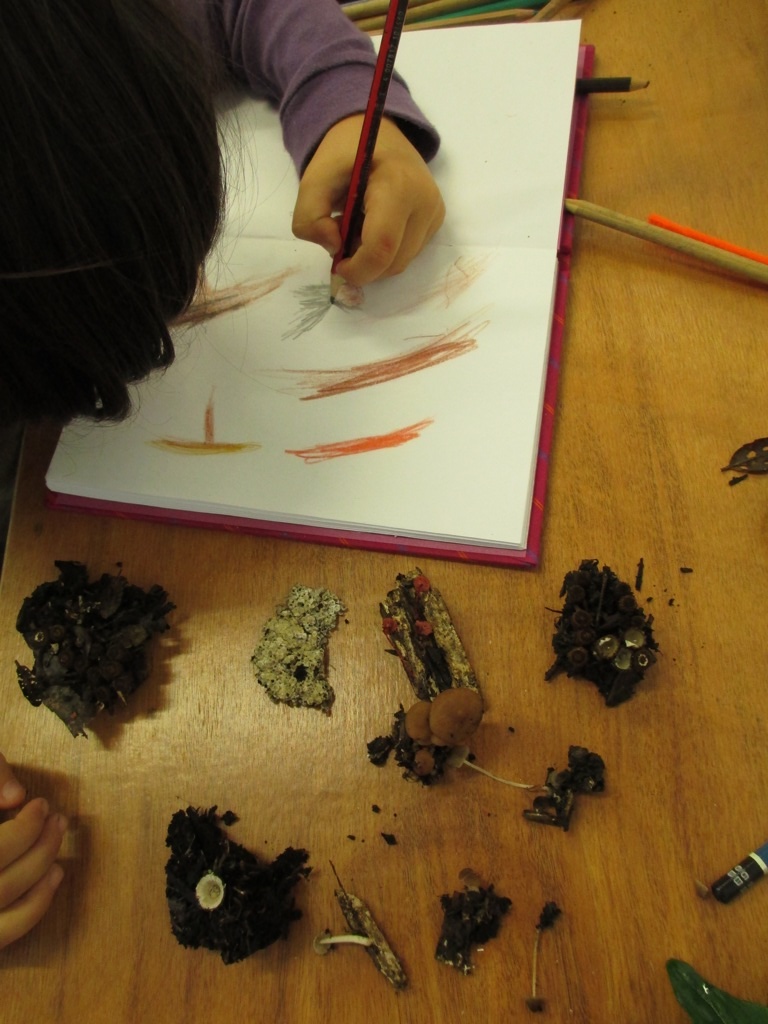
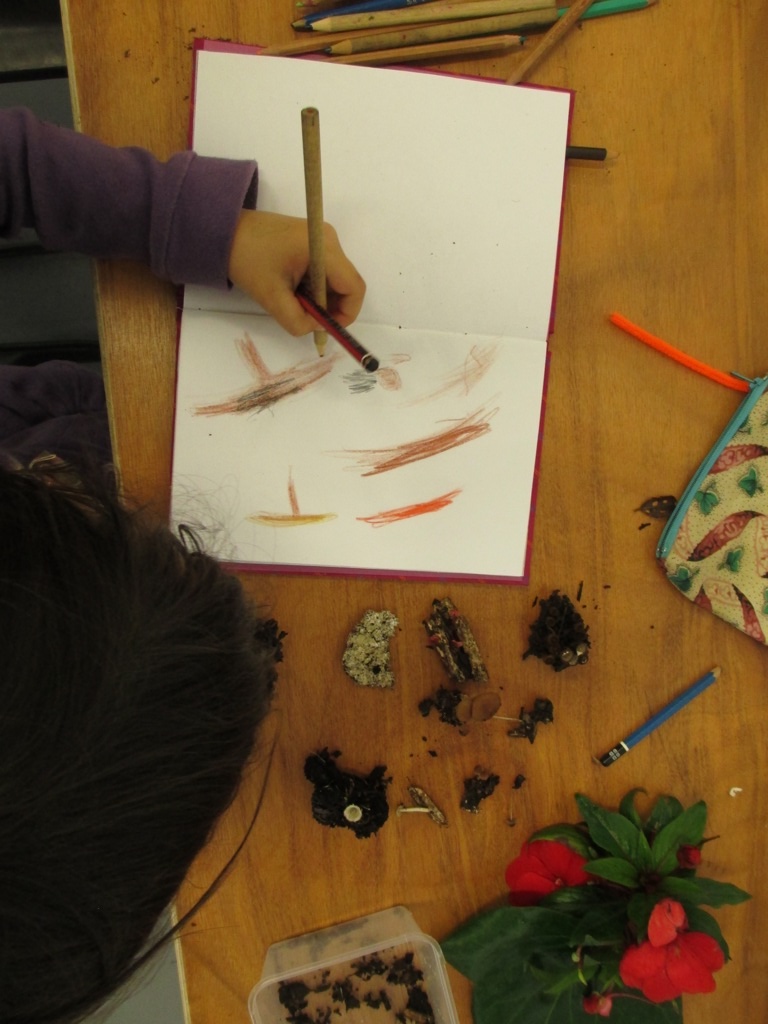
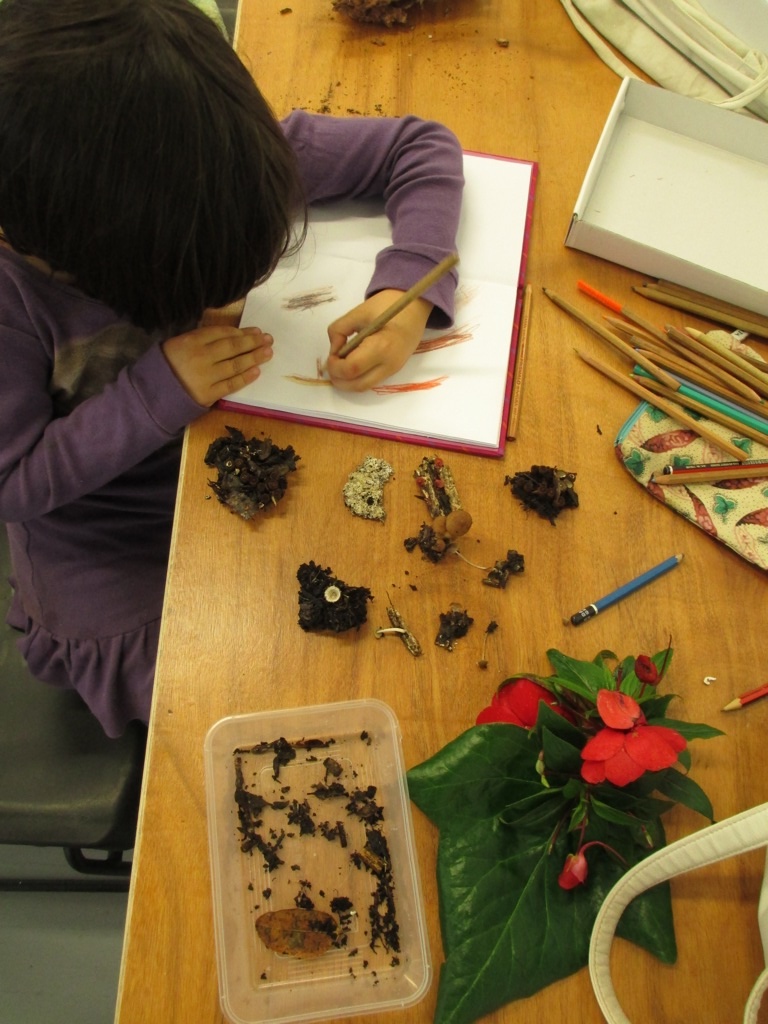
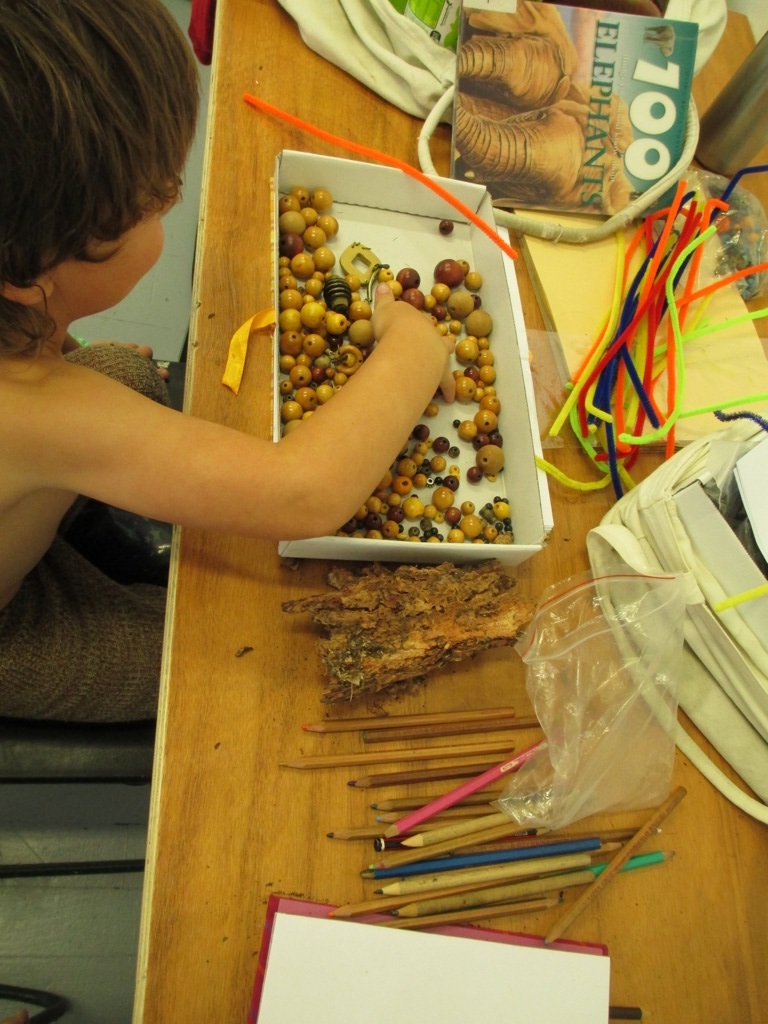
We had not planned to do a fungi hunt, but just stepped out between the heavy showers to explore, so this was very exciting. I am making sure we take notebooks and colour pencils with us these days, so it was great to take the time to do some documentation.
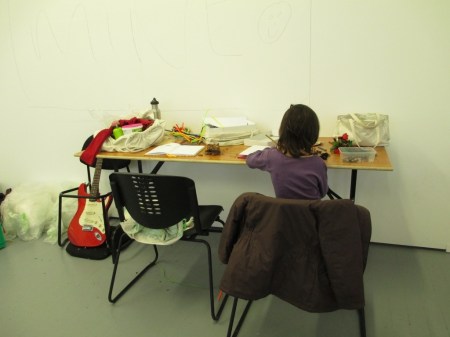
Hooray for some table space at art school!
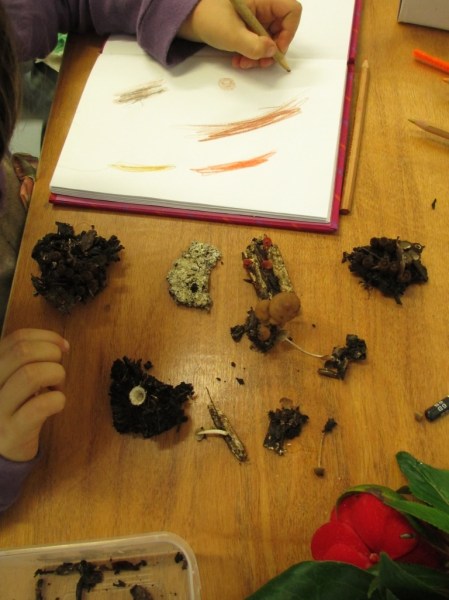
Finding the correct browns…
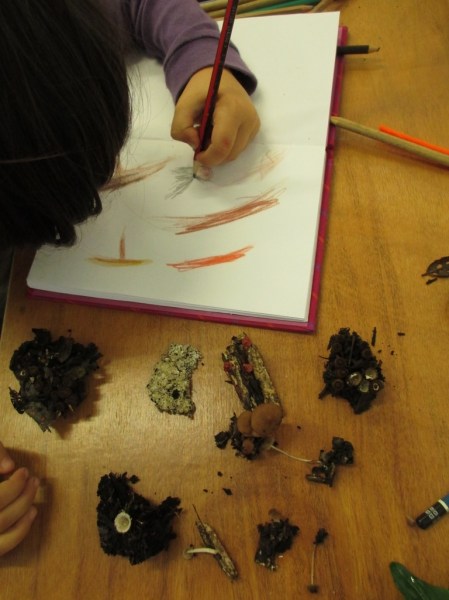
I like the two pencils in one hand technique!
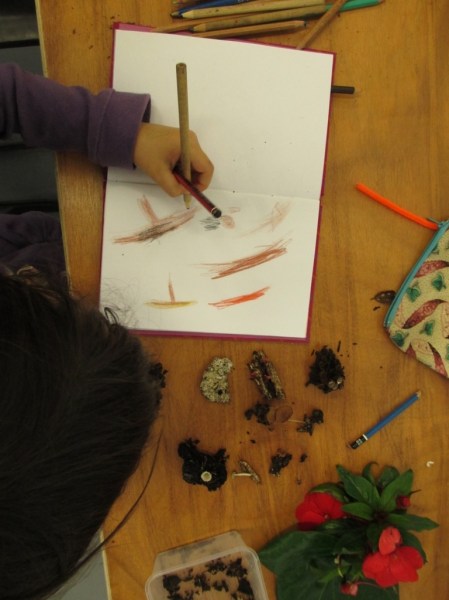
All in all, a very successful and unplanned expedition. Luna tells me she is a barkologist/biologist these days, good times! I was also very impressed with how Luna’s knowledge of fungi has deepened since last autumn, and her recall of what we did a year ago. I’m so glad we can dig deeper in these interests.
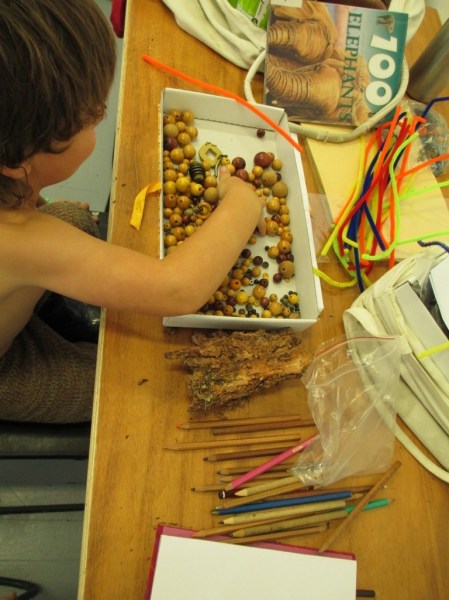
Blake was a bit more into the sound of beads dropping on the ground and moving around in the shoe box than doing any drawing…
There are a few things to keep in mind when you are learning about fungi. Especially as some varieties are poisonous, it’s best not to touch it, unless you are sure the specimen is harmless. Wear gloves and wash your hands afterwards, you don’t want any traces on your hands when you eat your lunch.
You don’t really need to bring anything, you can simply explore, or if you like to get a bit more involved, a container, sticks or a small trowel will be ideal for digging up any specimens you wish to take away to study. Make a note of where you find each species, and remember that the mushroom or toadstool is best described as the fruit, and so there may be a network of hidden ‘roots’ that you need to keep attached to the piece you wish to take away.
A camera is ideal for less intrusive documentation, as is a sketch book and pencils. A magnifying glass is also good to have on hand, and a small ruler or tape measure for size – this helps with identification later on.
Look out for some good fungi books at your local library, we have found the following to be good resources:
Pocket book:
A photographic guide to mushrooms and other fungi of NZ
Online:
Landcare research Fungal guide.
-
Tapenade for the long weekend
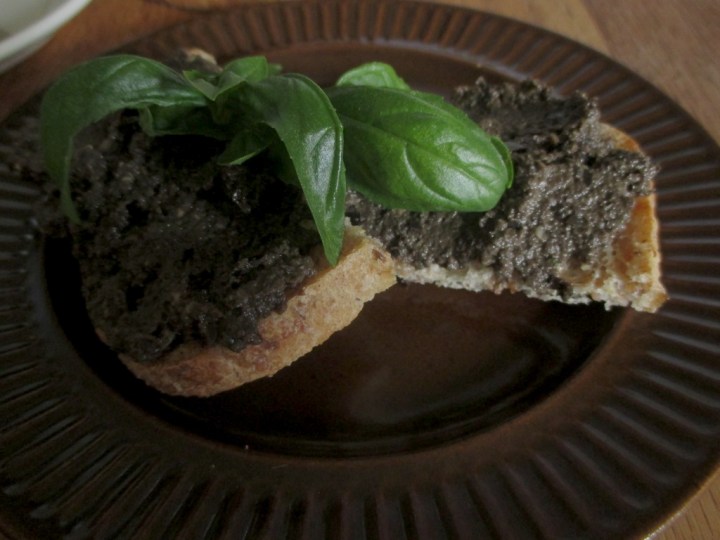
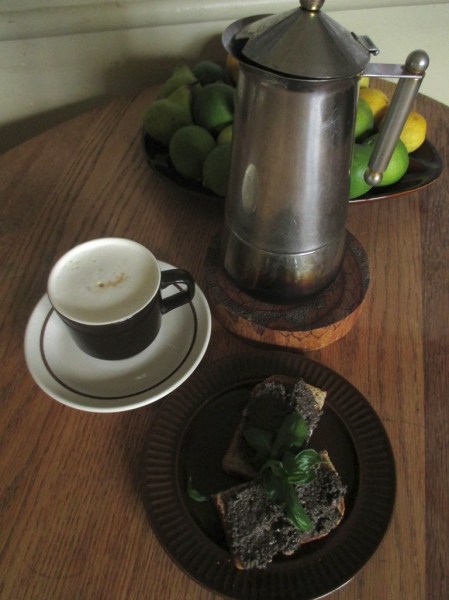
Happy long weekend! I thought I’d share something I have been enjoying.
It’s been a while since I’ve posted anything delicious and foodie, and while everyone is getting all into chocolate just now, I thought I’d strike out into something completely different…
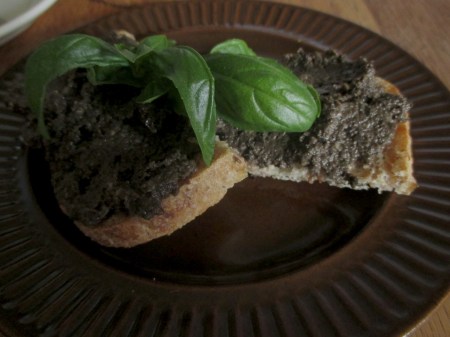
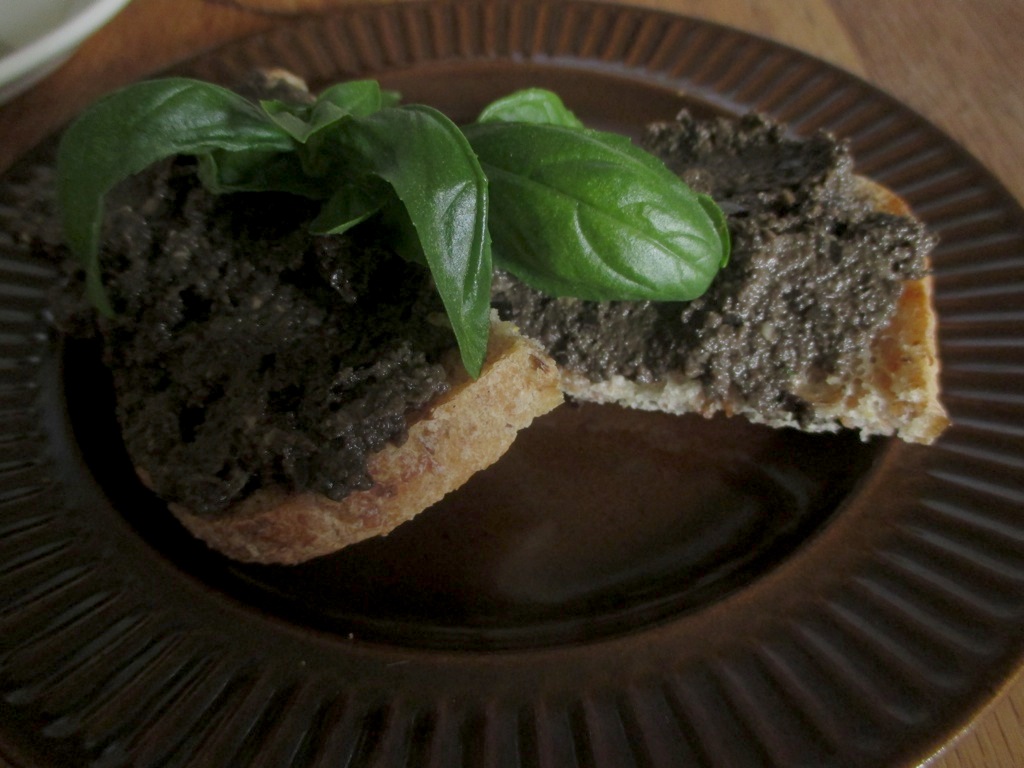
So here is the tapenade I’ve been enjoying lately. I was inspired by a friend turning up at the beach with a jar, ‘Yum!’ I thought, hey that can’t be too hard to make, so I started experimenting. It seems that it usually includes anchovies, so I made a vegan version for you all to enjoy. The recipe that I put together goes something like this:
Into your blender, place the following…
Two cups of pitted black olives
Two or three cloves of garlic
One third of a cup of walnuts
A good swirl of olive oil, maybe two tablespoons
The juice of a large juicy lemon
One or two generous handfuls of fresh basil and/or rocket
Blend to combine, until the olives and walnuts are smooth, or at least a consistent texture. I don’t mind a little chunk of olive in the mix, it’s up to you. Serve on fresh bread, toast, crackers, with salads, pasta, we’ve used it on pizza, use as a base, with a little tomato paste, or dollop on top.
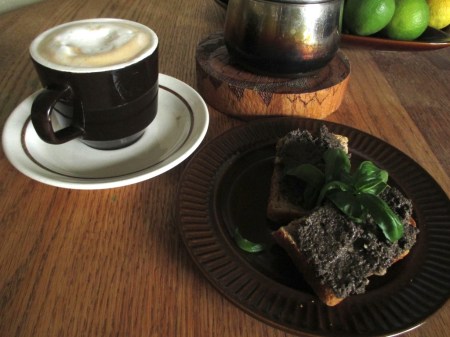
Enjoy!
-
Waihi beach wash up
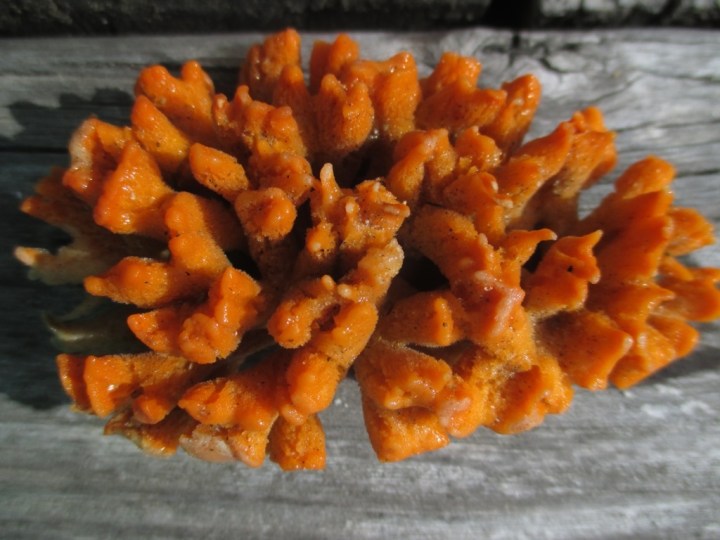
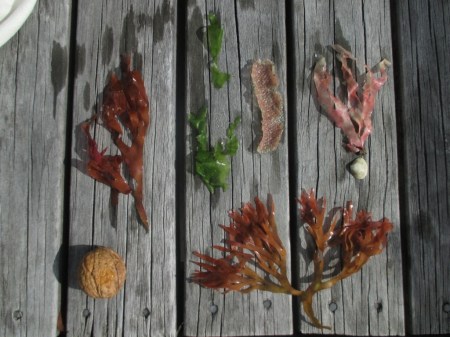
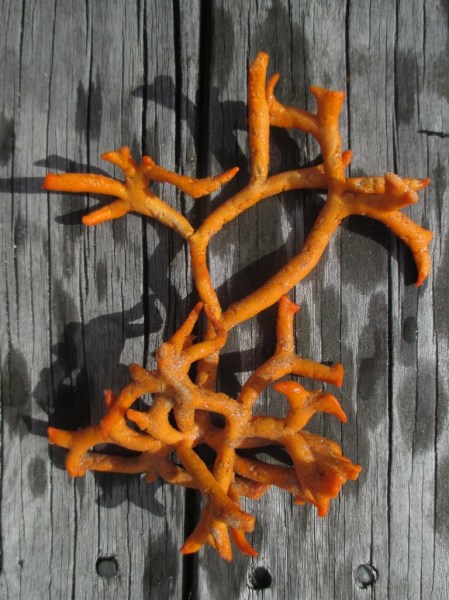
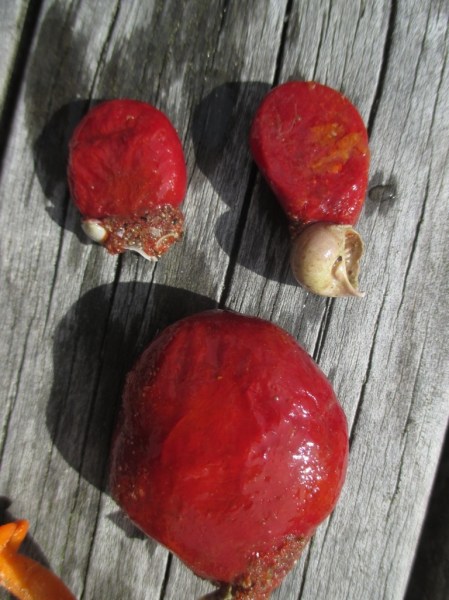
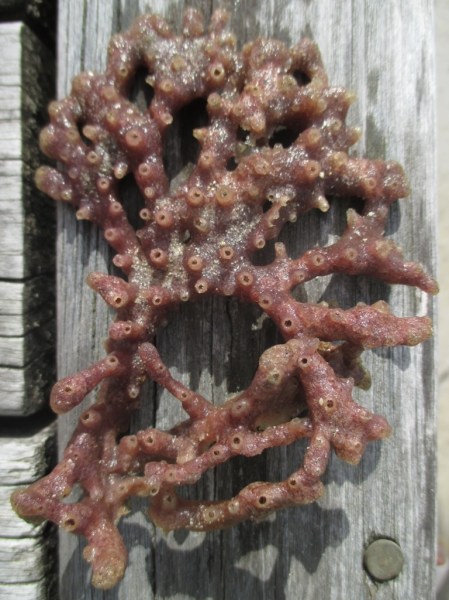
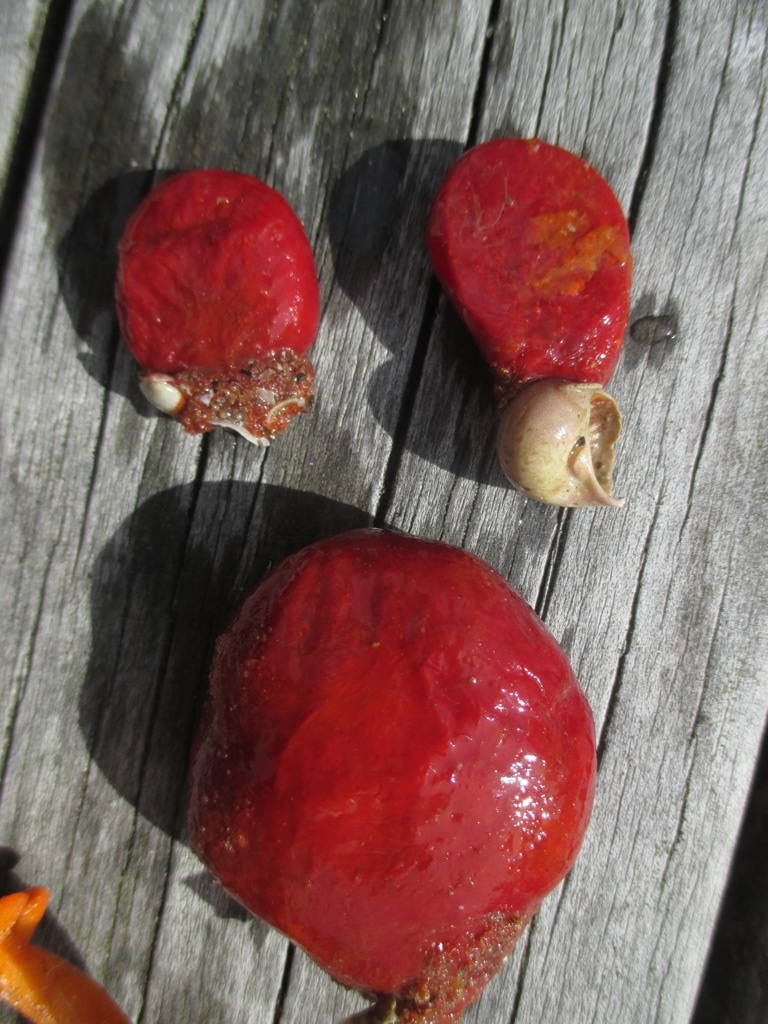
A low tide visit to Wahi Beach revealed some exciting discoveries, from fresh green sea lettuce and vibrant red sea sponges, to a dead eagle ray and a small shark head. Here are some photos I took when we returned from the beach.
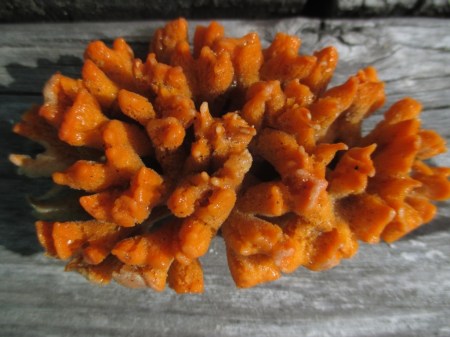
Sea sponges…
Sea squirts or sponges? The most vibrant red.
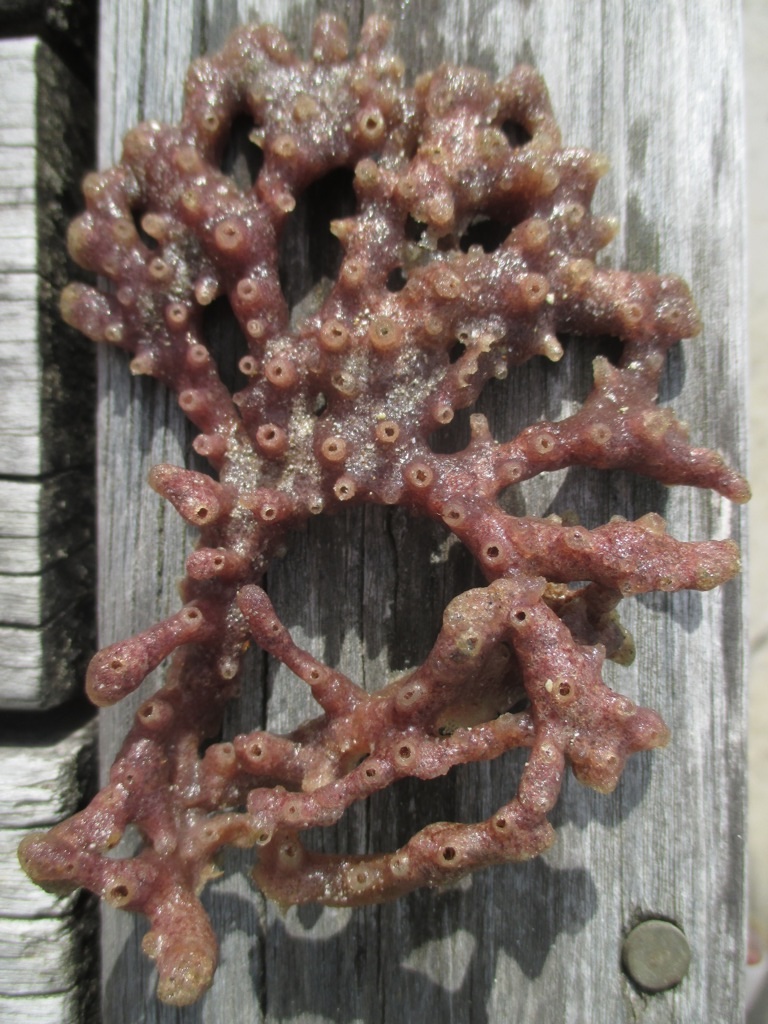
Unusual purple – pink looking sea sponge.
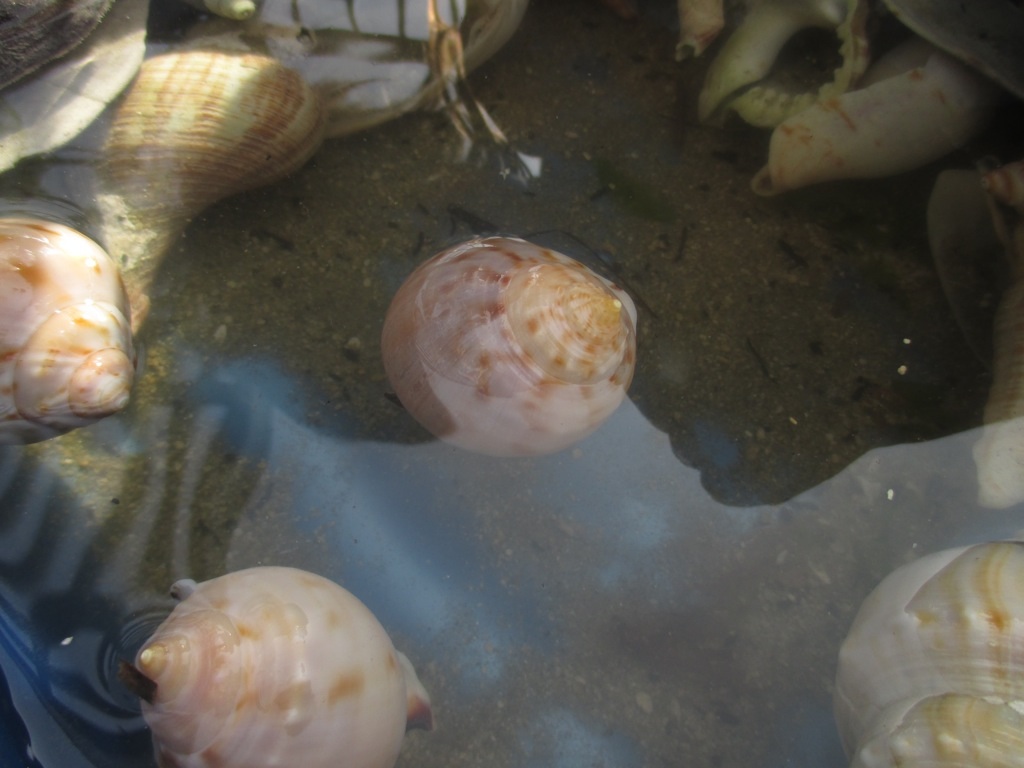
We carefully washed and investigated our finds, some of the pieces of algae had started to dry out, but we soon discovered that a moment in the water and they softened again. We washed off sand, and looked at the ‘new species of shell that we have never found before!’ (as Luna so excitedly declared) which we found to be fine enough to capture air and stay afloat, while other heavier shells sunk to the bottom of the container.
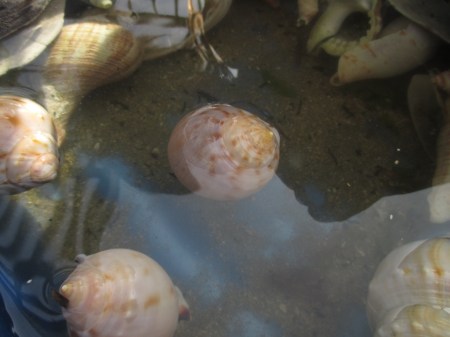
Luna and Blake enjoyed spending the afternoon washing and experimenting with their finds, lots of fun!
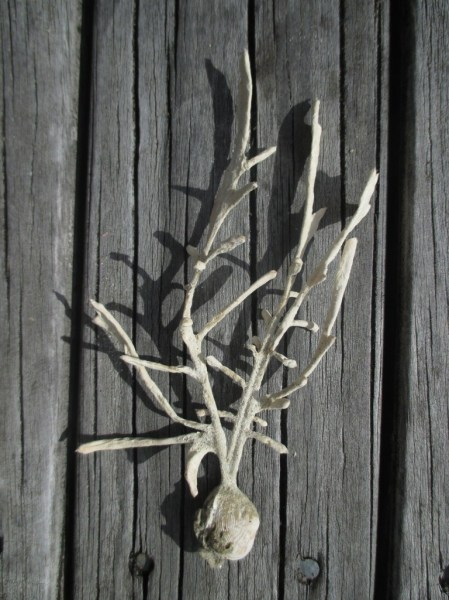
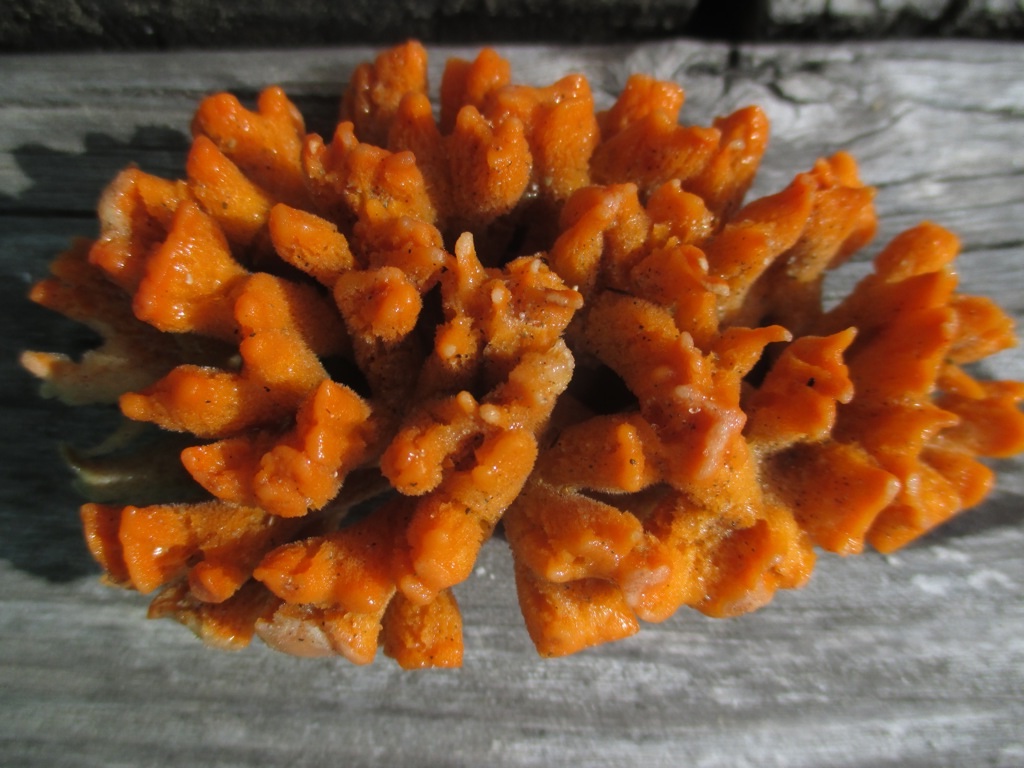
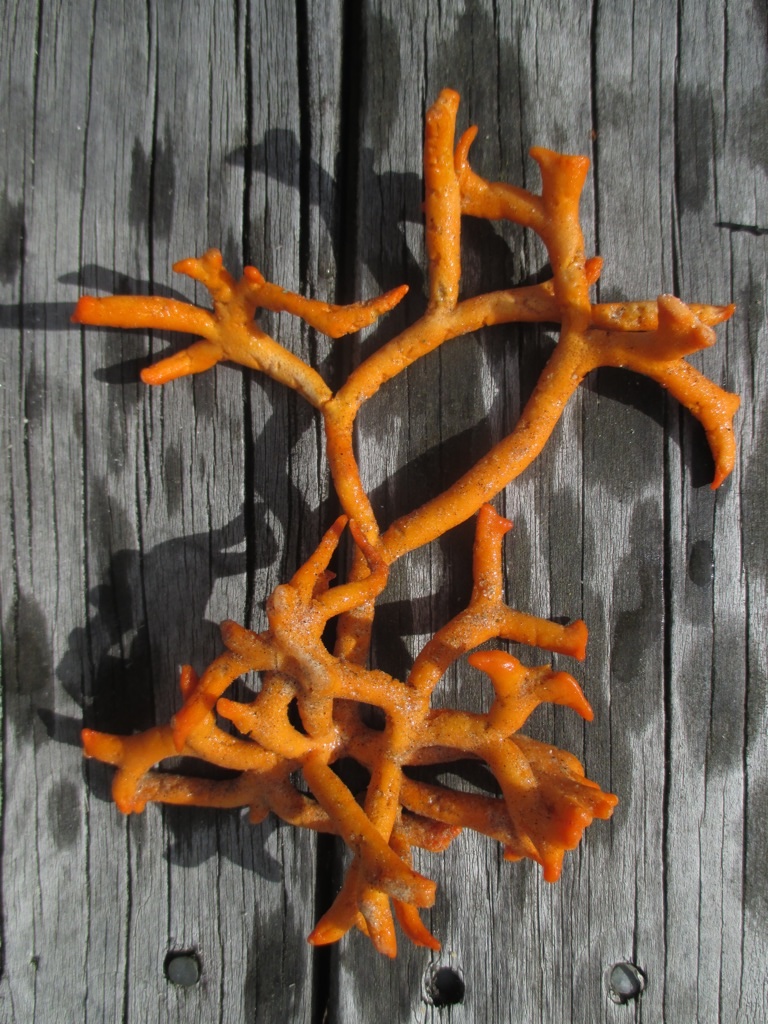
I was most interested in these older, drier bivalves that had bleached white sponges growing from them, in what appears to be a parasitic relationship.
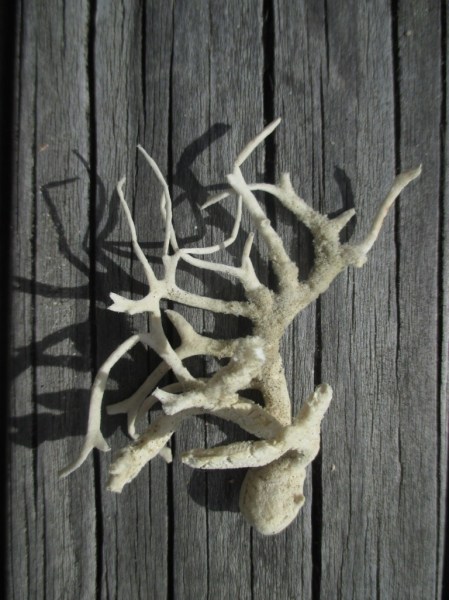
They are like delicate antlers, so fragile and fine.
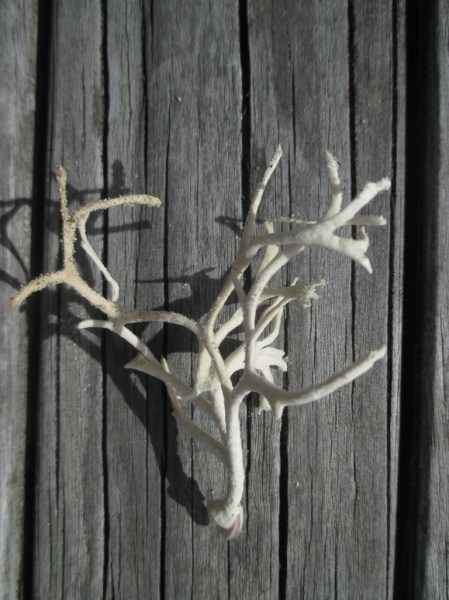
What was amazing, is the difference in size, the small shells that the sponges appear to sprout from were around 10 – 20mm in size, while the sponges were all over 100mm. Bizarre and beautiful.
-
Collaborative vintage sewing
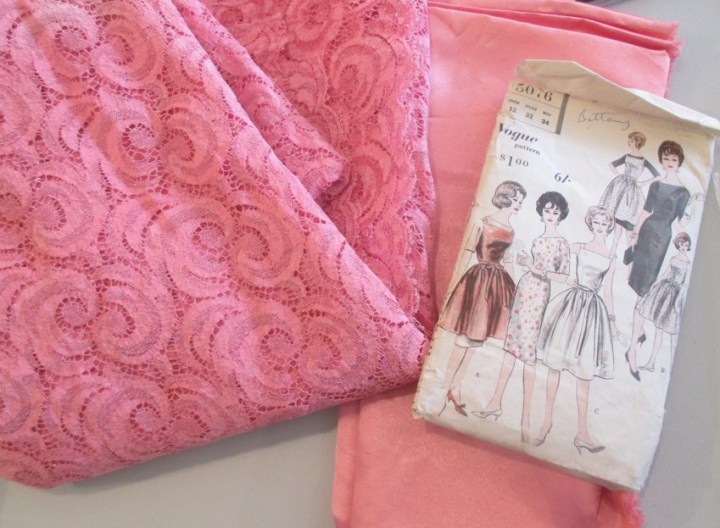
Here is a little sneak peek into a really exciting vintage sewing project that I have been looking forward to sharing with my readers for a wee while. I have the wonderful opportunity to collaborate with a very experienced and talented sewer, a woman who knows authentic techniques and has a deep understanding – and love – of vintage fashion and textiles. I’ll be documenting the process, the techniques and new skills we cover, in the making… all will be revealed, so watch this space!
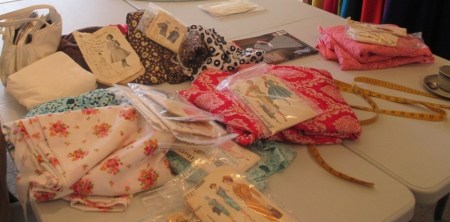
This weekend we met, looked over some of my patterns and fabrics, talked about each other’s work and how elegant vintage styles are, and of course we drank tea. Even though we were planning on working on just the one vintage sewing project, it was important to look at as many patterns and beautiful fabrics as possible… ahem.
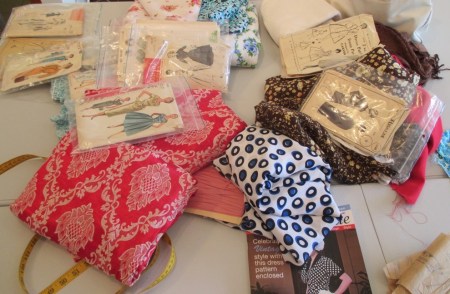
Earlier I had gone through my vintage pattern and fabric stash, looking for ideas for the perfect project… what I wanted for this was a fabulous (and slightly intimidating) vintage pattern that required skills or techniques I haven’t used, perhaps one that missed instructions or need to be up or down sized, something that would be a steep learning curve. It would be ideal if I could use a glorious piece of fabric, perhaps something vintage that I have been hesitant to cut into.
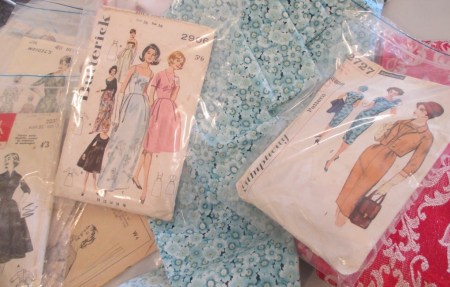
We looked at a number of different project ideas, I have two drops of unused vintage curtains, some fabrics from my nana’s stash, some lovely vintage floral fabric and some more contemporary fabrics. I have a couple of smaller patterns, bust size 32, when I usually go for a 34 or 36, a couple here that use under arm gussets, one that missed instructions, and a couple that were dresses with bolero jackets. It was so exciting, I want to make the lot, and NOW!
This is one of the finalists, I have about three meters of pink vintage lace, which was just asking to be made into an over skirt, perhaps over a colour matched pink wiggle dress, Balenciaga style… But the slightly more sensible side of me opted for less lace, more… more… actually, just less lace.
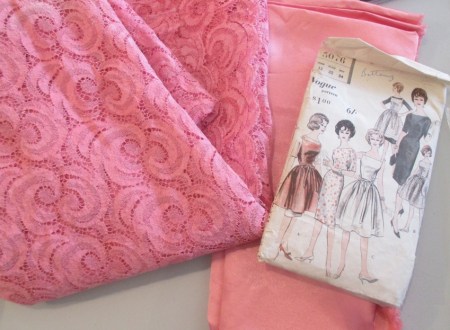
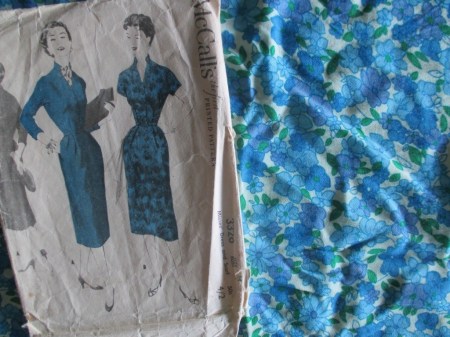
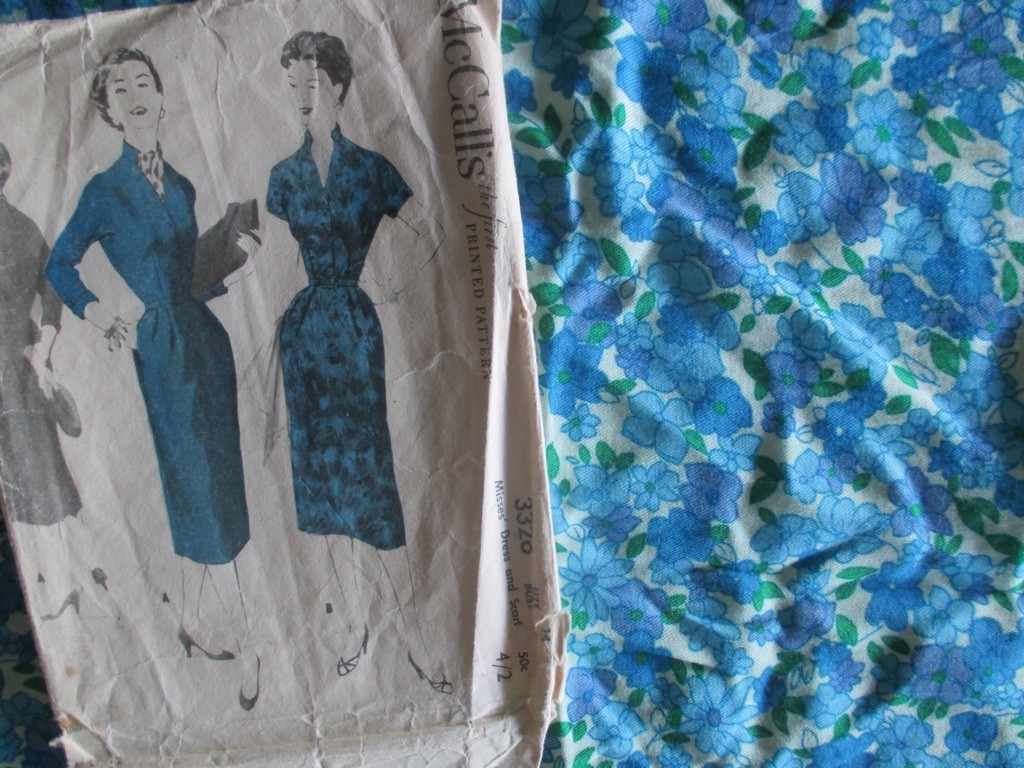
One generous friend, Anissa over at growmamma gave me this lovely piece of vintage fabric, which I wanted to use for something very special, but also wearable. Here it is along side the pattern that won on the day, McCall’s 3326.
Somewhat of a challenge to make it work, the fabric is just under the required length noted on the envelope, I have left in the hands of my capable tutor, while she checks the measurements, and ensures that It Will Fit and we’ll meet again soon, to get started!
We took down measurements, talked project design and development, lining, and how to achieve the best fit for a day dress. I am sorting out the notions, we will make self covered buttons, a self belt and how we may work carefully with limited fabric.
Yipeee! So very exciting.
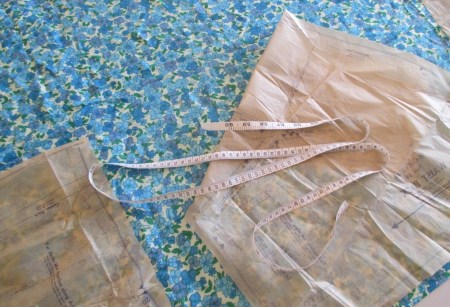
Do you sew vintage? Would you love to work with someone more experienced? Have you thought of attending a workshop where you have the opportunity to work with real vintage patterns? Let me know, and follow along with this project. x
-
Barnum’s Bones
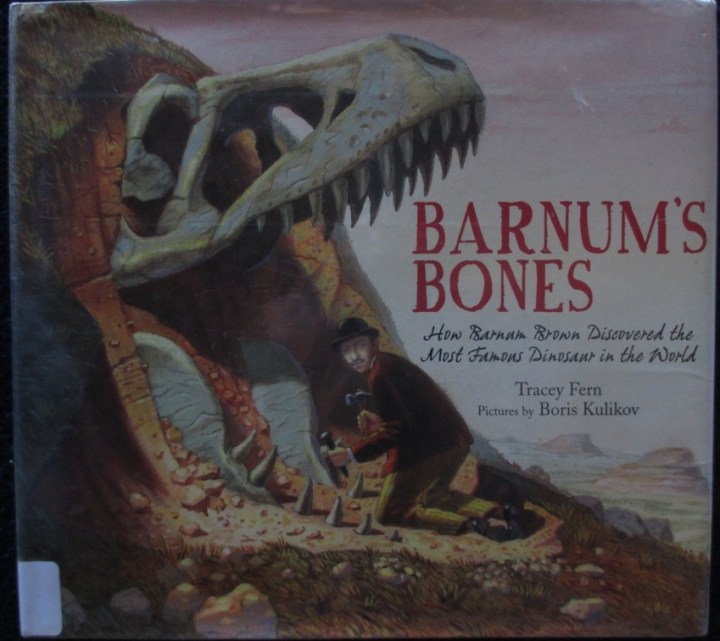
Barnum’s Bones: How Barnum Brown Discovered the Most Famous Dinosaur in the World, by Tracey Fern, pictures by Boris Kulikov.
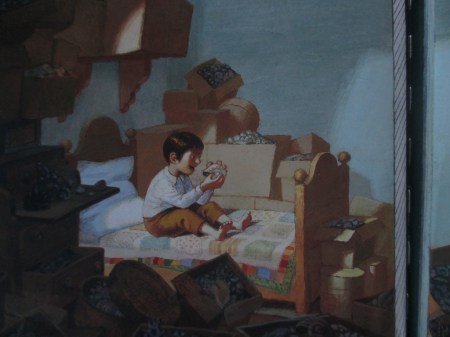
We have been learning about people who had lives full of adventure, pursuing their dreams and passions, and Luna and Blake have loved the story of Barmun Brown. If you have a small person into fossils and dinosaur bones they are probably going to dig this book!
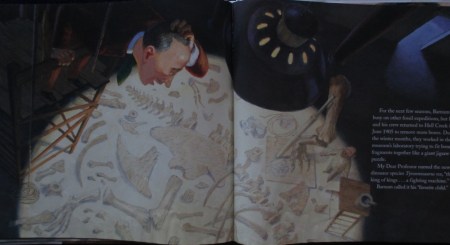
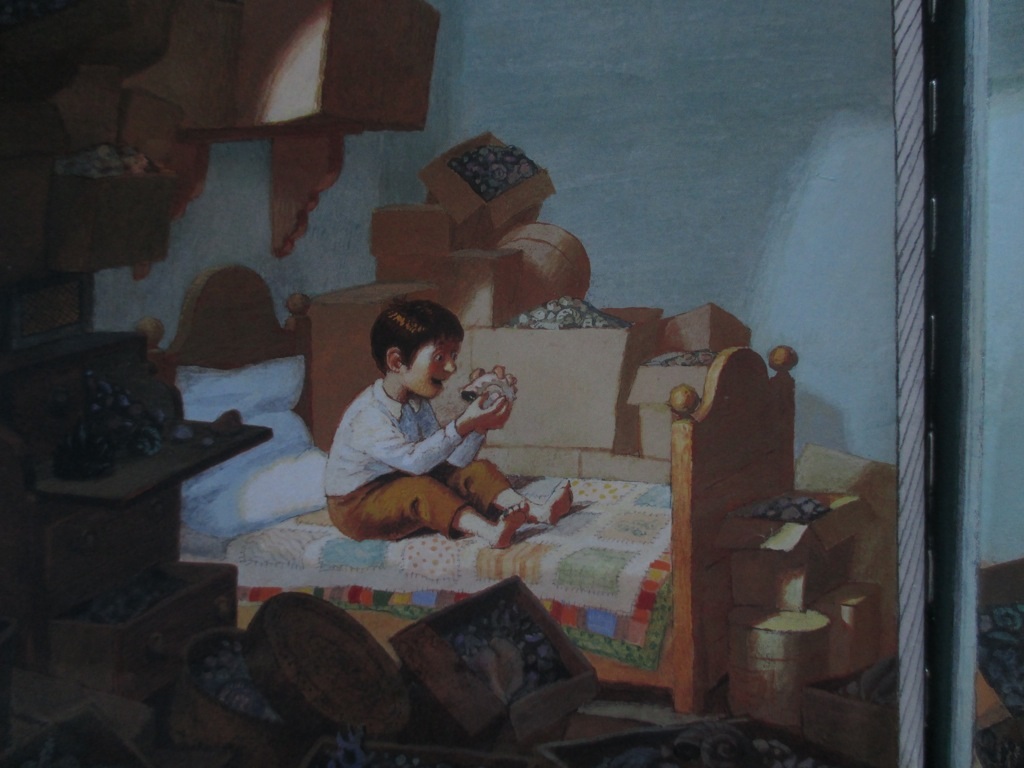
As a child Barnum was obsessed with collecting fossil clams and sea shells, apparently filling his bedroom with his collection…he went on to find fossils all over the world, contributing hugely to the growing field of palaeontology. The illustrations are imaginative and fun, and the story conveys the amount of time and research that has gone into building the understanding we have of dinosaurs.
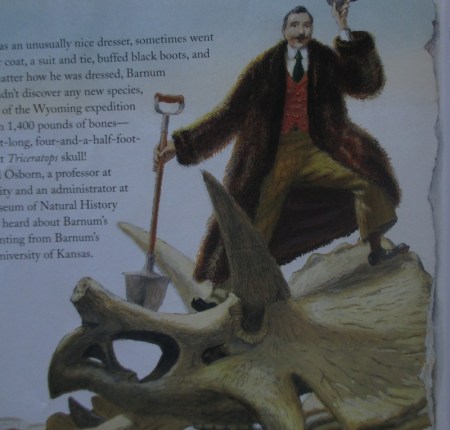
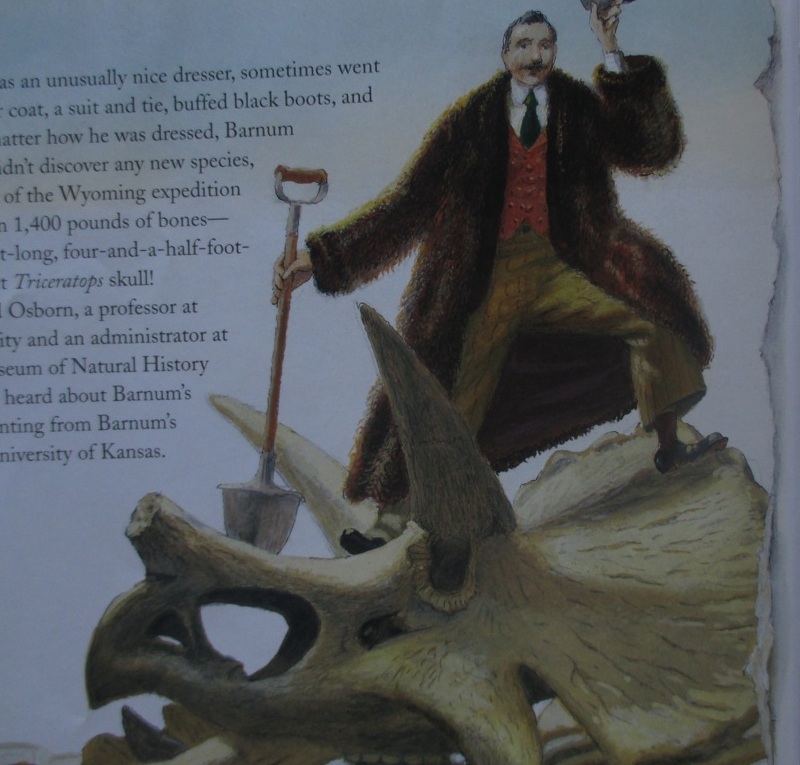
There are some biographical notes at the end, and I was particularly delighted to read that Barnum was known to work onsite in his finest threads, polished shoes, fur coat and bowler hat – now that’s style!
artist, writer, curator, mentor


















 Angela Rowe