
-
Fashion Revolution reading

If you are somewhat thoughtful and conscious of the choices you have (and many you don’t have) around how and where you spend your money, you might agree that conspicuous and excessive consumption is making our planet far less habitable and endangering lives of humans and animals it sustains.

I’m not going to pretend that buying locally produced, organic, fairly traded, good quality ethical goods are affordable for the majority of the population…..which is part of the problem, but what I can do is share some books, some ideas, and hey, you could chose just one thing to work on yourself.
Spend less, and chose carefully seems to be the mantra to adopt, if you have the means to do so.
I stepped back from dependance on fast fashion a few years ago now, motivated by a limited budget, lack of choice. I had access to my nanas sewing machine, some fabrics and notions to get me started sewing my own. I was interested in reducing the impact of my lifestyle on the planet, this is a comfortable idea…however, I still love clothes, the making, experimenting, and I still *want* more. But felt there was little impact I could really make, particularly with regards to my spending power.
When I had stopped working 9-5, even longer ago, I was able to get out to the op shops for clothing before I could make my own. Once you can move beyond the grim reality of (most of) our collective global / Western fashion habits, it’s fascinating as a problem. Here are some ‘best practice’ ideas that I have employed over the years, many require a change in thinking, an investment of time, and learning new skills. Lots of them are quite trendy now, the ideas, maybe more than the actual practice…
Use what you have and learn to care for it well
All that washing, tumble drying and leaving on the floor will wear your clothes out faster. Check the care labels on your clothes, you can probably wash your clothes in cold water, and if you can dry your clothes in the air inside or out, they will last longer, all that heat will perish elastic and eventually breakdown textile fibres. If you only wash clothes if they are soiled, rather than after every wear, they will serve you for longer. If you have a good pair of shoes, keep them clean and have them re-soled.
Make do and Mend
But actually learn to do it well, can you replace a button or repair a split seam? Take up a hem? Make sure you have the basic kit, a needle and thread, scissors somewhere at home. Then familiarise yourself with a few simple skills, you can find tutorials in books or the internet, or even ask someone you know to show you how.
Save to spend more on better quality
This can be a deal breaker for some, I’ve lived on a tight budget and had to go without and make do with second hand, I rarely buy anything new.. The thing is sometimes, those second hand garments may just last you longer than fresh of the rack. So look for quality pieces, second hand, and if you can afford to buy new, chose the best quality you can find, and if you have time, research those brands and find out who are doing well by their workers and the environment and give them your support (you can try this article for a place to start if you are in Aotearoa).
Think beyond the current season and trend
There are loads of ‘in my day’ anecdotes about clothing, for instance; there was that once or twice yearly shop for the family, that new winter coat, the new shoes, those long awaited upgrades to the wardrobe. The current fast fashion consumer model is based on FOMO (fear of missing out) and our desire to have it all (aspirational celebrity culture) and have it now. Think about – and look for – classics, tap into what you love to wear, what speaks to your heart and take care of those clothes.
Love your clothes
Having a few special pieces in the wardrobe used to be a real thing, the ball dress (or prom dress) maybe a loved pair of slippers, that really cozy winter jumper. I can look back and remember items of clothing that I loved as a child, I have one pair of jeans in my life at the moment, Lee jeans, I really love them, I have had them for ten + years (I’m also not a big jean wearer). If you own clothes that you love, maybe they bring back memories, or maybe they are just really comfy, maybe they just speak to your soul, you’ll probably care for them, and want to wear them often. Not leave them languishing in a bottom drawer or back of the wardrobe…
Learn to make a garment
There is only one way to really appreciate the work, skill and time involved in making clothes, and that is to make something to wear. There is little instant gratification from sewing. It is about the process, the materials, applying skills, learning and problem solving, then (hopefully) loving the result, flaws and all. If you don’t love it, maybe you’l learn from it. When you have given many hours or many days (ahem, weeks, months…) to a garment making project, you’re less likely to wear it while cleaning the car or toss it if a seam pops or a button falls off. You might even hang it up with pride at the end of the day, maybe, even, soak out a stain…
Buy second hand and preloved
Massive amounts of textiles are going into landfills every year, choosing second hand, breaks that cycle, and lets clothing give for longer, slowing things down a touch. The challenge is of course, that in recent years, lower and lower quality textiles and garment design and manufacturing has limited the lifecycle of garments. It’s hard to change that by the time the cheap t’shirt is in your hands. So, chose carefully.
Clothes swap
Like buying second hand, clothes swapping has been around forever, and people have been doing it on the down-low as a way to get by, connect with their community and, circumvent the the mainstream fashion industry, intentionally or not. You could search for something happening in your city, or start your own, whether it’s just a few good friends or a large scale event, it is an effective way to ‘shop’, for clothes and have fun.
Fashion with a narrative
I came a cross this as a term in Lucy Siegle’s book, To Die For, is Fashion Wearing out the World? Like most of the antidotes to Fast Fashion, it’s not a new idea. It basically means, forming a connection with your clothes, like ‘Love your clothes’ above, it’s about reconnecting ourselves with our most intimate possessions. It’s not so much the “OMG I found this on sale for five bucks!” wear it for a summer and biff it. Siegle was specifically referring to ‘ethical’ fashion buying, choosing, say, jandals made from old tires, fashion items with a backstory, like garments made from repurposed textiles. Something I’ve noticed when I’m around real fashion and textile lovers, is that they know about the clothes they wear, it might be that coat a nana wore, or that pair of boots shopped carefully for, happily taken out each winter, or maybe a stunning second hand dress worn to weddings or work do’s. It might be that amazing second hand or op shop score, your size, style and a bargain price.
Want more to digest?
So here’s a reading list to get you started:

Overdressed: The Shockingly High Cost of Cheap Fashion by Elizabeth L. Cline
From a US perspective, Cline unpicks the fast fashion system and the unrelenting consumption of “cheap”, poor quality clothing, starting with her own wardrobe. You’ll read about the acceleration of the design – manufacture – on the rack process of fashion, where earlier generations may have planned with anticipation a buy from the new winter or summer season clothes, Zara, at the extreme of fast fashion these days, can complete the process of design to the store rack in two weeks (pp 99).
So what has changed? Consumers used to understand the composition of the textiles that made up with garments they were buying, quality, was upper most when buying, you would shop for the best you could afford, so you would go for the fabrics that would last, like wool, cotton or silk. Around the middle of last century, new developments in plastics and man made fibres changed clothing, while they were adopted by consumers, the new synthetic textiles never quite held the same cache as the luxury natural fibres, nor did they wear well. And when we are talking about fashion we are also talking about the possibility of purchasing status, the idea of crossing class barriers, at least on the surface.
In her book, Cline tries to understand the fast fashion machine through approaching manufacturers in China, this is an eye opener if you are unfamiliar with the back story of clothing. Still worth a read if you are… Cline talks about the obsession with buying and maxing out visas on shopping and the influence of Celebrities and television shows like Sex in the City.
But it’s not all bad news, Cline also connects with people pushing back against the machine, the make, alter and mend movements, slow fashion and designers at the forefront of future fashion.
It is a good read!
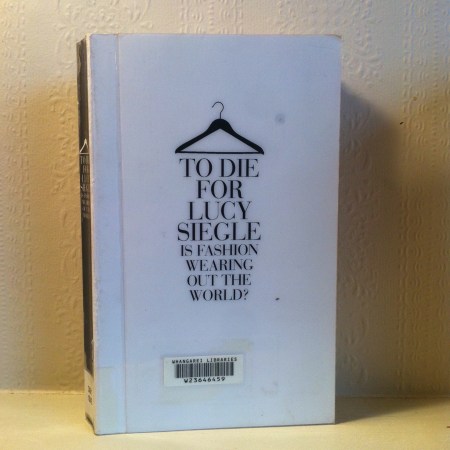
To Die For: Is Fashion Wearing Out the World? by Lucy Siegle
From a British perspective, this is a really comprehensive read, covering the scope of the fashion system, from the designers, makers and textile growers/manufactures. In the chapter, Fashion Crimes and Fashion victims, Siegle shines light on child labour and debt slavery behind some of our cheaper and more glitzy garments, that sequinned top? Those babies are hand stitched to create that design..Home workers are the least protected of the masses of people exploited by the rag trade. Work is outsourced to them via factory managers, and they do not enjoy any labour or health and safety benefits (if any) factory works may receive, such as minimum wage and overtime guidelines. Siegle takes us through a day in the life of a garment worker…
In Shop and Toss, Throwaway Fashion, Siegle brings up the uncomfortable question of what happens to the clothing we discard? Whether that be in the bin, via a ‘recycling’ network, like clothing bins we have here. Basically, our low quality cheap clothing becomes someone else’s problem, not the, ah, romantic ‘giving it a new life’ we might assume.
Siegle asks if there is a pace for Eco fashion in Big Fashion? Is it just an oxymoron? Are there any corporations making real changes in design and manufacture? What about ‘natural’ textiles, like cotton, leather and other animal products? Steal yourself for what really happens to animals, so we can enjoy a little furry glamour. Then there is the traditional and most common production of leather using Chromium, which rivals oil based vegan leathers when it comes to environmental damage and cost of human lives. It’s messy and complex, but with more information we can make better choices.
Siegel concludes with stories of people pushing back, looking at a range of designers and concepts to encourage consumers to be more thoughtful and how to buy better.
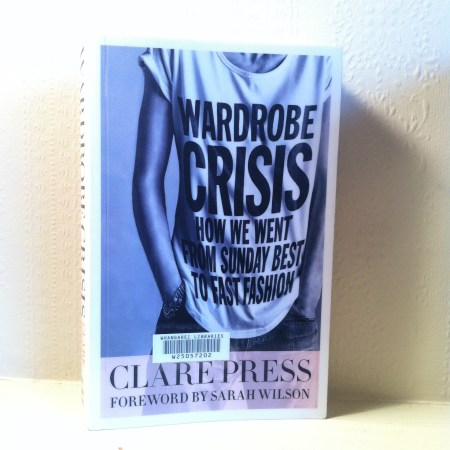
Wardrobe Crisis: How We Went From Sunday Best to Fast Fashion by Clare Press
A little closer to (my) home, Clare Press writes from Australia, with another perspective on the whole mess. She brings to the table psychological aspects of fashion and consumption, how and why we love clothes, and why we can’t seem to get enough. From Conspicuous consumption and celebrity fashion, to Sumptuary laws established by an elite who understood the power of scarcity and symbolism in maintaining class and control.
Press takes us on a journey of how we, generations ago, would acquire the clothes we needed to live our lives, sweatshops are not really new, poverty is not new, and what we wear has always communicated to others our place, our aspiration and our creativity. In the chapter, Shopping, Seduction and Mr Selfridge, the shift from producers to consumers, and the luxury of time and money to shop for the sake of shopping has taken us to where we are now.
Press also takes us back to the growing of plants for textiles, the human and environmental cost and the challenges faced by designers who are going transparent and taking responsibility for the process and the people behind what we wear. We can learn about Buy Nothing New Month, and other fashionistas challenging the status quo and asking consumers to think about why and how they wear clothes.
Yet another great read!
As I noted above, many of the suggestions for challenging Big Fashion and changing our attitudes are not new, grandparents and great-grandparents could probably teach us all a lot, funny how things come full circle.
Do you have any ideas or good reads around the fashion system and consumption? I’d love a new recommendation!
-
Mycelia:Mycelium, at Geoff Wilson Gallery, the children’s workshop
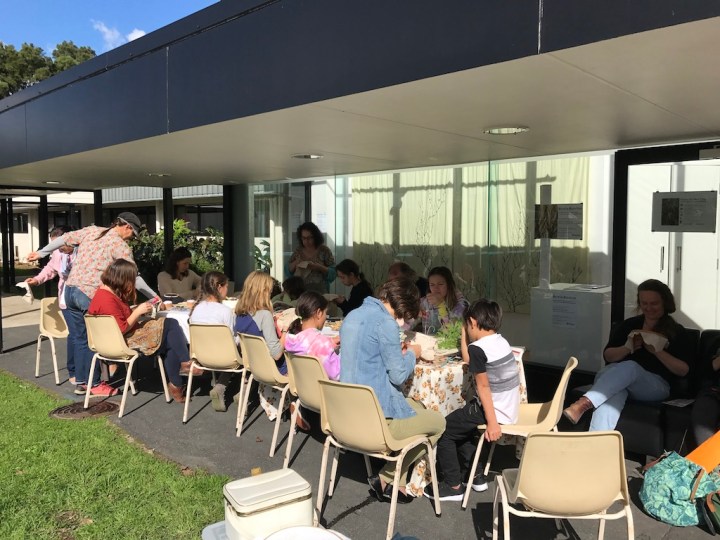
This week I held a children’s workshop to accompany my installation of Mycelia:Mycelium in the window space at the Geoff Wilson Gallery.

It was a great success! We were fortunate to have a bright sunny day, we set up our workspace outside, those who wanted to have a go with some stitching, settled in for some embroidery and conversation, the others who were less keen, made the most of the sunshine and space to create some kind of star wars game, light sabres and all!
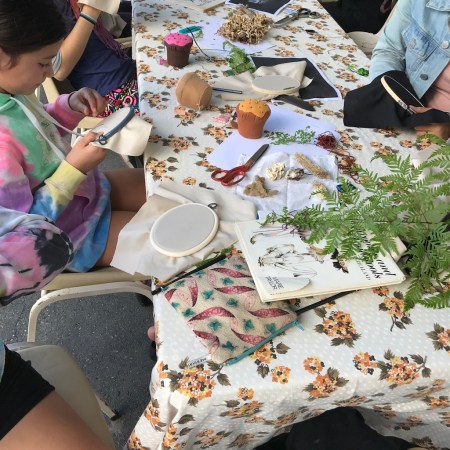
Being relatively new in town, it was really fabulous to have everyone turn out in support, there were thirty of us all together, pretty much everyone I had invited, and I had just enough supplies…phew!
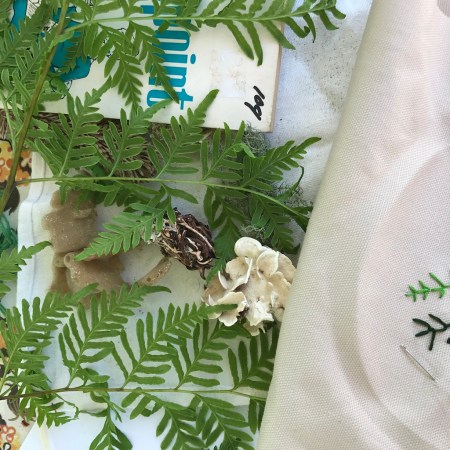
I created an education pack, with information on my work, how and why I started this project, and brought along a range of materials and items we could look at, as starting points for some stitch works. I include this education pack below..
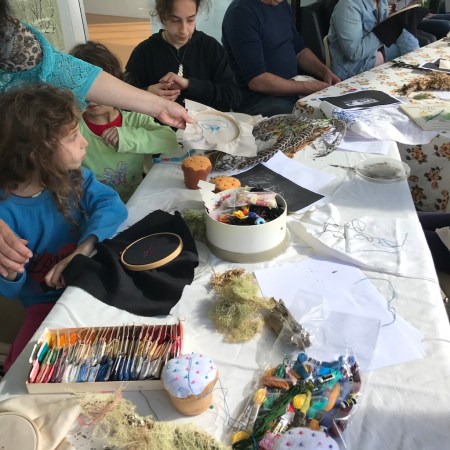
I talked about how, over the years, going on expeditions with Luna and Blake to find fungi, lead to many questions, and a desire to understand this strange organism better, I also talked about how, after years of living in mouldy and damp flats in Auckland, I knew we all have a relationship with fungi, but maybe it’s kind of hidden from view….
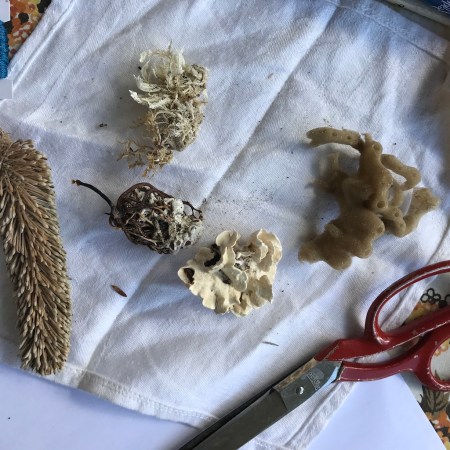
In fact, fungi is everywhere! And it is essential for our survival.
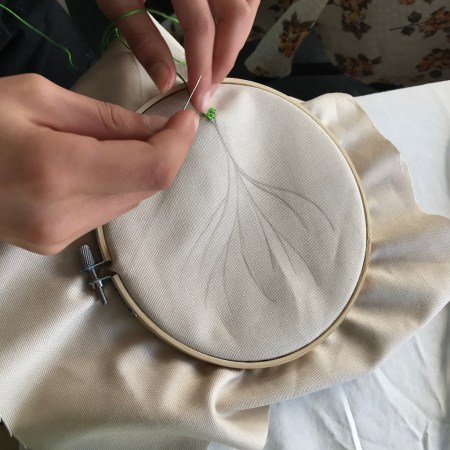
People made some really lovely works, have a look at these samplers…
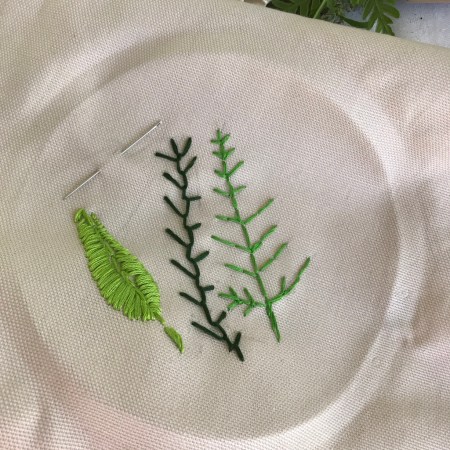
Some took inspiration from the ferns and other leafy objects I brought along…
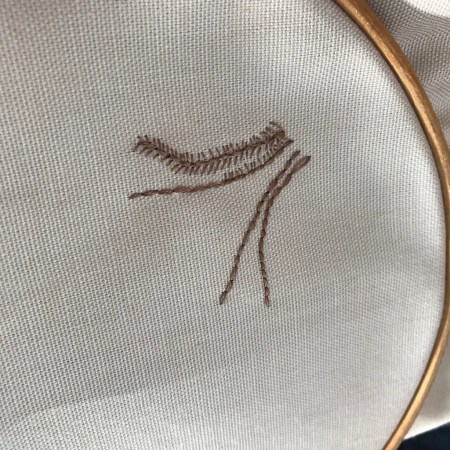
Others created their own work with a completely different narrative….
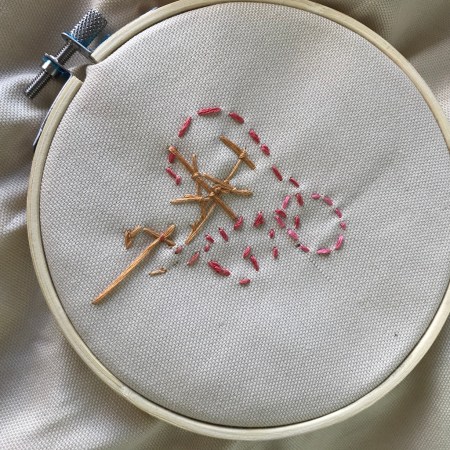
Some completed work on the day, but I think most who started, took their work home to complete in their own time. Perhaps this was a valuable insight into how much is involved in embroidery?
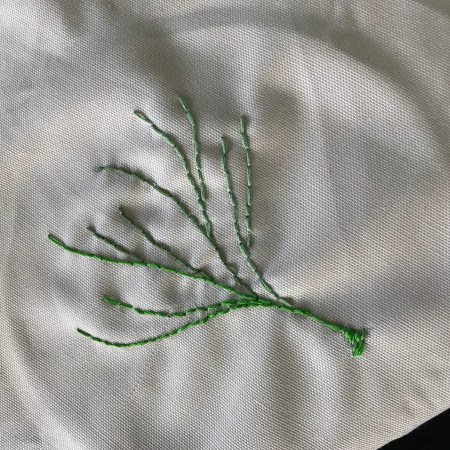
It was interesting to see the spider Tony and Friedan created…

It immediately brought to mind Maman, by Louise Bourgeois…

Image from Wikipedia.
If you are in Whangarei over the next month, do drop in and visit Mycelia:Mycelium, it’s on there until the 7th of September, in the Window Space, so you can view it outside the gallery hours. Check my press release for full details and the gallery website for opening times.
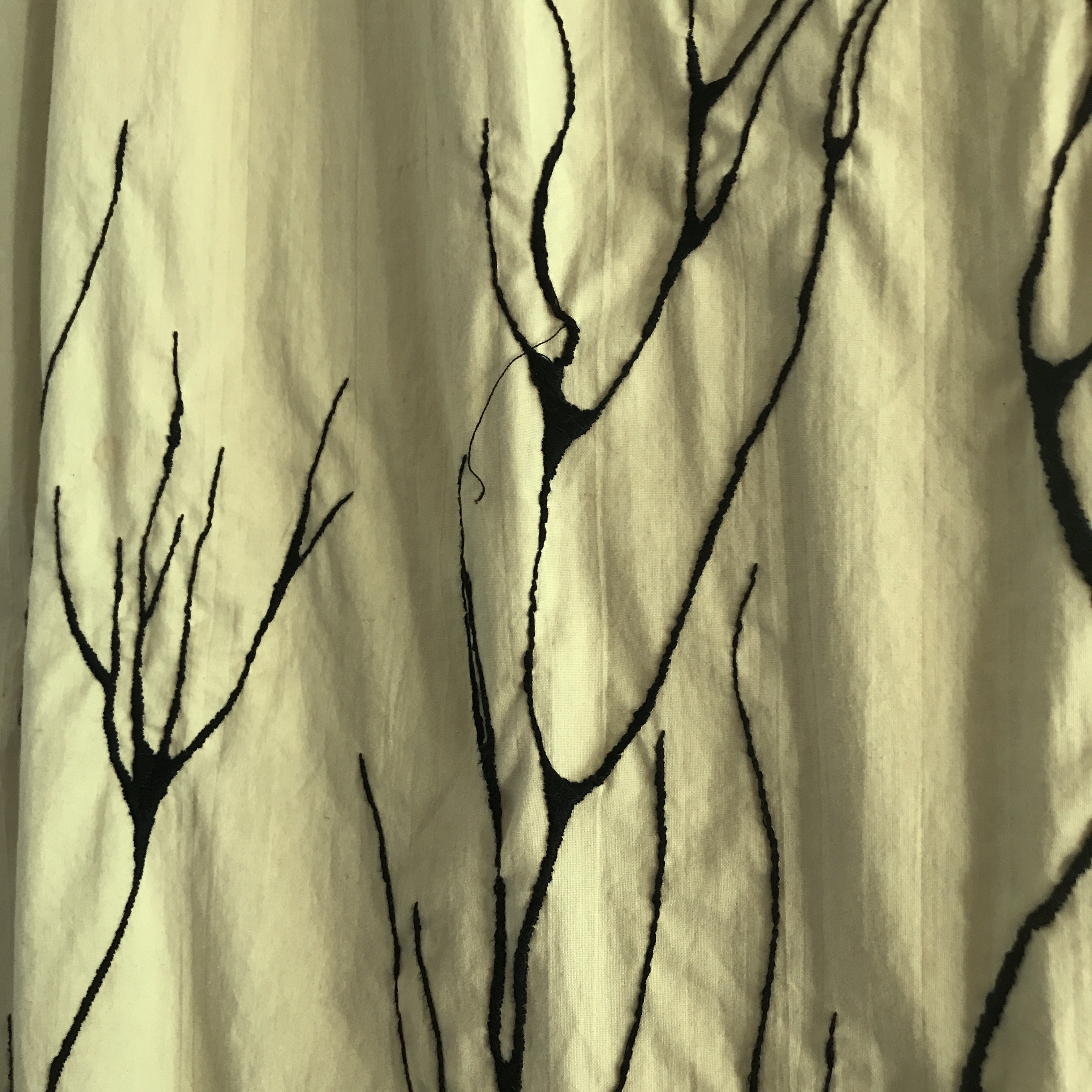

Mycelia/Mycelium, Angela Carter, 2017, Geoff Wilson Gallery, Window Space.
Mycelia/Mycelium, Angela Carter, 2017
Children’s workshop education pack
Fungi:
Did you know…? The study of fungi is called Mycology
Fungi are more closely related animals (us!) than to plants, and they do not photosynthesise.
Fungi are essential for life on earth, this is because of their decomposing action. Without fungi, we would be smothered by huge piles of organic material.
One of the earliest pioneers in the study of fungi is someone you will most certainly know…. but not as a scientist, who could that be? Follow this link to a review of a book on her life….
https://www.brainpickings.org/2015/07/28/beatrix-potter-a-life-in-nature-botany-mycology-fungi/
The largest organism on the planet, according to one source, is not the blue whale or titanosaur, rather one massive fungi under a forrest in Oregan, estimated 2200 years old, and 9.7km2, it is one continuous growth, and as noted by Paul Stamets, “this one fungus has killed the forest above it several times over, and in so doing has built deeper soil layers that allow the growth of ever-larger stands of trees”
https://en.wikipedia.org/wiki/Mycelium
We need fungi to live, but fungi can also make us unwell, like the black mould that can inhabit some homes. This can lead to respiratory illnesses, it’s a big deal for people living in Aotearoa New Zealand right now.
What is fungi?
https://en.wikipedia.org/wiki/Fungus
What is mycelium?
Mycelium is the vegetative part of a fungus or fungus-like bacterial colony, consisting of a mass of branching, thread-like hyphae. The mass of hyphae is sometimes called shiro, especially within the fairy ring fungi. Fungal colonies composed of mycelium are found in and on soil and many other substrates.
More about how it works/digests:
http://www.terrain.net.nz/friends-of-te-henui-group/fungi-te-henui/fungal-mycelia.html
It is through the mycelium that a fungus absorbs nutrients from its environment. It does this in a two-stage process. First, the hyphae secrete enzymes onto or into the food source, which break down biological polymers into smaller units such as monomers. These monomers are then absorbed into the mycelium by facilitated diffusion and active transport. Mycelium is vital in terrestrial and aquatic ecosystems for its role in the decomposition of plant material. It contributes to the organic fraction of soil, and its growth releases carbon dioxide back into the atmosphere. The mycelium of mycorrhizal fungi increases the efficiency of water and nutrient absorption of most plants and confers resistance to some plant pathogens.
The best time to observe fungi is in autumn, that’s the fruiting season.
A fun activity you can do with fungi, is making spore prints, you can read about how Luna, Blake and I created some last autumn.
Other things you can do, to learn more about fungi, you can dig up your compost pile, see if you can find strands of mycelium…you can collect specimens of fungi from the wild, bring them home and see if they grow and reproduce. Explore your garden or a local park, you will find fungi, you might need to get down low, look under bark, rotting wood and other organic material.
Have a read over this fungi hunt I did a few years ago with Luna and Blake, just around a small urban tree area at Auckland Uni.
Enjoy!
-
Mycelia:Mycelium in the Window Space at The Geoff Wilson Gallery

Window Space Gallery
Toi Te Pito Arts Precinct
NorthTec
51 Raumanga Valley Road
Whangarei 0110

Mycelia:Mycelium, 2017, detail.
Press Release
Mycelia:Mycelium, by Angela Rowe.
The hidden world of mycelia and mycelium – a large scale hand embroidery.
Opening, 5.00 – 7pm Friday 4 August. Exhibition on until Thursday 7 September 2017
“Hyphae spread widely through soil, rotten wood… feeding on organic remains, accumulating nutrients until conditions internal and external are right for fruiting” – New Zealand Fungi; an Illustrated Guide (1994). Stevenson, Greta. p.1.
Silently absorbing, digesting and converting organic matter in the substratum, strands of Hypha form the masses of Mycelia; entwining, enveloping, spreading in endless growth. Forming a beautiful symbiosis as thread to cloth, or remorselessly devouring and destroying it’s means to life.
The large scale hand embroidery, Mycelia:Myceliuim is a growth stitched into a pair of curtains Angela has used in flats rented in Auckland over the last 20 years. These curtains replaced the often mouldy curtains supplied by landlords, and they have become marked and stained in turn.
Mycelia:Mycelium is an examination of the relationship humans have with fungi, and with each other; a response to the scale of the current housing crisis, where people are forced to compete to rent damp, mouldy, unhealthy homes, and the most vulnerable people in our communities; children, elderly and those on lower incomes suffer the consequences.
This is the first time Mycelia:Mycelium has been shown publicly, and the first project that Angela has undertaken since moving to Whangarei in 2016.
With a diverse practice, connecting installation, theatre, performance and stitch, Angela graduated with a BFA from Whitecliffe College in 2005. She continues to expand her practice while studying biological organisms and social issues, she has a special interest in pursuing sustainable solutions for fashion design and working with young people.
Angela will be presenting an artist talk and facilitating a workshop for children at the gallery.
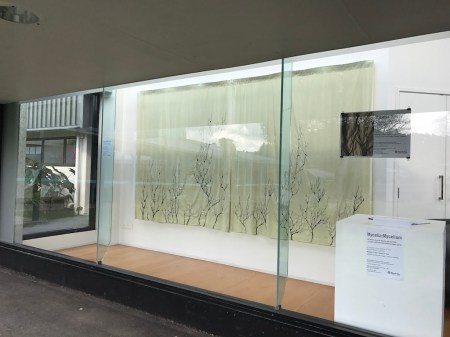
Mycelia:Mycelium, 2017.
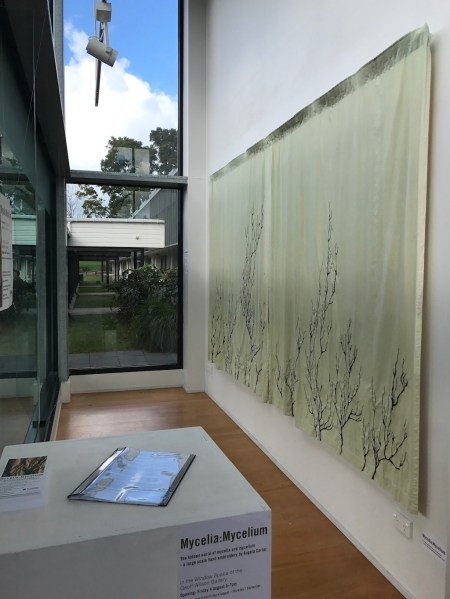
Mycelia:Mycelium, 2017.
-
Crustacea at Woolon 2017
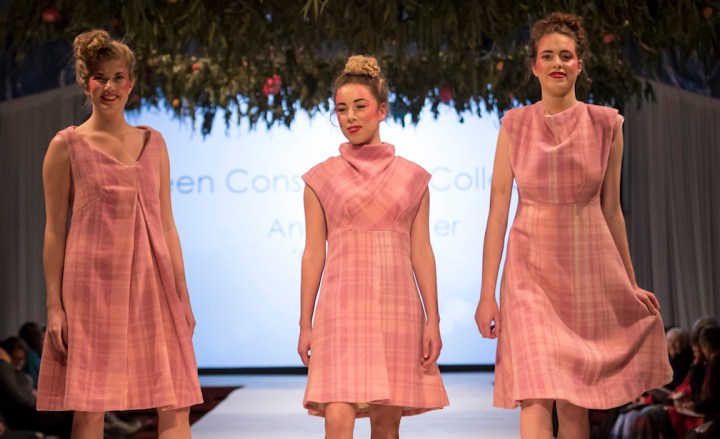

For a couple of months this year, my work room was a mass of pink plaid wool!
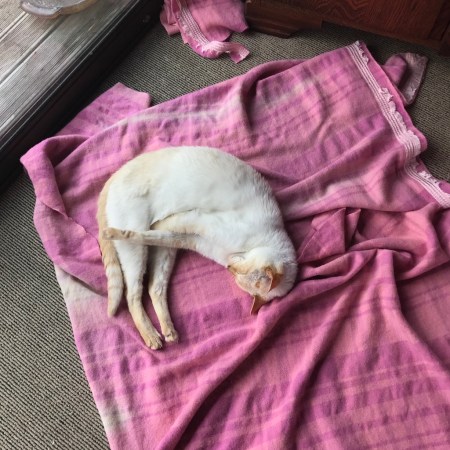
Austin got in on it, always ready for some fabric appreciation.

With the assistance of Blake and Luna of course.
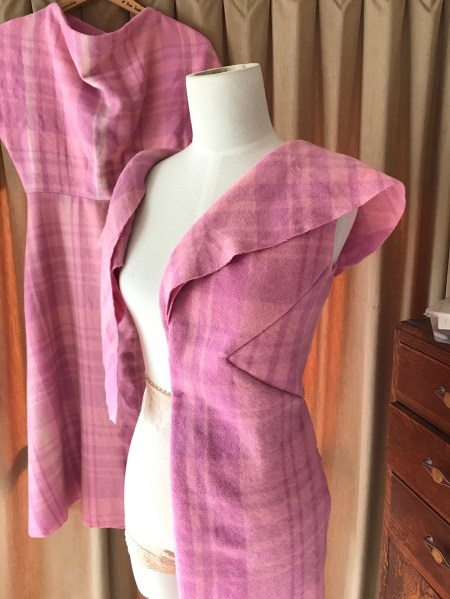
I entered Woolon this year, at a bit of a mad time! However, I managed to pull it all together and ship the garments off on time, and I dedicated this project to my nana Joy who passed away right in the middle of it all.
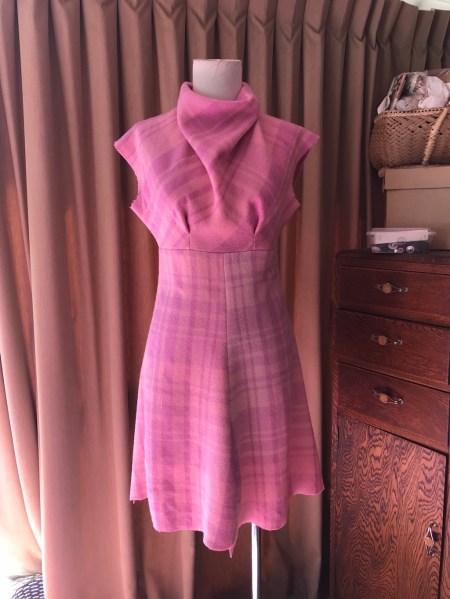
I’m glad I pressed on with it, as it gave me a focus at this challenging and emotional time.
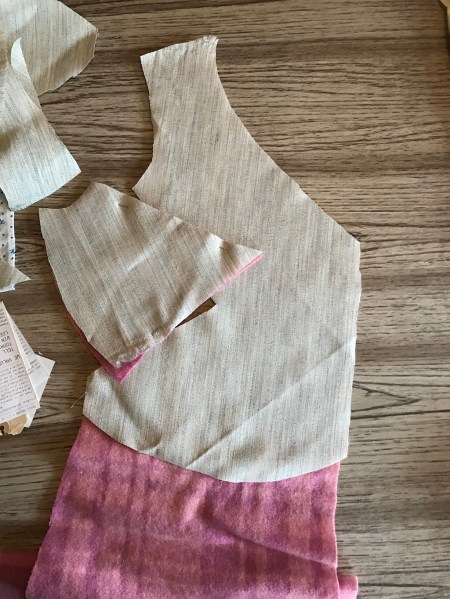
I enjoyed manipulating and working with this wool, I spent hours and hours pad stitching these panels on one bodice to give stability and form to the neckline. I am pleased with the result after all that work!

Hours and hours of hand stitching! Love it though.
Here are some photos from the awards show….
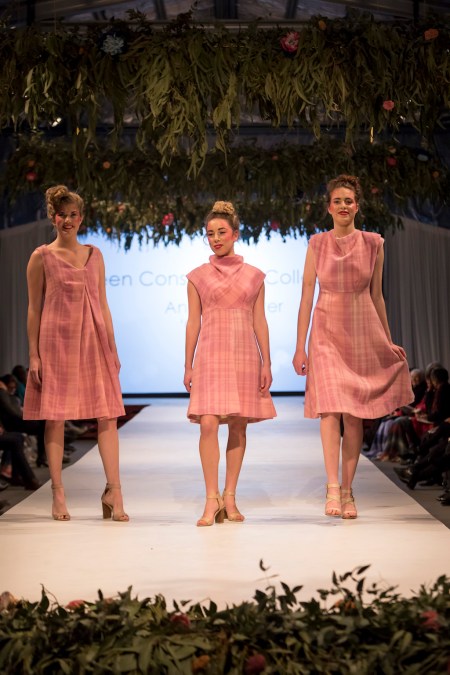
The complete collection, above.
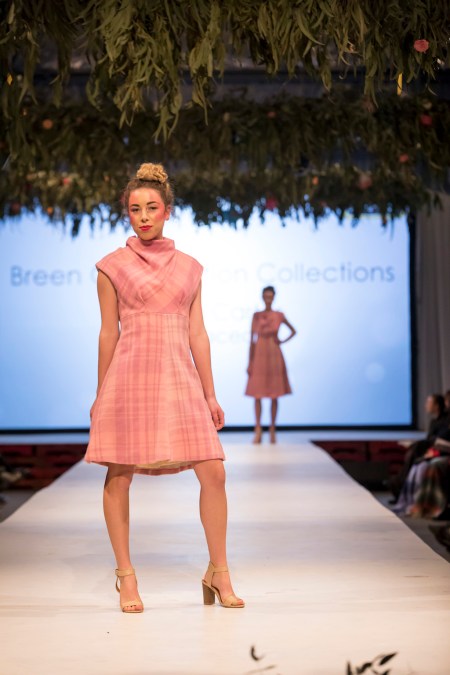
For this project I created a collection of garments, called Crustacea, three garments in total, they needed to be connected somehow, thematically, technically or through textile.
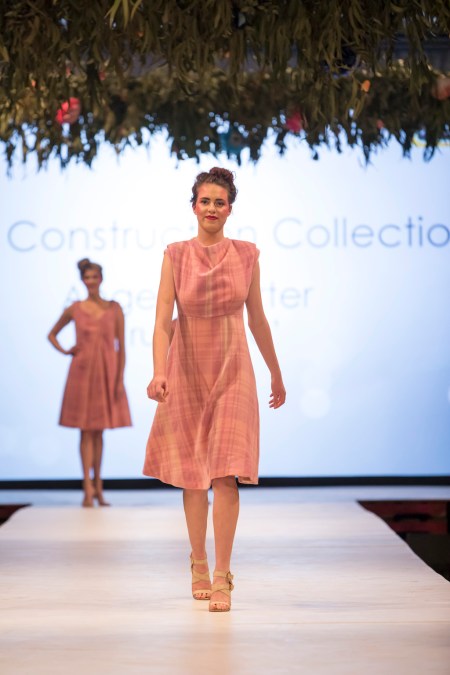
I chose a pair of pink wool blankets that my mum was given as a wedding gift in the 70s, they had been well used, first as blankets, and and then as curtains, and now as wearable art…

Crustacea is a reference to the ocean, and coastal inhabitants that I grew to love through beach combing with nana Joy over many years of my childhood.
The textile had become worn and stained, and faded over time, and I incorporated these marks of time and use into the design. I really love working with wool, and these garments exploit the drape that can be achieved with these old woollen blankets. The garment above is the one I used all that padstitching to shape the neckline and the triangular shaping panel at the side.
Photographed at the event by Janyne Fletcher.
-
pssst…pattern stash reveal ahead.

Natasha from Eclectic Ladyland got in touch with me earlier this year, to ask me a few questions about my style, my sewing, and, ahem, my pattern stash. In the interview I share some photos of some special patterns, my favourite makes, and some thoughts on opshoping and fashion….you can read the full interview here, at Eclectic Ladyland.
Love to hear what you think, have you shared your stash? Do you have some favourite patterns that you just can’t let go of?
Thanks Natasha for taking an interest in my sewing!
-
McCall’s black dress
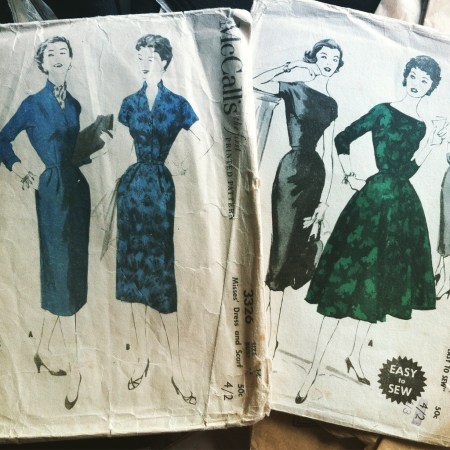
Two of my loved McCall’s patterns, 3326 and 3468, from my instagram.
This little number has been on the back burner for a while now, and I finished it a month or so back, and, yes, I love it.
I made the dress by combining two McCall’s patterns I have worked with before, I knew the fit would work, all I was doing was swapping the skirt and bodice, they had the same side seam closure, and are the same size, easy! McCall’s 3326, I first worked with a while back, then, McCalls 3468 was made a year or so back. I was undecided about a number of things, go wild with some stunning big silver buttons? Self belt, or nice vintage buckle? Or no belt? Shoulder pads, too much?
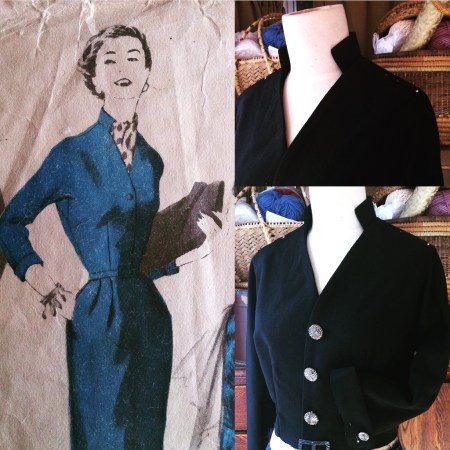
Big buttons or no?
I lined the bodice with a lovely white with black spotted cotton, used buttons from my mums old button stash, and I made bound button holes. Beautiful bound button holes.

Bound button holes.
I varied them slightly though, going for one ‘lip’ instead of two, this was due mainly to the bulky fabric, saved a bit of work, and I think works well. The fabric was fairly bulky, and stitching one lip seemed to work well, it sits nice and flat, and is, of course, functional.
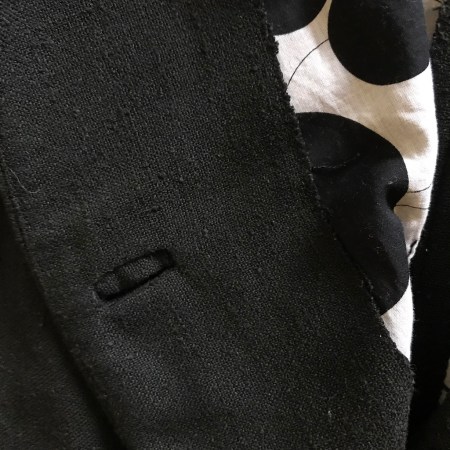
Inside, the back of the bound button holes.
I don’t usually wear black these days, so this was a step out of my comfort zone, and I am dangerously close to making and wearing more black…
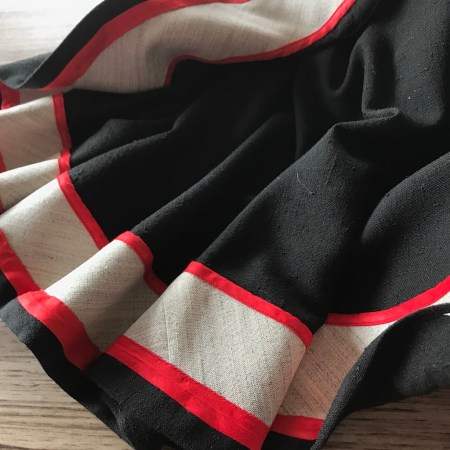
Fancy horse hair braid inside the hem, see? not completely black….
I added synthetic horse hair braid to the hem of this dress, something I tried with the skirt of my vintage suit.
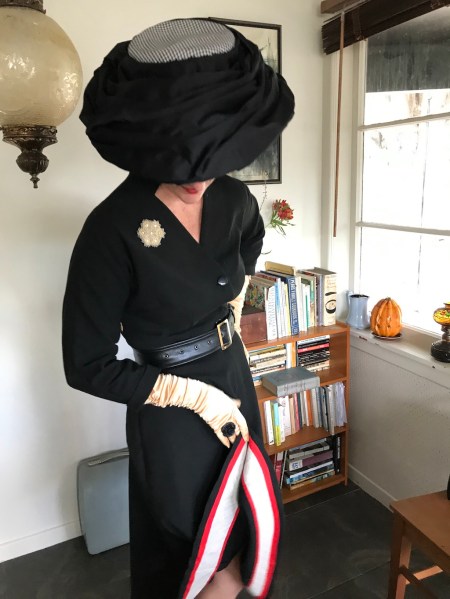
This time, I trimmed it with red bias binding, this gives the hem a slight crispness, and when you swirl, a lovely edge, see?
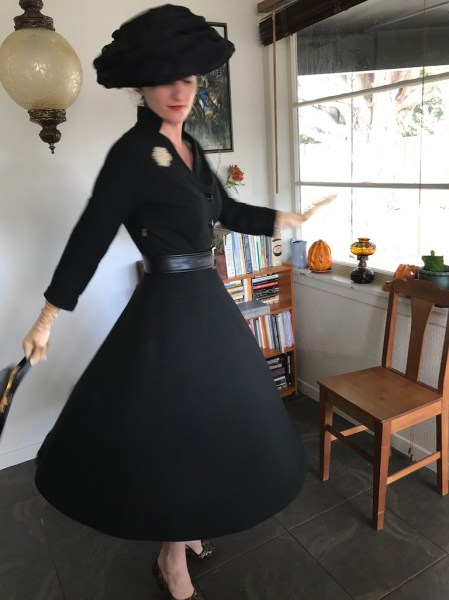
Nice huh?
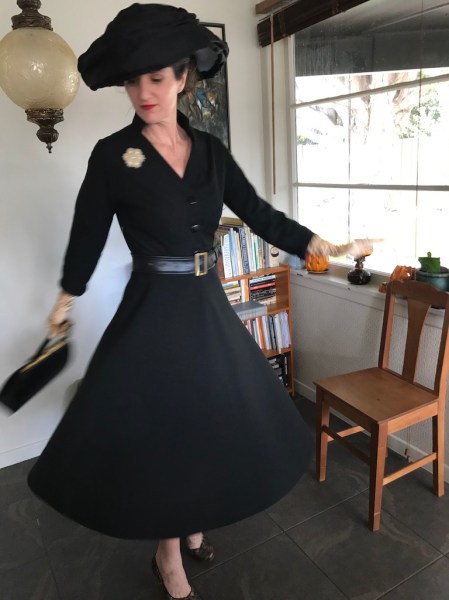
It is the shirt collar that I loved the most about McCalls 3326, it’s very simple to sew and – I think – so very chic.
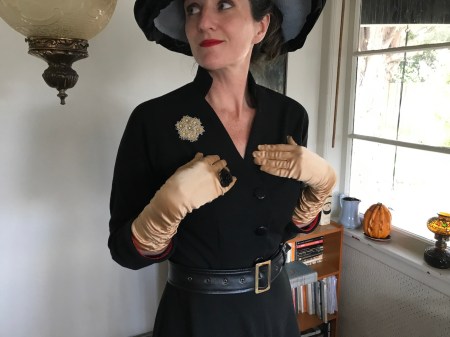
Such a great shape!

See? So nice.
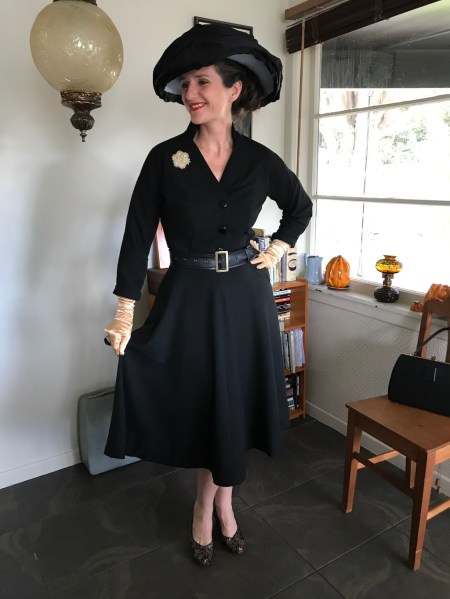
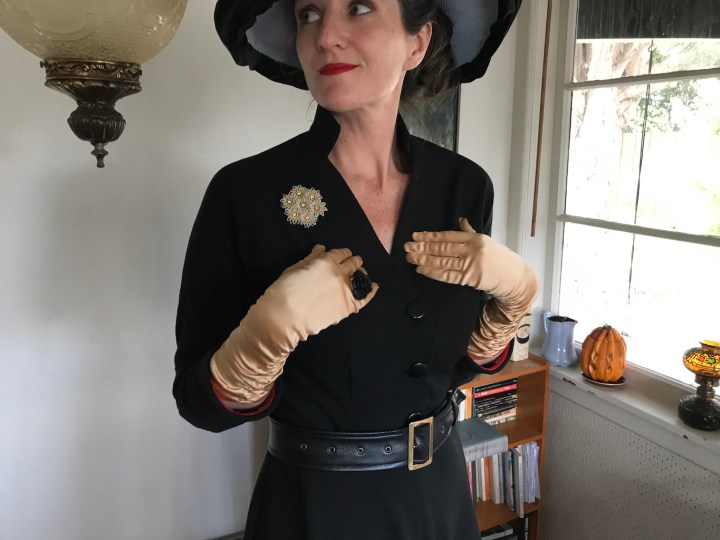
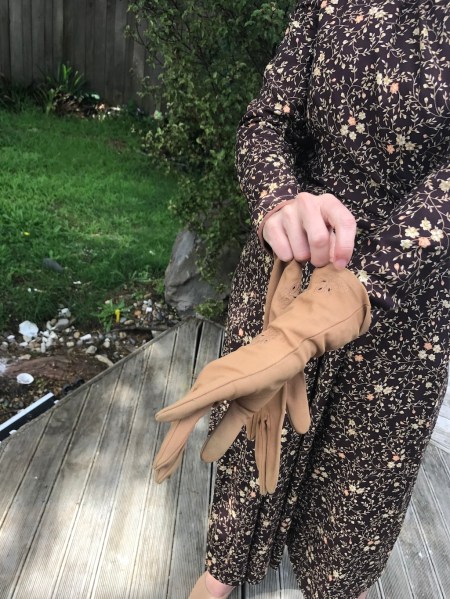
This dress is easily a stylish day dress, but throw on a hat, some gloves and it’s a sophisticated evening – or in my case – the perfect demure funeral dress. This baby had her first real outing to farewell my dear Nana Joy, a very talented sewist in her own right, always ready to praise or critique when necessary!

Angela xo
-
Butterick 6299 in Nanas fabric, and my cheat grading up method
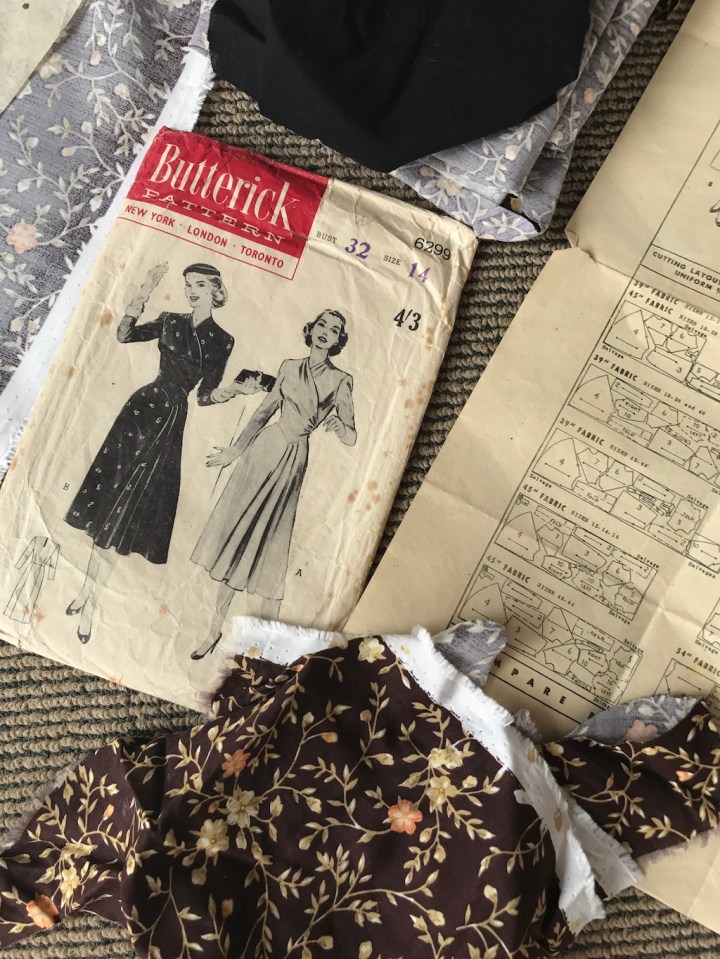
I have been working on a number of projects this year, many sewing, some stitching, and lots of reading…the blog has been a little neglected. I finally have some finished photos of Butterick 6299. I used fabric my nana gave me a few years ago, when she was de-stashing her hoard. It is a lovely printed rayon (she had two lengths of similar prints and colour ways), which I have loved and been scared to cut into, because it’s one of those ‘one of a kind’ pieces of fabric, and there was just enough for one dress, so no room for error!

Almost there! Butterick 6299, letting the hem drop…
My nana has been unwell lately, and it seemed like the time to use this fabric, and when I saw this pattern, I knew this was the right project.

Butterick 6299
I picked up this pattern a month or so ago, and I was smitten. It is about one and a half sizes small for me, so I needed to grade it up and make a muslin, just to be sure I had the right fit.
When it comes to a slight grade up or down, I can often get away with adding a centimetre (give or take) at the seams when I cut out the fabric. However, with the asymmetrical cross over bodice on this dress, I needed to be more precise.
This post includes my kind-of cheat to grade up a pattern.
I had another pattern that needed to be drafted up a size, so I worked on both at the same time, the second pattern is this elegant vintage Vogue 9839.
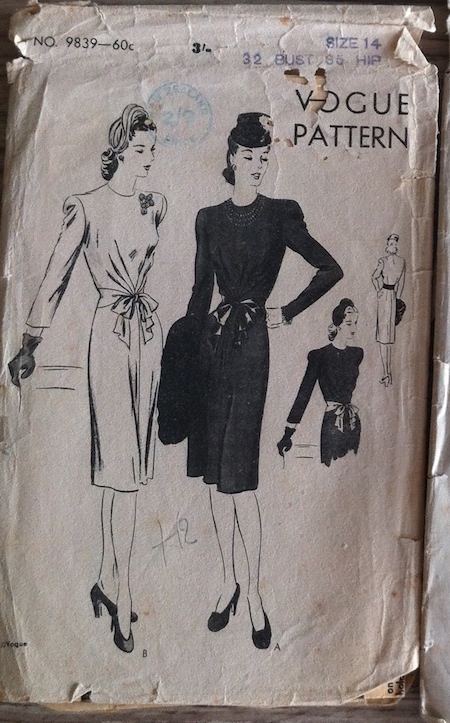
Vogue 9839
Both patterns are 32″ bust, I use a 36″, close, but enough to check placement of bust and bodice waist darts, and size of armhole. My method involves using a pattern I know well, with a basic bodice that I know fits; comparing and grading up the smaller pattern, while checking dart points, shoulder width and armholes. This is like referring to a pattern block drafted from your own measurements. The pattern I use for a fit reference is this Weigel’s simple sheath dress, it is a close fitting high boat neck, and I know it gives me a great fit. Also, all three patterns are designed to be used with woven fabric.
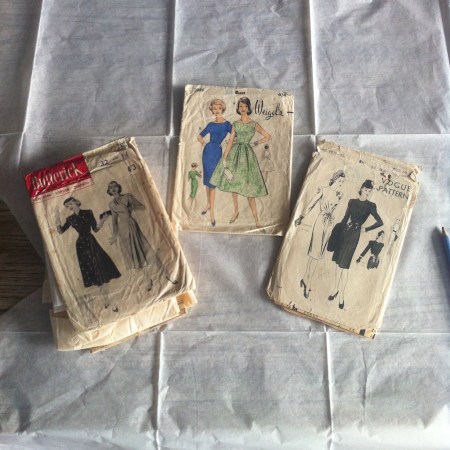
Lovely patterns
It’s quite simple, for a grade up like this, I trace off a new pattern piece, so start by laying out my tissue paper, and by placing one on top of the other, compare corresponding bodice pieces from my fit pattern and the smaller one, figure out the design elements that need to remain, like the high neck, I refer to the darts mainly to be sure they will fall in the right place.

Here is the bodice back for the Weigel’s pattern on the left and the Butterick on the right
Then I simply trace off a new piece, following the lines of my trusted fit pattern piece, you can see below it adds approximately 1.5 cms each side at the waist, I was happy where the shoulder point falls, so this was really all I needed to do. It is worth noting that both back bodice pieces are placed on the centre fold, so I was not going to make changes there, but I used that as another point of reference.
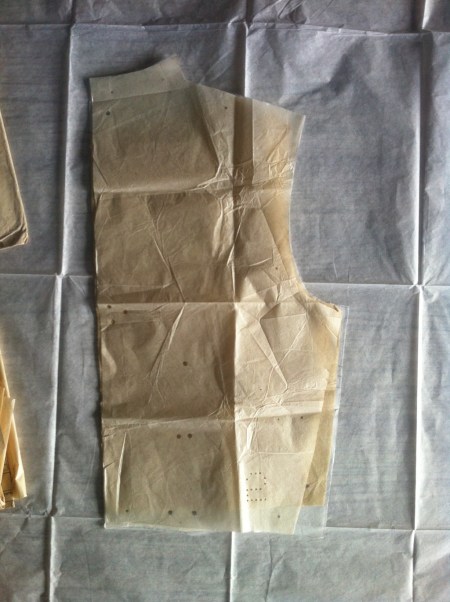
Back bodice for Butterick 6299
Three bodice backs, the new drafted piece at bottom, then my fit piece, and then the Butterick bodice. My main changes were in the waist, and adding a touch more at the underarm.
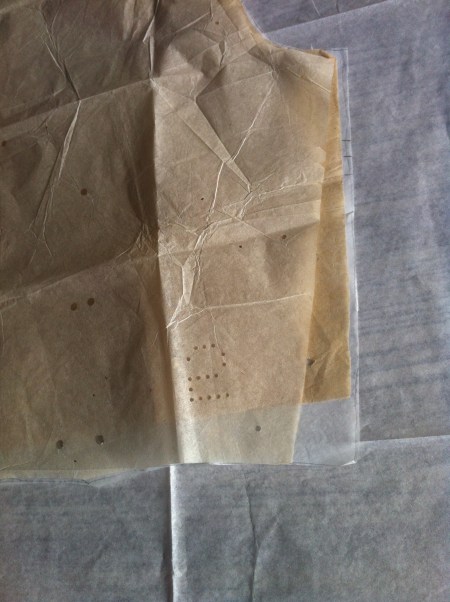
Three pattern pieces laid on top of each other to show the increase I added
The front bodice pieces for the Butterick pattern were more involved, I used the same reference points, waist dart, shoulder and centreline (marked on the pattern piece) taking into account the waist darts, and added an additional 1.5cm to the lower part of the crossover bodice piece. This was where I gave myself a little more work…I figured a little extra would be better than being a little short, when I ought to have kept the measurements exactly the same (I figured if I needed a touch more to work with at the waist, it wouldn’t be a biggie, but given the assembly process, I needed more time fiddling around pinning, trying on and re-pinning, refitting….and then cutting off the extra I gave myself in the end). Lesson learnt.

Butterick 6299 right front bodice
Right bodice front, this was more challenging, so I took my time to be sure that the centre line and darts were correctly positioned, when compared with my fitting, I did this to both bodice pieces.
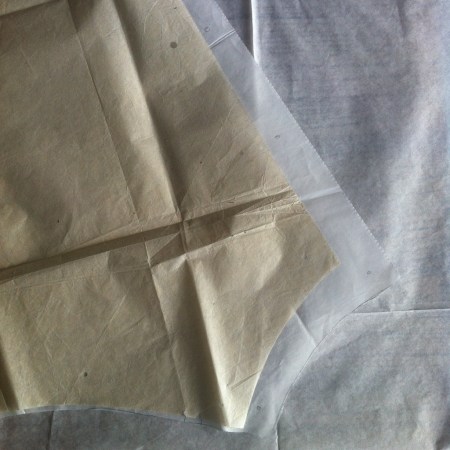
Bodice front, detail
My next step was to create a toile, I lined this dress, so I cut out my lining, black cotton lawn from my new drafted pieces and found it all worked great! It was also helpful to run through the neckline pleats, the crossover bodice and assembly, then I cut out the rest of the pattern. I added the same 1.5 cms at the skirt side side seams, and carefully checked the fall of the ‘v’ at the waist, it would all line up fine! Phew.
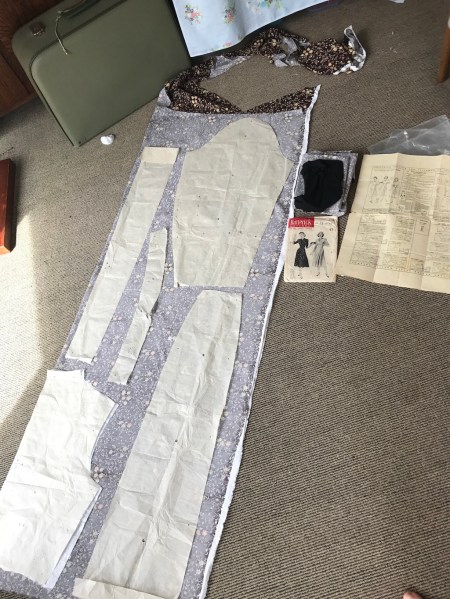
On the sewing room floor
There was just enough fabric, and I actually stuck to the pattern lay out for this dress!

Butterick 6299 and nana’s lovely fabric
I had some minor issues with the instructions for this pattern, the bodice assembly all goes as you’d expect, then there seems to be a gap where there may be notes on joining the waist seam. This would be no concern with a straight waist seam, but with the asymmetrical join, it seemed a bit odd not to include pointers there, you wouldn’t want to bugger that up. I went carefully, double checking the pleats fall in the right place, then top stitch the waist, it all worked out fine.
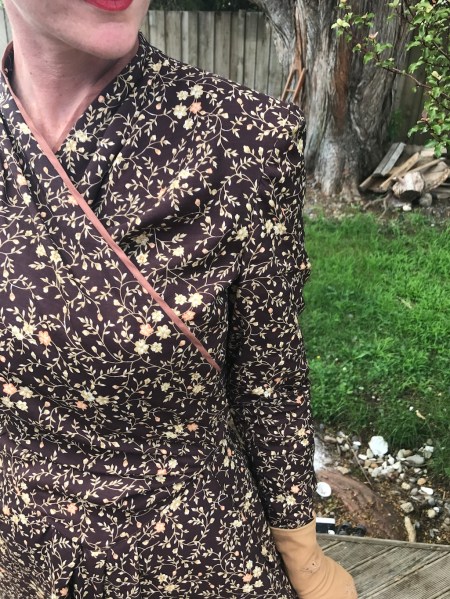
I added a bias trim on the bodice, both pieces fold over and attach at the side seam, this is a good way to assemble it, however the bias trim added some bulk on top of the folded fabric. Not really ideal, and I spent some time getting it to sit well, and not bulge out.
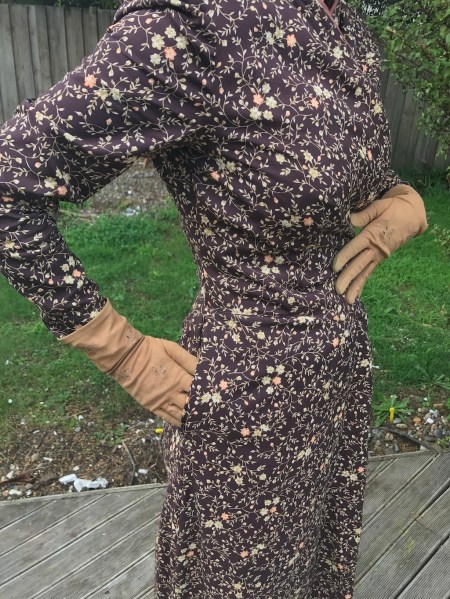
I added pockets too!

I am SO pleased with the outcome, it is a slim fitting dress, and I love the fabric!

Perfect colours for Autumn.

I had wanted to add bias to the waist seam, however I was just short trim! I was using a piece from my stash, the colour was perfect…

The pattern called for a small zip closure at the back, however, I could whip this baby off and on without it, so I left it off.
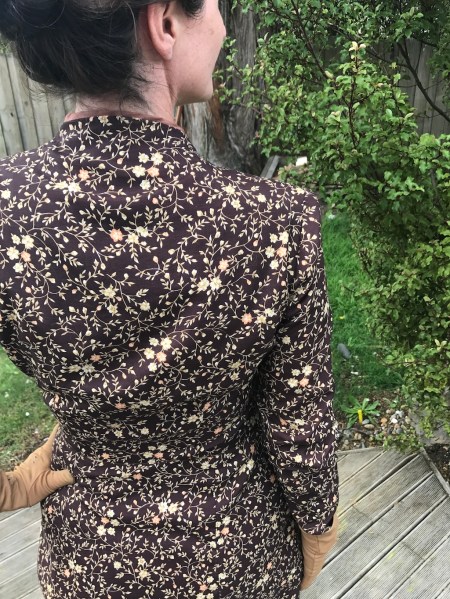
I love it! And I’m set for Autumn.
-
Recent stitch work – Lichen
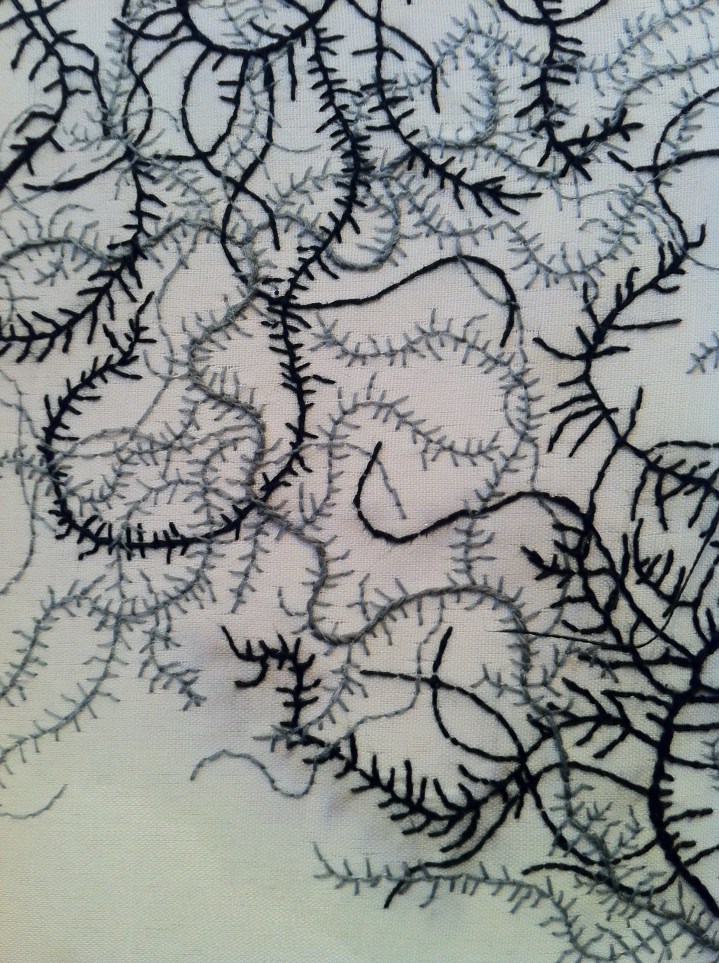
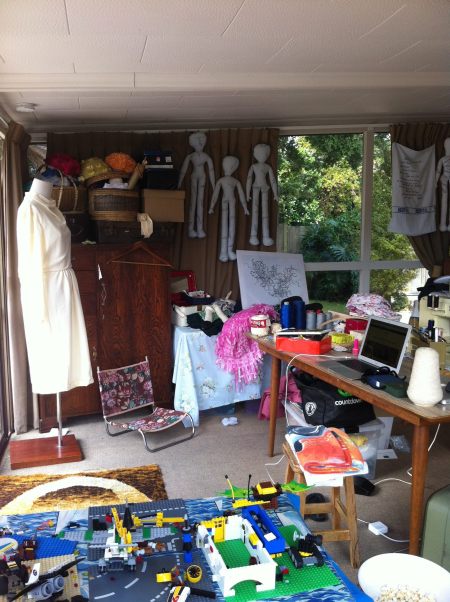
I’ve been enjoying a spacious workroom, I share it with my two children, they often come and play and make with me, listening to audio books. I’m having a bit of down time with work after some wrist surgery, so I’ve been reviewing work over the last year and planning new work.
We’ve been on many walks, and there is some incredible lichen in the bush, I’m talking trees dripping with strands of lichen, kind of gothic and spooky.
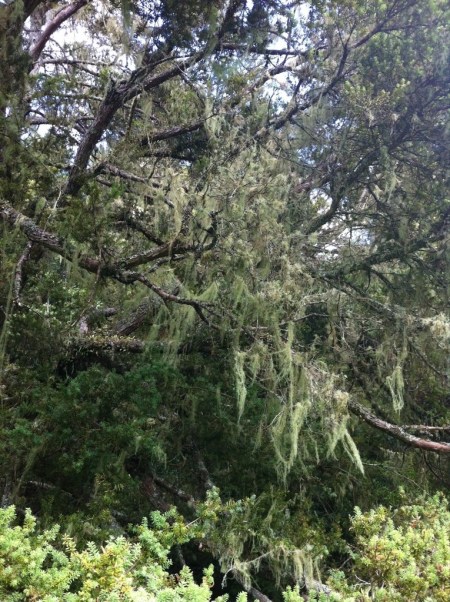
I’ve never seen such long strands of lichen like this before.

It’s so beautiful, and when fresh, or alive, it’s stretchy and supple, though it looks crisp and dry, dead.

And it’s so pale.

Fascinating! No surprise that I had to try and explore it more with pencil and thread.

Watercolour ink.

Some fragments of work in progress.
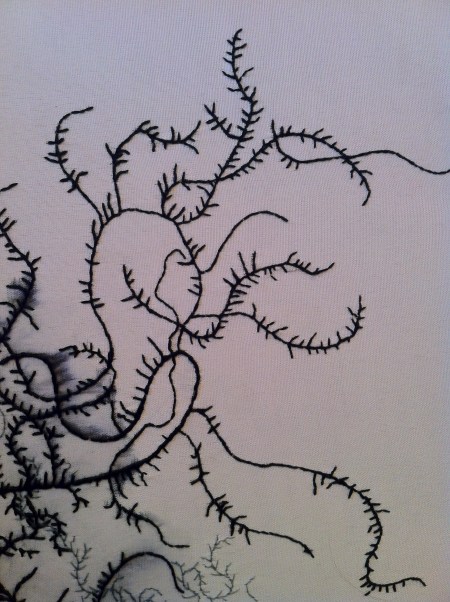
Loving Lichen.
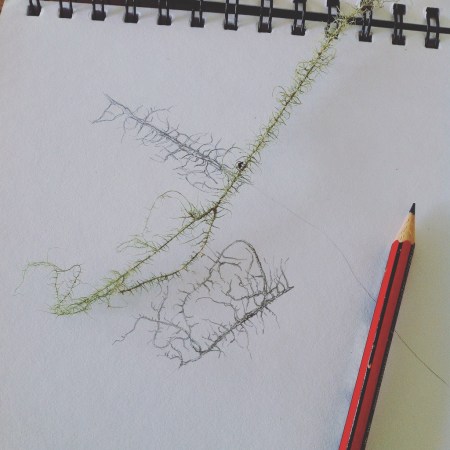
You can follow my work on Insatgram too!
-
Sew what you got sewing challenge 2017
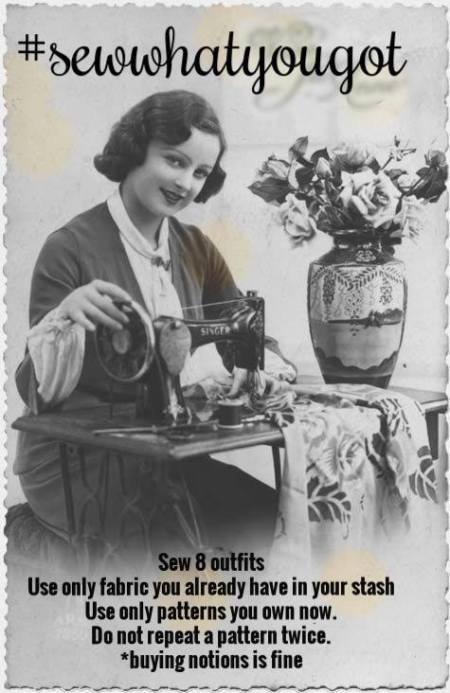
Who doesn’t love a sewing challenge?
For 2017 there’s a new stash-busting sewing challenge going around, #sewwhatyougot, sew eight outfits, using only fabric from your stash, patterns you already own, and not repeating a pattern…Also no UFO’s.
Kind of how I sew already, but I thought I’d join in the fun.

The Stash
Here’s the stash, winter fabrics top shelf, trans – seasonal and summer fabrics below. I will not share a photo of the pattern stash…. But I’ll outline my long – short list of sewing projects for 2017, some have overflowed from last years’ sewing plans…

Loungewear / house pajamas
I would like a really swish set of pajamas, and I’m leaning towards the Weigel’s Mandarin style house coat and pjs set, which was also one of the very few patterns from my nana, so another reason to use it. I’m also dreaming of a snuggly house coat for winter, and can’t decide between the Academy and the Druleigh…
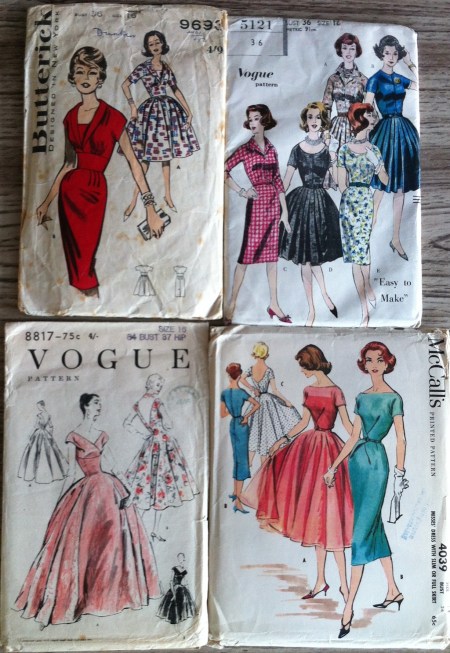
Frocks
Here are four dress patterns I’ve been sitting on for a while, can’t decide! I think it will come down to the fabric at hand as to which one/s go forward.

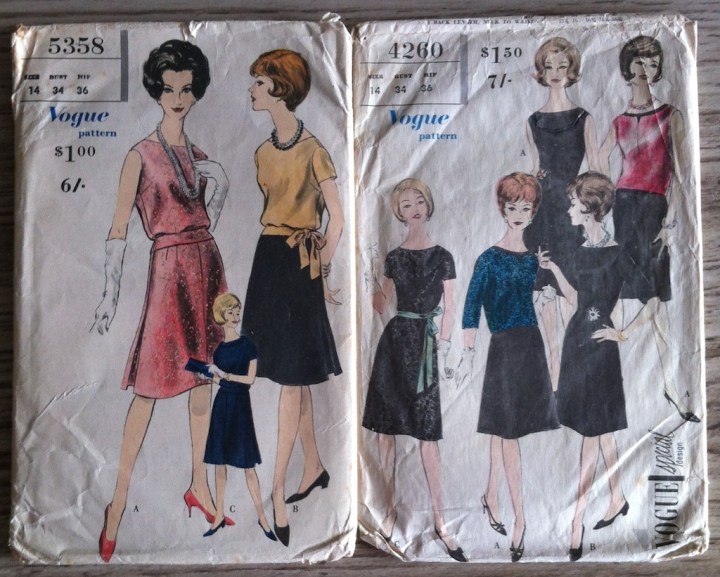
1960s casual elegance
I love the 60s for elegant simplicity, at least at first glance. Both of these patterns have nice details, like the side pleat in the skirt on Vogue 5358, Vogue 4260 includes subtle over blouses. Nice. I’ve started on a skirt as a wearable toile from Vogue 5358.

Vintage Separates
The first four patterns here are due to be remade, they are some of my basic staples, the last two, skirt patterns, will be new to me this year, which I’m excited about, particularly the Advance 5504. I’m all about pockets.
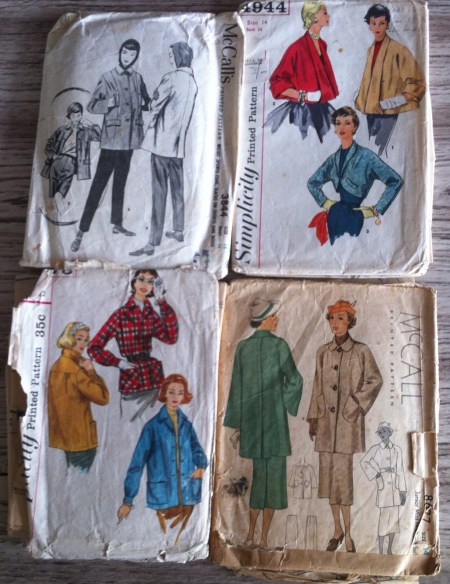
Outwear
A natural progression from the Vintage Suit Sew Along, I really want to make a car coat, I’m planning to make the McCall 30s number and Simplicity 4944, I have enough fabric for the outers of both, so it’ll come down to the linings!
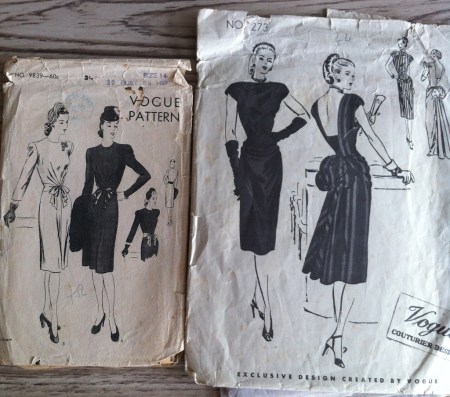
More 40s Noir numbers
Vogue 273 is a pattern I have been wanting to remake since this first full length version last year, this time around I’ll be making a shorter skirt, so I get it out more. Vogue 9839 is another 40s dress I’d like to make for winter, and I have three bundles of wool crepe that I could use for this dress…so, very do-able.
As you’ll note this is more than eight outfits, I’m keeping my options open!
What are your sewing plans this year?
-
The Last Word – a prohibition cocktail
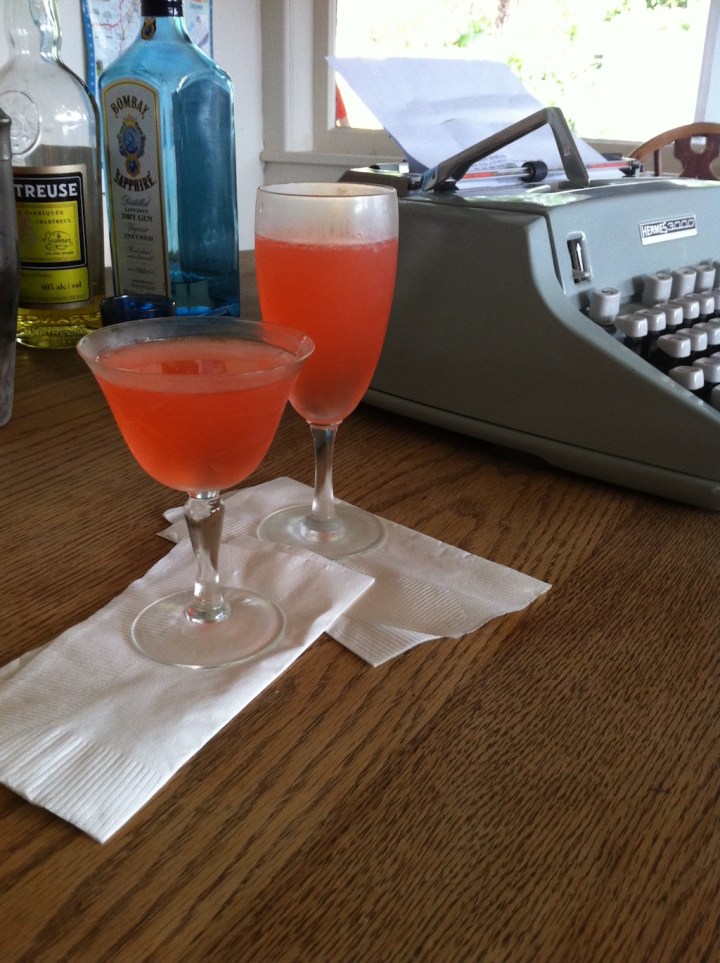

The Last Word on 2016? Nah, not really, just a really nice wee drop for summer.
This is another delicious prohibition cocktail, so you need to steel yourself before you indulge. You’ve been warned….
1 part gin
1 part lime juice
1 part maraschino liqueur
1 part green Chartreuse (I used yellow…)
Pour all ingredients over ice in a cocktail shaker, shake well, pour into chilled cocktail or coup glasses and enjoy!

I found these ones looked quite different to photos I had found, because I used Yellow Chartreuse, and the maraschino liqueur I have is quite pink.
Still delicious!
artist, writer, curator, mentor
 Angela Rowe